By Tov Smeds
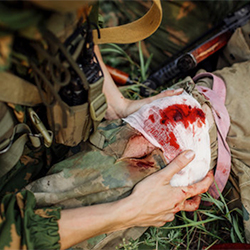
Some Ukrainians hospitalized with war wounds are coming down with pan-resistant Klebsiella pneumoniae.
This is a particular problem not just for those wounded by the war, but also other Ukrainians because K. pneumoniae causes disease in a wider context. Klebsiella can cause urinary tract infections, pneumonia, skin infections in wounds, and sepsis, according to Kristian Riesbeck, MD, PhD, a professor of clinical bacteriology at Lund University and a senior consultant, who was contacted by the Ukrainian microbiologist Oleksandr Nazarchuk, Doc of Med, PhD, for help in examining the degree of antibiotic resistance in bacteria from severely war-wounded and infected patients being treated in the hospital.
Using samples from 141 war-wounded individuals (133 adults wounded in the war and eight newborns with pneumonia), the researchers showed that several bacteria types were resistant to broad-spectrum antibiotics and 6% of all samples were resistant to all the antibiotics that the researchers tested on them.
In this new assessment, the researchers used samples from 37 of the patients who had been previously shown to have resistant bacteria (J Infect 2024;89[6]:106312. doi:10.1016/j.jinf.2024.106312). The entire genome of the bacteria was sequenced to examine whether there were genes that can cause resistance.
“All the bacteria were shown to carry the genes that we know are associated with resistance. We saw that one-quarter of them were resistant to all the available antimicrobial drugs on the market. These bacteria are said to have total resistance (pandrug-resistant). Infections caused by these bacteria become very difficult, or in some cases impossible, to treat with the medicines we have today," Dr. Riesbeck said.
Pandrug-resistant bacteria represent an extreme form of antibiotic resistance and a growing concern within healthcare.
The researchers were interested in finding out whether widespread infection could occur. To examine this, experiments were carried out in mice and insect larvae. “It was shown that the bacteria types most resistant to antibiotics were also the ones that survived best in mice in connection with pneumonia. Similarly, these bacteria types were so aggressive that they killed the insect larvae considerably faster than the bacteria that were less resistant to antibiotics,” they said.
Genetic sequencing showed that all Klebsiella bacteria with total resistance examined by the researchers carried the genes that make them more virulent.
“In many cases, bacteria lose their ability to infect and cause disease because all their energy is spent on being resistant to antibiotics. But we have perhaps underestimated bacteria: We saw that many of these bacteria types from Ukraine are equipped with genes that make them both resistant and virulent,” Dr. Riesbeck said.
According to Dr. Riesbeck, this means the bacteria that spread among the wounded in Ukraine will most likely continue to survive and cause problems. “This is something that will not disappear over time. As long as the patients cannot be isolated and treated properly, the spread of infection will continue,” he explained.
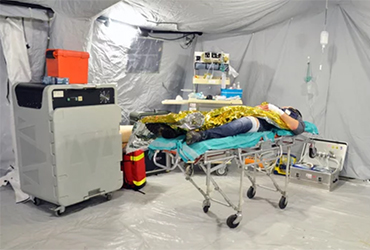
Dr. Riesbeck was not surprised, because this is what happens when the infrastructure of a healthcare system collapses.
K. pneumoniae is one of the leading bacterial causes of mortality globally. It is estimated that the bacterium is responsible for about 20% of all deaths attributable to antimicrobial resistance.
The research was conducted with support from, among others, the Knut and Alice Wallenberg Foundation, Swedish Research Council, Swedish Heart Lung Foundation and ALF funding from Region Skåne.