By Marie Rosenthal, MS
The composition of your gut microbiome may help protect against the overgrowth of Klebsiella pneumoniae, Escherichia coli and other organisms—and it may be altered by changes in diet (Nat Microbiol 2025 Jan 10. doi:10.1038/s41564-024-01912-6).
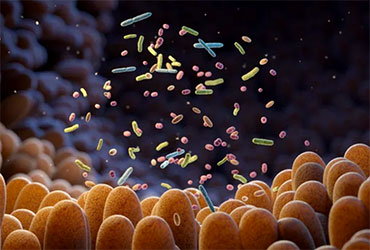
Enterobacteriaceae, including K. pneumoniae, E. coli, Shigella and others, are present at low levels as part of the normal gut flora, but whether overgrowth could contribute to bloodstream infections is still unknown.
Researchers have used computational approaches, including artificial intelligence, to analyze the gut microbiome composition of stool samples from more than 12,000 people across 45 countries. They found that a person's microbiome “signature” can predict if a person's gut is likely to be colonized by Enterobacteriaceae. The results are consistent across different states of health and geographic locations.
The researchers identified 135 gut microbe species that are commonly found in the absence of Enterobacteriaceae, hinting that they are likely protective, the researchers surmised.
Notable among the protective gut species are Faecalibacterium bacteria, which produce beneficial compounds called short-chain fatty acids by breaking down fiber in the foods we eat. This seems to protect against a range of disease-causing Enterobacteriaceae.
Probiotics may not directly change the environment in the gut—the bacteria in such supplements are likely unable to outcompete the much more numerous resident bacteria—and so this approach may be less likely to change the microbiome, they said, so diet might be a better option.
The researchers’ results suggest that diet can be potentially important in controlling the prevention of the overgrowth of “a range of bacteria, including E. coli and K. pneumoniae, because this changes our gut environment to make it more hostile to invaders," said Alexandre Almeida, PhD, a researcher at the University of Cambridge's Department of Veterinary Medicine, in England, and senior author of the paper.
“By eating fiber in foods like vegetables, beans and whole grains, we can provide the raw material for our gut bacteria to produce short-chain fatty acids—compounds that can protect us from these pathogenic bugs,” Dr. Almeida said.
Earlier research to understand interactions between the different bacteria in the gut has used mouse models, but some of these new results are at odds with previous findings.
The new study revealed that 172 species of gut microbes can coexist with Enterobacteriaceae. Many of these species need the same nutrients to survive. Previously it was thought that competition for resources would stop the disease-causing bacteria from establishing in the gut.
This has important implications for treatment: Taking probiotics that compete for the same nutrients with the bad bacteria to try and starve them out is not going to work. The researchers said it might be more beneficial to change the environment in the gut, for instance through diet, to reduce the risk for Enterobacteriaceae overgrowth.
“Each year for the past decade at least, we have seen annual increases in bloodstream infections caused by gram-negative bacteria, in particular E. coli. The cause(s) of this increasing incidence is unknown. This research suggesting a role for the gut microbiome in keeping or failing to keep E. coli under check as a result of dietary factors is intriguing. We need more evidence to confirm this possibility and especially whether we can manipulate the risk of infections occurring via dietary changes,” said Mark Wilcox, MD, a consultant microbiologist in Leeds, England. Dr. Wilcox is also a member of the Infectious Disease Special Edition editorial advisory board. He was not part of the study, but was asked to comment.