


By IDSE News Staff
An analysis of more than 2 million hospital visits found a diagnosis of pneumonia made in the hospital will change between patient admission and discharge—either because someone was admitted with a diagnosis of pneumonia but the final diagnosis was changed, or a final diagnosis of pneumonia was missed when a patient entered the hospital (Ann Intern Med 2024 Aug 6. doi:10.7326/M23-2505).
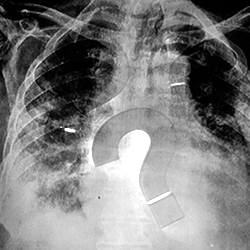
Pneumonia diagnoses are marked by pronounced uncertainty, according to Barbara Jones, MD, MSCI, a pulmonary and critical care physician at University of Utah Health, in Salt Lake City, and the first author on the study. Dr. Jones and her colleagues searched medical records from more than 100 Veterans Affairs medical centers across the country, using artificial intelligence tools to identify mismatches between initial diagnoses and diagnoses upon discharge from the hospital.
More than 10% of all such visits involved a pneumonia diagnosis, either when a patient entered the hospital, when they left or both.
“Pneumonia can seem like a clear-cut diagnosis,” Dr. Jones said, “but there is actually quite a bit of overlap with other diagnoses that can mimic pneumonia.” One-third of patients who were ultimately diagnosed with pneumonia did not receive a pneumonia diagnosis when they entered the hospital.
And almost 40% of initial pneumonia diagnoses were later revised.
The study also found that this uncertainty was often evident in doctors’ notes on patient visits: Clinical notes on pneumonia diagnoses in the emergency department expressed uncertainty more than half the time (58%), and notes on diagnosis at discharge expressed uncertainty almost half the time (48%). Simultaneous treatments for multiple potential diagnoses were also common.
When the initial diagnosis was pneumonia but the discharge diagnosis was different, patients receive a greater number of treatments in the hospital, but did not do worse than other patients. However, patients who initially lacked a pneumonia diagnosis but ultimately were diagnosed with pneumonia had worse health outcomes than other patients.
The new results call into question much of the existing research on pneumonia treatment, which tends to assume that initial and discharge diagnoses will be the same. Doctors and patients should keep this high level of uncertainty in mind after an initial pneumonia diagnosis and be willing to adapt to new information throughout the treatment process, Dr. Jones suggested.
“Both patients and clinicians need to pay attention to their recovery and question the diagnosis if they don’t get better with treatment,” she said.