





By IDSE News Staff
Trachomatous trichiasis, which typically results after multiple infections with Chlamydia trachomatis, can successfully be treated by either of the two most common types of eyelid surgery, according to findings from a large comparison trial funded by the National Institutes of Health.
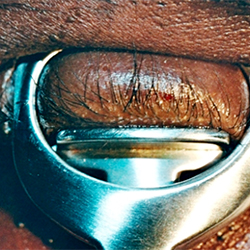
In light of previous smaller studies, which suggested that one of the surgery types had poorer outcomes, this study provides reassurance that either technique can treat the condition (PLoS Negl Trop Dis 2024 Sep 3).
“Some studies have reported postoperative trichiasis rates of 30% or higher for patients with trachomatous trichiasis following surgery, and repeat surgeries are more difficult,” said Emily Gower, PhD, of the University of North Carolina at Chapel Hill. “This trial sought to determine if we could decrease the risk for postoperative trichiasis by modifying the surgical procedure. We found that existing approaches result in better outcomes.”
Trachomatous trichiasis affects approximately 1.7 million people worldwide, mostly in poor and rural areas of Africa. The condition, a potentially blinding ailment where inward-turned eyelashes scratch the front of the eye, arises after repeated or chronic eye infections with C. trachomatis, which is spread by person-to-person contact. Trachoma is very common in hot, dry areas of the world, and repeat infections can eventually lead to scarring and malformation of the eyelid. This malformation causes the edge of the eyelid to draw inward, so that eyelashes scratch the eye. If left untreated, trichiasis can result in corneal clouding, and eventually blindness.
The most common and effective treatment for trichiasis is surgery to correct the inward turning of the eyelid, which typically is performed in one of two different ways. A few smaller studies indicated that one of the surgery methods, posterior lamellar tarsal rotation (PLTR), might be more effective, so some programs in Africa began retraining surgeons to perform that method. Additionally, previous analysis of eyelids treated with the other surgery, bilamellar tarsal rotation (BLTR), suggested that placing the surgical incision slightly further from the edge of the eyelid (5 mm above the lid margin instead of 3 mm) might lead to fewer recurrences, but this change had not been previously tested. The current study directly compared these three surgery approaches and evaluated the risk for postoperative trichiasis.
The study, which took place in southern Ethiopia, enrolled 4,914 patients with trichiasis in one or both eyes (6,940 eligible eyes). The participants were randomized to receive BLTR at 3 mm incision height, BLTR at 5 mm incision height or PLTR. Researchers rechecked the patients for postoperative trichiasis at six weeks and again at 12 to 18 months. On average, approximately 17% of eyelids had postoperative trichiasis.
There was no difference in risk for postoperative trichiasis between the two methods with a 3-mm incision height, while those who received the 5-mm incision height BLTR were significantly more likely to have postoperative trichiasis. The results indicate that the current standard surgeries—either method at 3 mm—are better options for trichiasis treatment than the 5-mm method.
The study was funded by NEI grant UG1EY025992 and carries clinical trial registration number NCT03100747.