





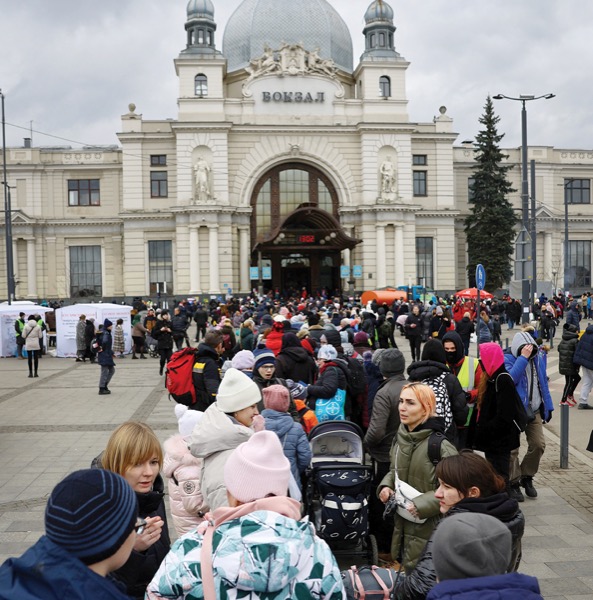
I am sure I am not the only person mesmerized by the images on my screen of the millions of people fleeing Ukraine after the Russian invasion, of the devastation and violence.
As an American, I was raised on the story of immigrants making this country the melting pot it is, because generation after generation came to the United States to flee oppression, war and violence. But I didn’t really understand what that meant until the Mariel boatlift in the 1980s. If you don’t remember, Mariel was a mass exodus from Cuba into the United States.
I was a staff sergeant in the U.S. Army Reserve at the time, and I helped to process the straggling mass of humanity that entered Florida and were sent to Fort Dix, N.J.: mothers and children, fathers and sons, brothers and sisters, lovers and friends. These were people who had left everything behind to come here, who were tired, scared and uncertain of their futures, and who must have had second thoughts after finding themselves on a military barracks surrounded by soldiers after leaving Cuba.
That experience, while just a blip in my life, made a lasting impression because, for the first time, I understood the meaning of what I was taught in our history books.
I don’t think I was ever prouder to be an American than during that long weekend of service.
I keep being drawn back to that time as I watch the people of Ukraine fleeing the bombs and the terror. I am grateful for the nations accepting them. I feel for them. I pray for them, and I hope that they find peace wherever they land. I worry about their journey.
The reports from the World Health Organization are dire. The Russians appear to be attacking civilian targets, such as hospitals, which are typically off limits. There is a lack of clean water, food and medical supplies. Many people are trapped, but others continue to pour over the borders to countries that are already stretched to capacity to handle the refugee influx.
And looming over all of this is the COVID-19 pandemic.
A serious outbreak could affect not only Eastern Europe but the entire world. I spoke with several experts, as well as attended a WHO virtual press briefing about the pandemic and Ukraine to write our cover story on the print issue, which you should receive soon, but you can read here if you want. I hope you find the information and views as interesting as I did.
Unfortunately, as everyone I spoke to reminded me, war and infections have been closely tied throughout history. Once again, George Santayana’s famous quote haunts us: “Those who cannot remember the past are condemned to repeat it.”
—Marie Rosenthal, MS
The views expressed here belong to the author and do not necessarily reflect those of the publisher.

This article is from the March 2022 print issue.