





Infectious disease physicians, pharmacists, nurses, microbiologists and researchers save people’s lives every day. But they went into overtime during the COVID-19 pandemic, when people were dying so fast that morgues overflowed. ID specialists made recommendations that slowed the spread and created treatment protocols that were fine-tuned as they learned more about SARS-CoV-2. They also developed vaccines and treatments in record time.
In short, you saved the world.
The development of vaccines was pivotal, allowing us to once again get on a plane, give our grandkids a hug and shake a stranger’s hand. But some people were leery of the mRNA technology used in most COVID-19 vaccines because they thought they were brought to market too fast. They failed to realize the groundbreaking research for mRNA technology began many years ago in a laboratory with people who were researching HIV and other viruses, according to Barney S. Graham, MD, of the Morehouse School of Medicine, in Atlanta. That research “helped us solve the COVID problem,” he said at CROI 2024.
Instead of a culture of trial and error, ID research and development (R&D) evolved to a culture of precision engineering from cell culture to chemical synthesis and platform technologies, he explained, resulting in a process “that used to be measured in decades to sometimes now being measured in just months or years.”
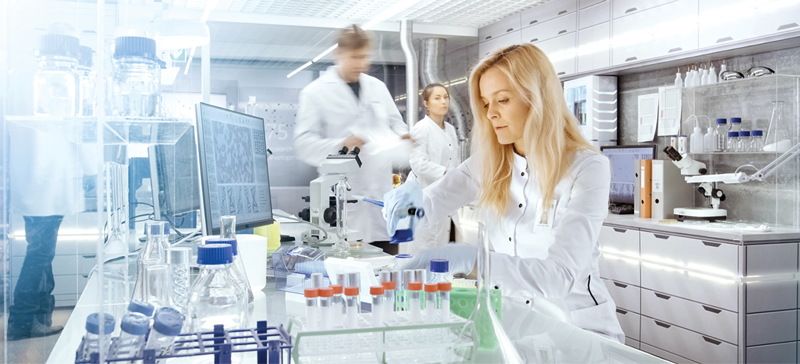
Although it felt like overnight, mRNA vaccines were the result of decades of laboratory research on different viruses and almost 10 years on coronaviruses alone.
“When the SARS coronavirus emerged and was recognized and reported at the end of 2019, because of the prior six or seven years of work on [another] coronavirus, and knowing the structure of the spike protein and knowing ways of stabilizing [the protein] that had worked across multiple other coronavirus spike proteins,” they were able to collaborate quickly with Moderna to develop a vaccine because the funding needed to develop and commercialize it suddenly materialized.
Laboratory research is “layers on layers … over many, many years,” Dr. Graham said. So, when the world needed a “quick” cure for COVID-19, they turned to a legacy of scientific knowledge and data to sequence the virus and develop monoclonal antibodies and vaccines.
However, that legacy and knowledge so badly needed are being forced out of the ID lab. Companies are pulling out of R&D in ID, particularly for antibiotics and resistance. Microbiologists, laboratory technicians and others are going into other fields of medicine or just leaving the lab. People are retiring, and young investigators are not taking their place. Knowledge and mentorship are being lost.
What happens when the next pandemic plagues the world? Who will save it?
Last August, we wrote about the silent pandemic of antimicrobial resistance (bit.ly/3R18Y0X-IDSE). In December, we wrote about the lack of new IDs accepting fellowships (bit.ly/47QvAXN). In this issue, you will read about the lack of microbiologists and ID researchers—all people we will need to save patients today and the world tomorrow.
We talked with many people—smarter brains than ours—about ideas about fixing the problem. It starts with compensation and investment.
You can help. After you read the story, contact your legislators and tell them to pass (and fund) the Pasteur Act; fund the Bio-Preparedness Workforce Pilot Program; support loan repayment for ID fellows who agree to practice in underserved areas; increase compensation for ID staff across the board; and provide more push and pull incentives for ID research from bench to bedside. It is going to take multiple approaches to solve this problem.
At some point, their lives, your life and my life will probably depend on it.
—Marie Rosenthal, MS
The views expressed here belong to the editor and do not necessarily reflect those of the publisher.
This article is from the August 2024 print issue.