





After an adolescence of reading Philip K. Dick, Isaac Asimov and Robert A. Heinlein, I am leery of artificial intelligence, but the experts for our cover story, as well as speakers at ASM, ESCMID and IAS, made me see the value of AI’s ability to comb quickly through massive data sets and synthesize the information.
So much good has come from AI so far. Look at the pediatric sepsis criteria introduced at the Critical Care Congress (JAMA 2024;331[8]:665-674). How many babies will be saved because clinicians can better determine their prognosis? There is also the potential to discover new drugs, use AI agents to interact with patients to encourage care, and smart diagnostics that can find TB that was missed by the human eye—to name just a few potential uses.
These advanced learning tools can improve care for your patients, but we must remember, they are just tools. Standardized and ethical rules should be developed for their use, and AI is only as good as the information it is fed. The data relied on by the AI should be checked and double-checked to ensure accuracy.
I give you an amusing anecdote about the AI of emotional support chickens to prove my point.
My sister-in-law, Andrea, knitted me an emotional support chicken in my favorite colors: red and purple. To be honest, I think it was more for her emotional support than mine, but it is adorable and has pride of place on my bureau. I had never heard of emotional support chickens, so I Googled them—and yes, they are a thing!
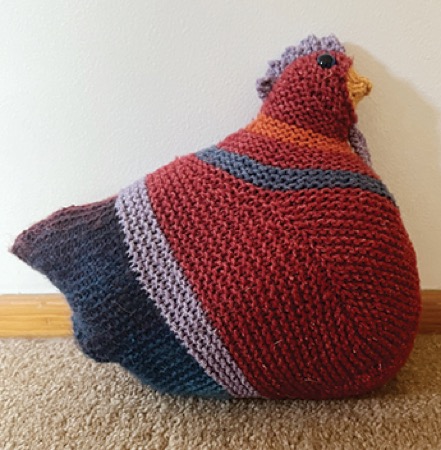
People all over the country are buying patterns and yarn to knit chickens for friends, families and patients in hospitals. However, the AI summary at the top of the Google search returns seemed to confuse these knitted pillows with real chickens.
I hope the use of AI in medicine continues to help researchers and clinicians improve the health and lives of everyone, but does not become the sole arbitrator of our healthcare.
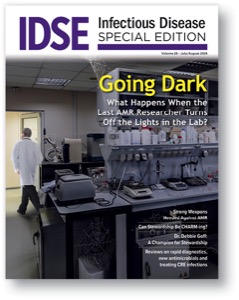
We have bragging rights! Infectious Disease Special Edition won two awards this year for the same story, “Going Dark: What Happens When the Last AMR Researcher Turns Off the Lights in the Lab?” In May, we won a Folio Award for Business News Coverage, and in August, we received a TABPI honorable mention in Feature Writing. It was written by a person, not AI, and I think our wins are due to our talented art director, Matthew White. He’s the best.
The views expressed here belong to the editor and do not necessarily reflect those of the publisher.
This article is from the August 2025 print issue.