





Among hospitalized adults with COVID-19 and preexisting hepatic or renal disease, early treatment with remdesivir (Veklury, Gilead Sciences) was associated with significantly lower rates of in-hospital mortality compared with no antiviral therapy, according to findings presented at IDWeek 2025, in Atlanta.
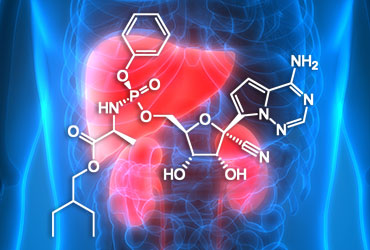
The analysis, led by Patrick Godwin, MD, a clinical professor of medicine at the University of Illinois College of Medicine, in Chicago, evaluated outcomes among patients at particularly high risk for a poor prognosis from SARS-CoV-2 infection. “Individuals infected with SARS-CoV-2 with underlying hepatic or renal comorbidities are at higher mortality risk than the overall population,” Dr. Godwin and colleagues wrote (abstract P1632). “Data on the effect of early remdesivir treatment in these high-risk subpopulations are needed to inform clinical decision-making.”
Related Content



A Significantly Lower Risk
The researchers conducted a retrospective study of U.S. medical claims and hospital chargemaster data, assessing the effectiveness of initiating remdesivir on hospital admission or within the first two days of hospitalization. Eligible adults had confirmed SARS-CoV-2 infection and preexisting hepatic or renal comorbidities. Patients were followed for up to 30 days, until discharge, or until death.
The analysis used coarsened exact matching and 1:1 propensity score matching to balance demographic, clinical, and hospital characteristics between treatment groups. The matched renal cohort included 13,798 patients, with an overall mortality rate of 6.05%. The matched hepatic cohort included 4,968 patients, with a mortality rate of 4.59%. In both groups, remdesivir use was linked to a significantly lower risk for in-hospital death.
Among patients with renal disease, remdesivir was associated with a 15% lower mortality risk (hazard ratio [HR], 0.85; 95% CI, 0.75-0.96), while those with hepatic disease had a 33% lower risk (HR, 0.67; 95% CI, 0.53-0.85). The survival benefit persisted among patients requiring supplemental oxygen at admission. In hepatic patients not requiring oxygen, early remdesivir use also significantly lowered mortality rates (HR, 0.55; 95% CI, 0.34-0.89).
“Individuals hospitalized with SARS-CoV-2 infection with underlying hepatic or renal comorbidity treated with [remdesivir] realized in-hospital survival benefit over those not similarly treated,” the authors concluded. “This benefit was observed both overall and among more severely ill patients receiving supplemental oxygen.”
Data Support Remdesivir Safety
The results align with other emerging safety data showing that remdesivir can be used safely, and in fact with additional safety benefits, in patients with organ dysfunction. A 2025 meta-analysis published in BMC Infectious Diseases found that among patients with severe renal impairment, remdesivir use was associated with a lower incidence of kidney injury (risk ratio, 0.51; 95% CI, 0.27-0.97) and no significant increase in hepatic disorder or mortality, supporting its safety in patient groups that were previously excluded from clinical trials due to concerns about renal or hepatic toxicity (2025;25[1]:782).
Until mid-2023, the FDA labeling for remdesivir stated that “remdesivir is not recommended in patients with [estimated glomerular filtration rate lower than] 30 mL/min,” unless the potential benefits outweighed risks. But following accumulating safety data, including results from the REDPINE trial (Clin Infect Dis 2024;79[5]:1172-1181), the FDA updated the label in July 2023, removing that restriction and stating that no dose adjustment is required for patients with any degree of renal impairment, including dialysis. In August 2023, the label was also updated to note that no dose adjustments to remdesivir were required to treat COVID-19 in people with mild, moderate, and severe hepatic impairment.
Dr. Godwin reported financial relationships with Gilead Sciences, the maker of remdesivir, and his co-authors are employees or stockholders of Gilead.