By IDSE News Staff
Evidence has emerged over time that cannabis use is linked to an increased risk for serious illness in those infected with SARS-CoV-2, according to researchers at Washington University School of Medicine in St. Louis (JAMA Netw Open 2024 Jun 21. doi:10.1001/jamanetworkopen.2024.17977).
The study analyzed the health records of 72,501 people seen for COVID-19 at health centers in a major Midwestern healthcare system during the first two years of the pandemic. The researchers found that people who reported using any form of cannabis at least once in the year before developing COVID-19 were significantly more likely to require hospitalization and intensive care than those with no such history. This elevated risk for severe illness was on par with that from smoking tobacco.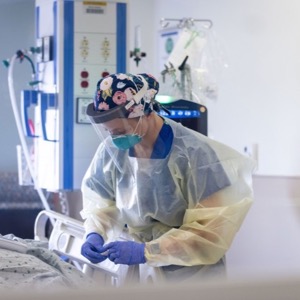
“There’s this sense among the public that cannabis is safe to use, that it’s not as bad for your health as smoking or drinking, that it may even be good for you,” said senior author Li-Shiun Chen, MD, DSc, a professor of psychiatry at Washington University. “I think that’s because there hasn’t been as much research on the health effects of cannabis as compared with tobacco or alcohol. What we found is that cannabis use is not harmless in the context of COVID-19. People who reported yes to current cannabis use, at any frequency, were more likely to require hospitalization and intensive care than those who did not use cannabis.”
Cannabis use was different than tobacco smoking in one key outcome measure: survival. While smokers were significantly more likely to die of COVID-19 than nonsmokers—a finding that fits with numerous other studies—the same was not true of cannabis users, the study showed.
“The independent effect of cannabis is similar to the independent effect of tobacco regarding the risk of hospitalization and intensive care,” Dr. Chen said. “For the risk for death, tobacco risk is clear, but more evidence is needed for cannabis.”
The study analyzed the de-identified electronic health records of people who were seen for COVID-19 at BJC HealthCare hospitals and clinics in Missouri and Illinois between Feb. 1, 2020, and Jan. 31, 2022. The records contained data about demographic characteristics such as sex, age and race; other medical conditions such as diabetes and heart disease; use of substances including tobacco, alcohol, cannabis and vaping; and outcomes of the illness—specifically hospitalization, ICU admittance and survival.
COVID-19 patients who reported they had used cannabis in the previous year were 80% more likely to be hospitalized and 27% more likely to be admitted to the ICU than those who had not used cannabis, after considering tobacco smoking, vaccination, other health conditions, date of diagnosis and demographic factors. For comparison, tobacco smokers with COVID-19 were 72% more likely to be hospitalized and 22% more likely to require intensive care than nonsmokers, after adjusting for other factors.
These results contradict some other research suggesting that cannabis may help the body fight off viral diseases such as COVID-19.
“Most of the evidence suggesting that cannabis is good for you comes from studies in cells or animals,” Dr. Chen said. “The advantage of our study is that it is in people and uses real-world healthcare data collected across multiple sites over an extended period. All the outcomes were verified: hospitalization, ICU stay, death. Using this data set, we were able to confirm the well-established effects of smoking, which suggests that the data are reliable.”
The study was not designed to answer the question of why cannabis use might worsen COVID-19 symptoms. One possibility is that inhaling marijuana smoke injures delicate lung tissue and makes it more vulnerable to infection, in much the same way that tobacco smoke causes lung damage that puts people at risk for pneumonia, the researchers said. That isn’t to say that taking edibles would be safer than smoking joints. It is also possible that cannabis, which is known to suppress the immune system, undermines the body’s ability to fight off viral infections no matter how it is consumed, the researchers noted.
“We just don’t know whether edibles are safer,” said first author Nicholas Griffith, MD, a medical resident at Washington University. Dr. Griffith was a medical student at Washington University when he led the study. “People were asked a yes-or-no question: ‘Have you used cannabis in the past year?’ That gave us enough information to establish that if you use cannabis, your healthcare journey will be different, but we can’t know how much cannabis you have to use, or whether it makes a difference whether you smoke it or eat edibles.”