

Originally published by our sister publication, Pharmacy Practice News
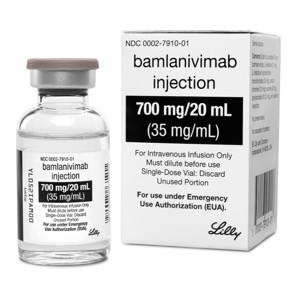
The FDA has revised its emergency use authorization (EUA) for the monoclonal antibodies bamlanivimab and etesevimab (Eli Lilly) to ensure the combination is only used in states and territories where “the combined frequency of variants resistant” to the therapy is 5% or lower.
The revision, detailed in an Aug. 27, 2021 letter to Lilly, follows an initial pause placed in late June on use of the regimen due to data indicating it yielded suboptimal results when used against SARS-CoV-2 variants. However, subsequent in vitro tests have determined that the combination “is expected to retain activity” against several variants, including the delta variant, according to a statement by the U.S. Department of Health and Human Services (HHS).
The CDC has determined that the frequency of the SARS-CoV-2 delta variant is increasing throughout the United States and has become the dominant strain.
The FDA posted a list of 22 states, territories and U.S. jurisdictions in which bamlanivimab and etesevimab administered together are currently authorized, as well as states where the combination is not approved for use. The agency said it will “periodically update both lists as new data and information becomes available.”
The HHS stated: “Effective today, ASPR [Assistant Secretary for Preparedness and Response] will resume distribution of bamlanivimab and etesevimab together and etesevimab alone (to pair with existing supply of bamlanivimab at a facility for use under EUA 094)” to the 22 states.
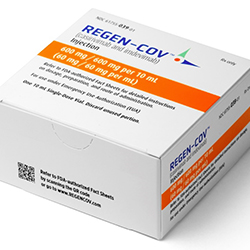
HHS stressed that the revised EUA does not affect the two other currently authorized monoclonal antibody therapies for COVID-19: Casirivimab and imdevimab (REGEN-COV, Regeneron) and sotrovimab (GSK). “Based on similar in vitro assay data currently available, REGEN-COV and sotrovimab are likely to retain activity against the P.1, B.1.351, AY.1 and AY.2, B.1.621 and B.1.617.2/Delta variants. As such, the use and distribution of REGEN-COV and sotrovimab are not impacted by the circulating variants based on information available at this time.”
Who Gets the Treatment
The FDA first issued its EUA for bamlanivimab and etesevimab in February 2021, noting that the regimen was indicated for the treatment of mild to moderate COVID-19 in adults and pediatric patients (≥12 years of age and weighing ≥40 kg) with positive results on direct SARS-CoV-2 viral testing, and who are at high risk for progressing to severe COVID-19 and/or hospitalization.
The revised EUA underscored the appropriateness of that indication, citing data from the phase 2/3 BLAZE-1 (ClinicalTrials.gov Identifier: NCT04427501) and phase 2 BLAZE-4 (NCT04634409) trials. Based on data from those trials, “it is reasonable to believe that bamlanivimab and etesevimab administered together may be effective” when given for its authorized indication, the FDA noted.
The revision also stated that “when used under the conditions described in this authorization, the known and potential benefits of bamlanivimab and etesevimab administered together outweigh the known and potential risks of such products.”
Health Care Facilities’ Role
Given the potential risks, the FDA stressed that health care facilities need to report any adverse events in patients treated with bamlanivimab and etesevimab. Such reports should be submitted via a MedWatch form (www.fda.gov/medwatch/report.htm), according to the agency. Alternatively, health care facilities can complete and submit FDA Form 3500 (health professional), available on the MedWatch site, by fax (1-800-FDA-0178).
Submitted reports should state “bamlanivimab and etesevimab use for COVID-19 under Emergency Use Authorization (EUA)” at the beginning of the question “Describe Event” for further analysis. For questions regarding reporting, call 1-800-FDA-1088.
To further mitigate any risks posed by bamlanivimab and etesevimab, the FDA urged health care facilities and providers to take the following actions:
• Ensure they are aware of the FDA’s letter of authorization and its key findings, and make authorized Fact Sheets available to health care providers and to patients and caregivers, respectively, through appropriate means, prior to administration of bamlanivimab and etesevimab.
• Ensure appropriate storage and cold chain is maintained until the monoclonal antibody products are administered consistent with the terms of the letter of authorization.
• Through a process of inventory control, health care facilities will maintain records regarding the dispensed authorized bamlanivimab and etesevimab (i.e., lot numbers, quantity, receiving site, receipt date), and product storage, and maintain patient information (e.g., patient name, age, disease manifestation, number of doses administered per patient, other drugs administered).
• Ensure any records associated with this revised EUA are maintained until notified by Lilly and/or FDA. Such records will be made available to Lilly, HHS and FDA for inspection upon request.
• Report therapeutics information and utilization data as directed by HHS.
The letter also stressed that bamlanivimab and etesevimab, which are neutralizing immunoglobulin IgG1 monoclonal antibodies that bind to distinct but overlapping epitopes within the receptor binding domain of the spike protein of SARS-CoV-2, “are both investigational drugs and are not currently approved for any indication, but have been authorized for emergency use” by the FDA under its EUA.
Previous Actions
The FDA has been active in its monitoring of monoclonal antibody therapy for COVID-19. In April 2021, the agency revoked its EUA for bamlanivimab, which was used as monotherapy for mild to moderate COVID-19 in adults and certain pediatric patients, as previously reported.
Eli Lilly said it asked for the revocation because SARS-CoV-2 viral variants were proving resistant to bamlanivimab monotherapy, resulting in an increased risk for treatment failure. In March 21, approximately 20% of viruses sequenced in the United States were reported as variants that were resistant to bamlanivimab alone, increasing from approximately 5% in mid-January this year, the FDA said.
The agency agreed, saying the benefits of bamlanivimab monotherapy no longer outweighed the risks for its authorized use.