





By the narrowest of margins, the CDC’s Advisory Committee on Immunization Practices (ACIP) voted down a controversial proposal that would have required patients to obtain a prescription before receiving a COVID-19 vaccine. The vote ended in a tie of 6–6, which meant that the “no” vote from Chair Martin Kulldorff, PhD, carried the day under the committee’s rules.
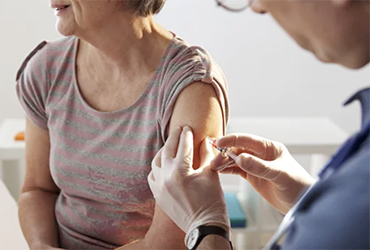
The outcome capped a tense day of presentations and debate in which panelists argued over post-marketing safety signals, public trust and equitable vaccine access. Three other COVID-19–related resolutions passed, but the prescription proposal stood out for its potential to severely restrict vaccine uptake.
Access at the Center of the Debate
Several committee members and outside experts argued forcefully that requiring a prescription would place unnecessary barriers between patients and vaccines, particularly in rural and underserved communities.
Hillary Blackburn, PharmD, MBA, who was appointed recently to the panel and is its first pharmacist voting member, underscored that pharmacists already administer the vast majority of COVID-19 shots. “Pharmacists are licensed healthcare professionals, … one of the only clinician types to complete a standalone national immunization delivery certificate,” Dr. Blackburn, the director of Medication Access and Affordability at AscensionRx, in Nashville, Tenn., said. “According to claims data for the 2024–2025 season, 90% of COVID-19 vaccines were given at pharmacies. Requiring a prescription would create barriers for patients and risk deterring people who seek vaccination.”
Cody Meissner, MD, a professor of pediatrics at the Geisel School of Medicine at Dartmouth, in Hanover, N.H., and a veteran ACIP member, agreed. “I’m strongly opposed to a requirement for the prescription,” he said, because such a mandate “is going to become a big barrier to administration of this vaccine. If a person wants it for himself, herself or her children, they should be able to get it without a prescription.”
Approximately 30% of Americans don’t have ready access to a primary healthcare provider, noted ACIP member Joseph Hibbeln, MD, ABNP, a psychiatrist and nutritional scientist, in South Lake Tahoe, Calif., and a retired captain of the U.S. Public Health Service, who was the former acting chief of the Section of Nutritional Neurosciences at the National Institute on Alcohol Abuse and Alcoholism. “In Texas and more rural states, it can be an even higher barrier … [and] impairs the ability to have a risk–benefit discussion with a provider. This would present a significant barrier to implementing all of the good things we’ve discussed.”
Amy Middleman, MD, MPH, a professor of pediatrics and the chief of adolescent medicine at the University of Oklahoma College of Medicine, in Oklahoma City, speaking to the committee as a representative of the Society for Adolescent Health and Medicine, pointed out the fundamental difference between preventive immunization and therapeutic prescribing. “It has always been clear that vaccines are a primary prevention public health strategy that is remarkably different from treatment with antibiotics or treatment for patients who are seeing providers on an individual basis,” she said. “If we start asking for prescriptions for vaccines, which are again a primary prevention public health strategy, we are going to overwhelm physicians’ offices. It's alarming to me that for a primary preventive strategy, we are actually adding access concerns and barriers rather than diminishing them.”
3 Other Votes
Although the prescription proposal was defeated, three other measures passed either unanimously or with broad support.
First, the committee voted to recommend that the CDC expand its COVID-19 Vaccine Information Statement (VIS) “to describe at least the six risks and uncertainties” included in the presentation from COVID-19 Working Group Chair Retsef Levi, PhD, an operations management professor at MIT Sloan School of Management, in Boston.
Second, the committee voted on an update of the pediatric and adult immunization schedule for COVID-19 vaccines, with new focus on “individual-based decision-making” for all people. It stated that vaccination should be based on individual decision-making for adults 65 years of age and older, and that vaccination for those aged 6 months to 64 years should also be based on individual decision-making, “with an emphasis that the risk–benefit [ratio] of vaccination is most favorable for individuals who are at an increased risk for severe COVID-19 disease and lowest for individuals who are not at an increased risk.”
That decision conflicts with the the FDA approval: that the vaccine be reserved for people older than 65 or in those with underlying medical conditions.
The third was a resolution that “authorized healthcare providers” should “discuss the risks and benefits of the vaccine for the individual patient,” including comorbidities, known risk factors for severe outcomes from COVID-19 infection, as well as “related uncertainties, especially those outlined in the Vaccine Information Statement.”
Each of these votes passed with broad margins, although the VIS expansion received strong pushback from outside experts. Supporters argued that patients deserve more detail on risks and uncertainties. But infectious disease experts warned that including studies with weak or inconsistent methodologies could confuse rather than inform. Henry Bernstein, DO, a pediatric infectious disease specialist at Cohen Children’s Medical Center of Northwell Health, in New Hyde Park, N.Y., said the proposals “place far too much emphasis on studies that have serious limitations. They don’t reflect the weight of the scientific evidence. If we highlight outlier findings or poor-quality studies in the VIS, we risk undermining confidence rather than reinforcing it.”
Jason Goldman, MD, a practicing internist representing the American College of Physicians, was even more blunt. “We cannot equate poor-quality studies with the enormous body of evidence that demonstrates safety and effectiveness,” he said. “If we do that, we risk misleading the public rather than educating them.”
Robert Hopkins Jr., MD, the medical director of the National Foundation for Infectious Diseases and professor at the University of Arkansas for Medical Sciences, in Little Rock, echoed that sentiment. “VIS are meant to provide clear, evidence-based guidance. Adding data points that are speculative or methodologically unsound undermines that clarity.”
Related Content



Evidence From CDC Scientists
Earlier in the day, ACIP heard detailed updates from CDC scientists.
Arjun Srinivasan, MD, MS, MBA, the acting chief medical officer of the CDC’s National Center for Immunization and Respiratory Diseases, and John Su, MD, MPH, the acting director of the CDC’s Immunization Safety Office, presented cumulative evidence from both U.S. and international surveillance.
Dr. Srinivasan summarized hospitalization and mortality data: “In adults over 65, updated mRNA vaccines reduced the risk of hospitalization by more than 50% and the risk of death by approximately two-thirds.”
Dr. Su reviewed vaccine safety monitoring, including myocarditis. “Myocarditis remains rare,” he said. “We see approximately 40 cases per million second doses in adolescent and young adult males. Importantly, most patients recover fully, and the risk of myocarditis after infection is substantially higher.”
He added that with more than 13 billion doses administered worldwide, COVID-19 vaccines “are among the most intensively monitored medical products in history.”
This evidence was bolstered by a new study published the same morning in JAMA Network Open (2025;8[9]: e2532469). Analyzing real-world data to make scenario projections, the researchers found that vaccinating both high-risk individuals and the general public with updated mRNA COVID-19 vaccines reduced disease burden, compared with no vaccination recommendations. Although vaccinating high-risk individuals was projected to reduce hospitalizations by 76,000 (95% CI, 34,000-118,000) and deaths by 7,000 (95% CI, 3,000-11,000), a universal vaccination recommendation was projected to add to the reductions, preventing 11,000 more hospitalizations and 1,000 more deaths in those 65 years of age and older.
Presentations Raising Safety Concerns
Following the CDC update, Dr. Levi introduced a panel of outside speakers he said would highlight unresolved questions about mRNA vaccines.
Wafik El-Deiry, MD, PhD, an associate dean of Oncologic Sciences at the Warren Alpert Medical School of Brown University, in Providence, R.I., raised the issue of residual DNA fragments detected in vaccine vials: “Both the Pfizer and Moderna vaccines have been found to contain DNA that exceeds the FDA limits.” He stressed that the implications remain uncertain but argued that the finding pointed to “gaps in our knowledge of the relationship between multiple vaccinations and spike persistence.”
Charlotte Kuperwasser, PhD, a distinguished professor in the Department of Developmental, Molecular, and Chemical Biology at Tufts University School of Medicine, in Boston, cited evidence of immunoglobulin G4 class switching after repeated vaccination, which she linked to possible immune tolerance, as well as case reports of spike protein or mRNA persistence in tissue. “These are signals that merit closer examination,” she said, while acknowledging that causality could not be inferred.
Bruce Carleton, PharmD, a professor and the chair of the Division of Translational Therapeutics at the University of British Columbia, in Vancouver, presented exome sequencing data from 50 individuals who developed myocarditis after vaccination. “Most of the cases occurred after the second dose,” he said, reporting recurrent variants in genes such as TTN and LRP8. He described the findings as exploratory and emphasized the limitations of the small sample but suggested that genetics could eventually help identify who may be more vulnerable.
Dr. Levi framed the session as underscoring the need for caution. While acknowledging the evidence was incomplete, he argued that the presentations “illustrate plausible biological mechanisms” and should be incorporated into the CDC’s VISs and deliberations.
Industry scientists countered that the vast body of evidence supporting the safety and effectiveness of the COVID-19 mRNA vaccines. “With over 13 billion doses administered worldwide, COVID vaccines have been the most closely monitored of any previous vaccines and have demonstrated safety and effectiveness across the lifespan based on current evidence,” said Phyllis Arthur, MBA, the executive vice president and head of Healthcare Policy and Programs at the Biotechnology Innovation Organization.
Bishoy Rizkalla, PhD, the vice president for medical affairs in infectious diseases at Moderna, emphasized that “assertions not aligned with the broader scientific evidence” often relied on isolated case reports without context, adding: “Claims of long-term persistence of vaccine-derived spike or mRNA are refuted by well-controlled biodistribution studies conducted to regulatory standards globally, … showing no evidence of long-term persistence.”
During the public comment section, C. Buddy Creech, MD, MPH, a professor of pediatrics and the director of the Vanderbilt Vaccine Research Program, in Nashville, Tenn., placed the issue in a broader public health context. “Vaccines are a public health prevention strategy, not an individualized therapy that should require a prescription,” he said. “Adding barriers only increases the likelihood that people who would benefit most from protection will miss it.”
Dr. Bernstein urged the committee to remember its mission. “This body has always been about weighing the totality of high-quality evidence,” he said, noting that the data show that as vaccine coverage increases, incidence decreases over time. “Operation Warp Speed was a huge success as COVID-19 vaccine continues to work incredibly well. Most importantly, safety is carefully evaluated at every step of vaccine development—even after the vaccines have been licensed and implemented. The balance between perceived benefits and risks of vaccination is linked closely to vaccine acceptance. When vaccine coverage decreases because of loss of confidence, outbreaks happen.”