





By IDSE News Staff
COVID-19 vaccinations are now removed from CDC recommended immunization schedules for healthy children and pregnant people, according to a new announcement from Health and Human Services Secretary Robert F. Kennedy Jr. on X.
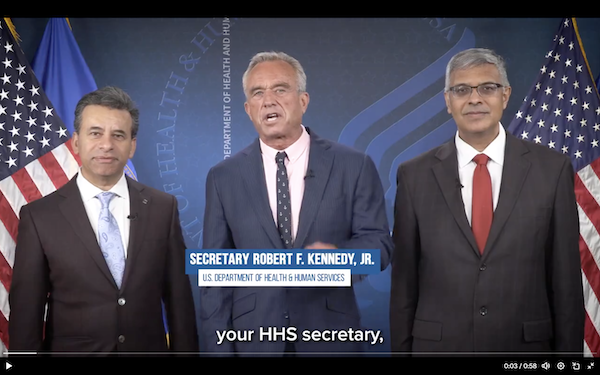
In a video message standing alongside National Institutes of Health Director Jay Bhattacharya, MD, PhD, and FDA Commissioner Marty Makary, MD, MPH, Mr. Kennedy said he “couldn’t be more pleased” to make the announcement. The previous booster strategy lacked any clinical data, Mr. Kennedy said. “It’s common sense, and it’s good science,” Dr. Bhattacharya said. “There’s no evidence healthy kids need it today, and most countries have stopped recommending it for children,” Dr. Makary followed.
The response from top medical experts could not be more contradictory. Tina Tan, MD, the president of the Infectious Diseases Society of America, released a statement calling this announcement “the opposite of what Americans have been asking for when it comes to their health—it takes away choices and will negatively impact them.” Dr. Tan said this is “particularly troubling” for pregnant people, as “pregnancy is a well-established risk factor for severe COVID-19 complications, including preterm labor and birth, preeclampsia, heart injury, blood clots, hypertension, and kidney damage.” She also noted that infants and children can experience severe disease and long COVID, which can affect their development.
Steven J. Fleischman, MD, the president of the American College of Obstetricians and Gynecologists, echoed these sentiments in his own statement. “ACOG is concerned about and extremely disappointed by the announcement that HHS will no longer recommend COVID-19 vaccination during pregnancy. As OB-GYNs who treat patients every day, we have seen firsthand how dangerous COVID-19 infection can be during pregnancy and for newborns who depend on maternal antibodies from the vaccine for protection,” he said.
He continued by saying the vaccine is safe in pregnancy, protects mothers from severe disability, as well as infants after birth, and is based on science that “has not changed.”
“In fact, growing evidence shows just how much vaccination during pregnancy protects the infant after birth, with the vast majority of hospitalized infants less than six months of age—those who are not yet eligible for vaccination—born to unvaccinated mothers,” he said in the statement.
Dr. Fleischman concluded that ACOG is worried this will “deteriorate” the pregnant public’s confidence in vaccines and affect patients’ access to vaccines. Sean O'Leary, MD, MPH, who chairs the American Academy of Pediatrics' Committee on Infectious Diseases, told NPR that this will confuse parents and patients. Dr. Tan agreed, noting that this decision will affect health insurance coverage of vaccines, making it harder for people to afford and access vaccines.
“IDSA strongly urges insurers to maintain coverage for COVID-19 vaccines so that all Americans can make the best decisions to protect themselves and their families against severe illness, hospitalization and death,” Dr. Tan said in the statement. “IDSA also urges Congress to conduct meaningful and necessary oversight to ensure appropriate decision-making processes at the Department of Health and Human Services, which will impact people of all ages.”
Based on ACOG, HHS and IDSA press statements.