By IDSE News Staff
The FDA accepted a New Drug Application (NDA) from Shionogi Inc. for ensitrelvir, an investigational oral antiviral to prevent COVID-19 following exposure to an infected individual. The FDA has set an action date of June 16, 2026, under the Prescription Drug User Fee Act.
The NDA is supported by results from the global double-blind, randomized, placebo-controlled, phase 3 study, SCORPIO-PEP, which investigated ensitrelvir as post-exposure prophylaxis (PEP). If approved, ensitrelvir would be the first and only oral therapy for the prevention of COVID-19 after exposure to an infected individual.
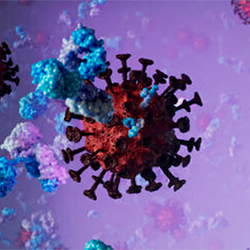
Ensitrelvir is a SARS-CoV-2 main protease inhibitor created through joint research between Hokkaido University and Shionogi. SARS-CoV-2 has an enzyme called the main protease (3-CL), which is essential for the replication of the virus. Ensitrelvir suppresses the replication of SARS-CoV-2 by selectively inhibiting the main protease.
In SCORPIO-SR, ensitrelvir demonstrated both clinical symptomatic efficacy (symptom resolution sustained for at least 24 hours) for five typical omicron-related symptoms (primary end point) and antiviral efficacy (key secondary end point) in a predominantly vaccinated population of patients with mild to moderate SARS-CoV-2 infection, regardless of risk factors. Most adverse events were mild in severity and no deaths were seen in the study. Among the most common treatment-related adverse events were temporary decreases in high-density lipoprotein and increased blood triglycerides, as observed in previous studies (Clin Infect Dis 2025;80[6]:1235-1244).
Ensitrelvir is known as Xocova in countries where it is approved.
SARS-CoV-2 remains highly transmissible, and up to half of people living with an infected individual may develop COVID-19 (JAMA Netw Open 2022;5[4]:e229317). COVID-19 continues to affect daily life and may lead to absence from school and work, may cause long COVID, and, in some cases, may progress to severe disease. Even patients with mild COVID-19 may experience worsening of preexisting chronic conditions.
Following exposure to COVID-19, the best way to avoid its potentially serious and long-term complications is to stop viral replication, which prevents the development of the disease. There are no approved antiviral therapies proven to prevent COVID-19 after exposure. COVID-19 vaccines are received before exposure, and they do not stop viral replication. Other COVID-19 antivirals are taken following exposure and diagnosis, after viral replication has occurred and disease is already established.