By Gina Shaw
A rapid multiplexed molecular panel facilitated safe discontinuation of antibiotic therapy in patients with suspected pneumonia whose sputum or bronchoalveolar lavage (BAL) samples tested negative on it, according to study results (P-1761) presented at IDWeek 2024, in Los Angeles.
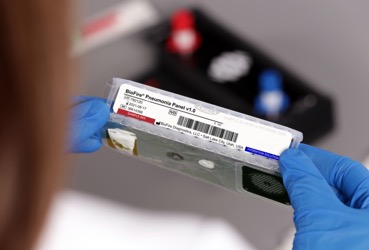
Use of the BioFire FilmArray Pneumonia (BFP) panel led to a significant reduction in the number of total days on antibiotics with no increases in in-hospital mortality, length of stay or readmission, reported lead author Noah Yoo, PharmD, a clinical pharmacist at NYU Langone Health, in New York City.
Patients with suspected hospital-acquired and ventilator-associated pneumonia are often started on broad-spectrum antibiotics while waiting for traditional cultures to confirm diagnosis, which can take up to 72 hours, Dr. Yoo noted. So there is a need for a more rapid method of pneumonia confirmation.
The BFP panel is a multiplexed nucleic acid−based test that screens for 33 of the most common pathogens associated with lower respiratory tract infections. “It can be a useful stewardship tool in pneumonia, with high specificity and a turnaround time of about one hour,” Dr. Yoo said.
The study, a multicenter retrospective review of adult patients with suspected pneumonia on imaging who had negative results on the BFP panel, compared outcomes between those who were discontinued on antibiotics within 48 hours of receiving negative results and those whose antibiotics were continued. The investigators reviewed 500 patient charts, but excluded 315 mainly because they lacked respiratory samples for correlation with the BFP panel.
Of the 185 patients included in the analysis, 59 had antibiotics discontinued and 126 had them continued. “The two groups’ characteristics were largely well matched, including past medical history, although there were some notable differences in admission characteristics,” Dr. Yoo said.
The group that continued on antibiotics had more community-acquired pneumonia (59% vs. 79%; P=0.006), higher initial white blood cell count (10 vs. 13; P=0.038), and higher quick Pitt Bacteremia Score (1 [IQR, 0-1] vs. 1 [IQR, 0-3]; P=0.020). “However, their pre-BFP length of stay, ICU admission rates and intubation rates were similar,” he noted.
As expected, the duration of antibiotic therapy was significantly shorter in the discontinuation group, by about 9.5 days overall. “Differences were seen across most antibiotic classes, and were particularly notable in anti-pseudomonal agents as well as with ceftriaxone,” Dr. Yoo said. (Ceftriaxone was considered separately “because we generally do not consider ceftriaxone to have Pseudomonas activity," he explained. This is consistent, he noted, with the position taken by the Clinical and Laboratory Standards Institute, which removed ceftriaxone minimum inhibitory concentration breakpoints for P. aeruginosa in 2010.)
There were no significant differences between the two groups in 30-day readmission or recurrence of pneumonia. Patients whose antibiotics were discontinued had a significantly reduced rate of acute kidney injury (8.5% vs. 37%; P=0.004), and significantly fewer of these patients were discharged on antibiotics (8.5% vs. 37.3%; P<0.001). The discontinuation group also had a significantly lower incidence of in-hospital mortality (8.5% vs. 20.6%; P=0.039), which Dr. Yoo noted may be attributable to some of the observed baseline differences between the groups.
“These findings suggest that the BioFire BFP panel can potentially be utilized as a stewardship tool to optimize antimicrobial therapy and reduce exposure to unnecessary antibiotics,” he concluded.
Dr. Yoo reported no relevant financial disclosures.