






FDA Clears Roche’s First Respiratory Test Powered by TAGS Technology
The FDA has cleared the cobas Respiratory 4-flex (Roche), which uses the company’s innovative TAGS (Temperature-Activated Generation of Signal) technology, designed to streamline respiratory testing and ensure timely and accurate diagnoses.
The new test provides accurate polymerase chain reaction (PCR) results for the four most common respiratory viruses: SARS-CoV-2, influenza A and B, and respiratory syncytial virus (RSV), enabling prompt targeted treatment. The test consolidates these four key targets into a single assay, simplifying laboratory workflows and integrates with Roche’s cobas 5800, 6800 and 8800 molecular lab instruments.
With its customizable testing menu, cobas Respiratory 4-flex enables laboratories to tailor testing to physician orders and patient needs, reducing the need for repeat healthcare visits and tests. The test includes a “digital reflex” option, which allows for additional testing from the same sample. For example, if the physician requests influenza A and B and the results are negative, a digital reflex can request results for SARS-CoV-2 or RSV, focusing on relevant tests for the patient. Although raw data for all targets are generated and available, only requested results are analyzed and reported, ensuring targeted and efficient testing.
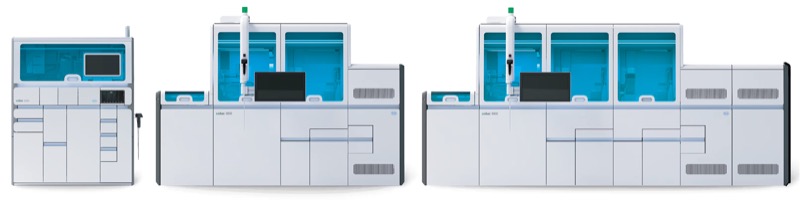
“The expanded testing capabilities, enabled by TAGS technology, will allow labs to deliver reliable and relevant patient testing, while also optimizing healthcare resources,” said Brad Moore, the president and CEO of Roche Diagnostics North America.
FDA Clears Hardy Rapid Test to Detect CTX-M Enzymes
Related Content


The FDA has cleared the Hardy Diagnostics NG-Test CTX-M Multi, an in vitro, rapid and visual immunoassay for the qualitative detection of most prevalent CTX-M enzymes (groups 1, 2, 8, 9 and 25) from pure colonies of Enterobacterales suspected of extended-spectrum beta-lactamase (ESBL) production.
The NG-Test CTX-M Multi offers a cost-effective and rapid solution, delivering results in just 15 minutes.
Detection has relied primarily on minimum inhibitory concentration (MIC) and disk diffusion susceptibility testing, molecular techniques like PCR or screening culture media. These methods can be time-consuming or expensive.
The rapid and widespread emergence of ESBLs is a growing global health concern because they confer resistance to many beta-lactam antibiotics. As prevalence continues to rise, so does the need for increased CTX-M ESBL testing.
First reported in 1989 in Germany, CTX-M beta-lactamases were considered rare in North America until 2003, when the CDC identified them in nine Escherichia coli isolates from five states. Since then, CTX-M ESBLs have become the most prevalent type in the United States and globally.
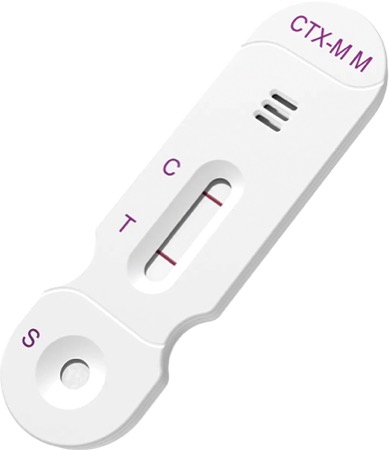
More than 100 variants within the five major CTX-M groups are known, with CTX-M variants belonging to groups 1 and 9 being the most widespread. CTX-M enzymes are found in various bacterial species, including E. coli, Klebsiella pneumoniae and Proteus mirabilis.
Early detection concurrent with the traditional antimicrobial susceptibility testing in critical cases or in instances of suspicion of resistant Enterobacterales, leading to timely treatment, and appropriate antibiotic selection is the key to improving patient outcomes.
FDA Clears Qiagen QIAstat-Dx Rise Syndromic Testing
Qiagen recently announced the launch of QIAstatDx Rise—a version of the QIAstat-Dx automated syndromic testing system that offers throughput with an easy workflow, according to the company. The new system, which received FDA clearance, is designed to meet the needs of hospitals and reference laboratories seeking highly automated syndromic testing with automated loading and unloading of cartridges, access to priority handling of urgent samples, and only a minimum of hands-on time.
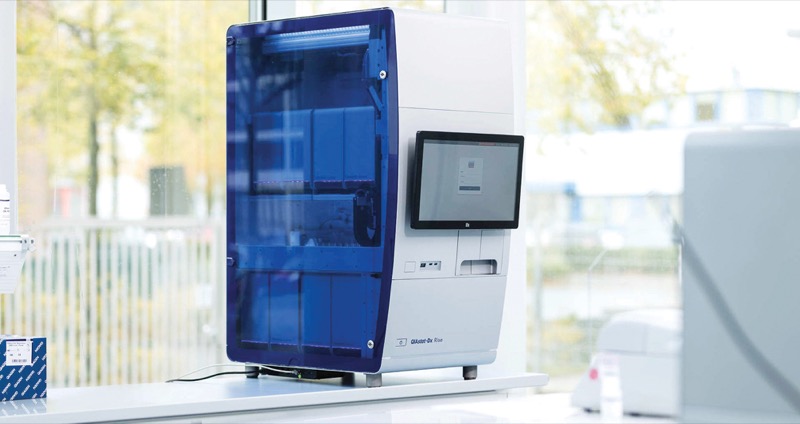
“The launch of QIAstat-Dx Rise marks a significant step forward in our commitment to expand access to infectious disease diagnostics across the U.S. and builds on the expansion efforts for this system in other areas of the world,” said Nadia Aelbrecht, the vice president and head of Infectious Diseases at Qiagen.
This clearance marks Qiagen’s third FDA-cleared test in the QIAstat-Dx family over the last 12 months.
The first two panels for respiratory conditions are already available. QIAstat-Dx Rise delivers automated, real-time PCR-based detection of multiple pathogens from a single sample, significantly increasing testing capacity. With the ability to run up to 160 tests per day across eight analytical modules, including 16 batch samples and two urgent slots per run, the system enables fast and accurate diagnoses in settings where turnaround time is critical.
Cepheid’s Rapid Diagnostic Assay Quickly Detects Carbapenemase-Producing Gram-Negative Bacilli
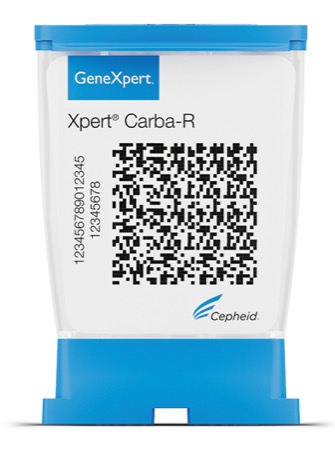
The Xpert Carba-R (Cepheid) test can successfully detect most carbapenemase-producing gram-negative Bacilli (Carba[+]-GNB) carriers in a short period, according to new study (ESCMID Global 2025; abstract P2159).
The Xpert Carba-R and conventional culture methods were tested on 50 patients who were hospitalized between February and June 2024 in Algeria, and who received at least seven days of imipenem. Rectal swabs were tested using both methods.
Xpert Carba-R identified 32% (16/50) as carriers within 50 minutes, primarily detecting NDM and OXA-48 enzymes. Conventional culture, which required two to five days to return results, identified 44% (22/50) as carriers and captured a broader range of organisms, including Acinetobacter baumannii producing OXA-23, OXA-24 and rarer enzymes like NMC-A. Concordance between methods was observed in 76% of cases (38/50), with discrepancies largely due to A. baumannii strains missed by Xpert Carba-R.
“The detection of Carba(+)-GNB requires techniques that are sensitive for their detection, specific for their categorization, and rapid for optimal results,” wrote Professor Bachtarzi Med Azzedine and co-investigators from CHU de Beni Messous and CHU Mustapha Bacha, in Algiers, Algeria. They also noted that the findings showcase that conventional culture still has a place, particularly in locations such as Algeria where colonization by carbapenemase-producing A. baumannii plays a significant role.
FDA Clears bioMérieux Anterior Nasal Swab Specimens Respiratory Panel
The FDA has cleared and provided a Clinical Laboratory Improvement Amendments waiver for Anterior Nasal Swab (ANS) specimens, an additional sample type for use with the BioFire Spotfire Respiratory/Sore Throat (R/ST) Panel Mini (bioMérieux).
By swabbing only the anterior part of the nasal cavity, the ANS provides significantly more comfort for the patient.
Since the COVID-19 pandemic, the need for point-of-care testing has become increasingly important in many countries, including the United States. Bringing diagnostic solutions closer to the patient may accelerate the time to results to rapidly identify the origin of infectious diseases and determine the appropriate treatment. With these advancements, sampling methods have also diversified, especially with the adoption of the ANS, which has gained widespread recognition for the ease of collection, superior patient comfort and comparable reliability to nasopharyngeal swabs.
Launched in the United States in 2024, the mini panel is a single-multiplex PCR test that detects five of the most common viral and bacterial causes of respiratory or sore throat infections in about 15 minutes. Already offering two sampling methods, nasopharyngeal swab and throat swab, the Spotfire R/ST Panel Mini now includes a third sample type with the ANS specifically for use with the respiratory menu. Offering sample type flexibility enables healthcare professionals to adapt their approach to enhance patient well-being.
The additional ANS specimen type for the respiratory panel will be available for use in the United States this fall.
—Ethan Covey contributed to Diagnostic Digest
This article is from the October 2025 print issue.