

By IDSE News Staff
The Centers for Medicare & Medicaid Services (CMS) awarded the new add-on payment (NTAP) to the Q-linea ASTar System, which it said met the necessary cost criterion to be included. The funding will be effective through September 2027.
The NTAP reimbursement of 97.50 per patient will be available to U.S. hospitals for Medicare patients.
Cases involving the use of the ASTar system that are eligible for new technology add-on payments will be identified by ICD-10-PCS procedure code XXE5X2A.
NTAP funding was awarded based on three criteria, including substantial clinical improvement, in addition to newness and cost. Rapid antibiotic susceptibility test results provided by ASTar for patients with bacteremia are expected to reduce time to optimal antibiotic therapy for these seriously ill patients.
“We are grateful to CMS for this funding for US hospitals seeking to improve the quality of care and antimicrobial stewardship efforts for sepsis patients, who are some of the most critically ill patients they treat. We anticipate this designation will reduce time to adoption among innovative hospitals at the forefront of medical advancements,” said Stuart Gander, CEO of Q-linea.
The FDA granted 510(k) clearance for the company’s ASTar System, enabling market launch to hospitals and laboratories in the United States, in April 2024.
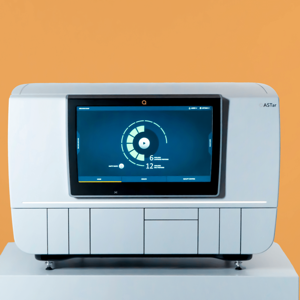
The ASTar System is a fully automated system for rapid AST. The proprietary AST technology is based on broth microdilution, optimized for high sensitivity and short time to results, delivering phenotypic AST with true minimum inhibitory concentration results from positive blood cultures in approximately six hours.
The ASTar System accelerates and simplifies the time-sensitive workflows faced during the treatment of patients with bloodstream infections and sepsis, and can reduce the time to optimal antimicrobial therapies and ensure that patients receive the correct treatments sooner—when time matters most.
According to the CDC, at least 1.7 million adults in the United States develop sepsis each year and nearly 270,000 die as a result. The ASTar System enables rapid therapeutic response to sepsis directly from a positive blood culture in approximately six hours, giving physicians the tool needed to improve patient outcomes and reduce mortality.