By IDSE News Staff
The FDA granted marketing authorization to Cepheid for the Xpert HCV test and GeneXpert Xpress System, the first hepatitis C virus test that can be used at certified point-of-care settings for people at risk for HCV.
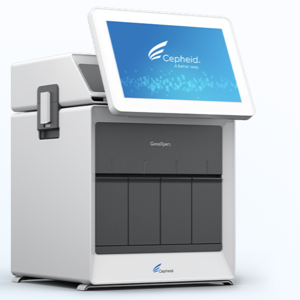
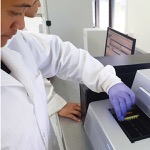
The test may be performed in settings operating under Clinical Laboratory Improvement Amendments Certificate of Waiver, such as certain substance use disorder treatment facilities, correctional facilities, syringe service programs, doctors’ offices, emergency departments and urgent care clinics. Instead of requiring a sample to be sent to a central lab for testing, the test detects HCV ribonucleic acid (RNA) and delivers results in about an hour using a blood sample from the fingertip.
Validation data for the Xpert HCV test and GeneXpert Xpress System were gathered through the Independent Test Assessment Program (ITAP), a National Institutes of Health Rapid Acceleration of Diagnostics (RADx) Tech program, in collaboration with the FDA. ITAP was launched in 2021 to accelerate test evaluation to support the FDA’s regulatory review and the availability of high-quality, accurate and reliable diagnostic tests to the public.
The FDA reviewed the Xpert HCV test and GeneXpert Xpress System under the agency’s De Novo premarket review pathway, a regulatory pathway for low- to moderate-risk devices of a new type.
The authorization of this test enables a test-and-treat approach in which a person can be tested for HCV, and if positive for HCV RNA, will be linked to care and potentially receive treatment during the same healthcare visit. Before the availability of a rapid, point-of-care test, HCV testing had been a multistep process, which often resulted in patients needing follow-up appointments for test results and additional testing, which can lead to patients not receiving a diagnosis and not receiving necessary treatment.
“Despite the existence of a safe and highly effective oral cure for hepatitis C, many people do not know they have the disease due partly to the lack of availability of convenient, widespread testing options,” said Jeff Shuren, MD, JD, the director of the FDA’s Center for Devices and Radiological Health. “Equipping healthcare providers with tools to diagnose and treat patients in the same visit can result in hundreds of thousands more hepatitis C patients being diagnosed and treated, preventing individual disease progression, and additional spread of the virus,” Dr. Shuren said.
For some people, HCV is a short-term illness, but for more than half of people with HCV infection, it becomes a chronic infection. It is estimated that more than 2.4 million people–and as many as 4 million people–in the United States have hepatitis C, which, if left untreated, often leads to serious and sometimes deadly outcomes such liver failure and/or cancer. The infection contributed to more than 12,000 deaths in 2022 alone, according to the CDC.
“A third of people with hepatitis C in the United States don’t even know they have a deadly, yet curable, infection,” said Jonathan Mermin, MD, MPH, the director of CDC’s National Center for HIV, Viral Hepatitis, STD and TB Prevention. “This new test provides hope that more people will be cured, but it will only succeed if it is affordable and available,” he said.
“Today’s announcement by the FDA of marketing authorization for a rapid diagnostic to detect hepatitis C RNA is an example of the power of the RADx Tech model to deliver a much-needed test to millions of people in record time,” said Bruce J. Tromberg, PhD, the director of the National Institute of Biomedical Imaging and Bioengineering. “Although our ITAP partnership with the FDA was originally designed to accelerate regulatory authorization of reliable home and point-of-care tests for COVID-19, we’ve successfully expanded the program across hyperosmolar hyperglycemic syndrome to include tests for hepatitis C and several other innovative diagnostics.”
The test is indicated for adults with signs or symptoms of HCV, or at risk, and is not intended for use in monitoring patients undergoing treatment or for use in screening blood, plasma or tissue donors. The risks associated with the test include the possibility of false-positive and -negative results.
Along with the De Novo authorization, the FDA is establishing special controls that define the requirements related to labeling and performance testing.
When met, the special controls, in combination with general controls, provide a reasonable assurance of safety and effectiveness for tests of this type. This action creates a new regulatory classification, which means that subsequent devices of the same type with the same intended use may go through FDA’s 510(k) premarket process, whereby devices can obtain marketing authorization by demonstrating substantial equivalence to a predicate device, which may save a developer time and expense compared with other review pathways.