

By Ethan Covey
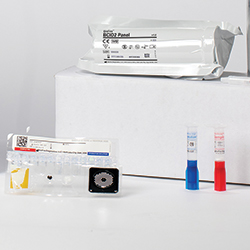
The TriVerity Test—a 29-mRNA host response assay performed on whole blood, manufactured by Inflammatix—demonstrates higher diagnostic accuracy than a protein-based host response test in differentiating bacterial versus viral infections, according to data presented at the ESCMID Global 2025 Conference (abstract O0625).
“Analyzing the immune response to acute infections can be used as a tool for the diagnosis of bacterial and viral tests independent of pathogen identification,” the study authors wrote.
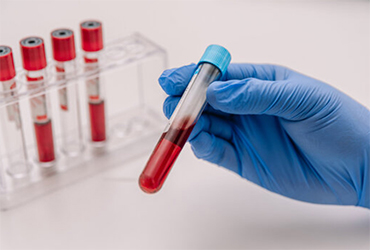
The study focused on whole blood and serum collected from 867 participants in a multicenter trial of emergency department patients who had suspected infections. Among the participants, 520 had a determined true infection status, designated by consensus adjudication: 328 with bacterial infections, 113 with viral, three coinfected and 76 noninfected.
When comparing results from the TriVerity Test against those from the Liaison MeMed BV (Diasorin), the former yielded more accurate results.
For bacterial infection, TriVerity achieved an area under the curve (AUC) of 0.83 (80% CI, 0.80-0.85), significantly outperforming MeMed BV’s AUC of 0.76 (80% CI, 0.72-0.78; P=0.0009). For viral infection, the AUC of TriVerity was 0.93 (80% CI, 0.90-0.94), significantly higher than MeMed BV’s AUC of 0.69 (80% CI, 0.65-0.73; P<0.0001). TriVerity also exhibited superior specificity, with a 96% “very high” bacterial specificity versus 69% for MeMed BV.
“These findings underscore the previously reported robustness of TriVerity in distinguishing between bacterial and viral infections and non-infected status,” the authors wrote.
The study authors are employees of Inflammatix.