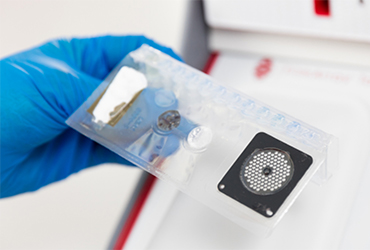
Implementation of the BioFire FilmArray Blood Culture Identification 2 Panel (BCID2; bioMérieux) resulted in clinically significant reduced time to appropriate therapy in patients with extended-spectrum beta-lactamases producing Enterobacterales (ESBL-E) and carbapenem-resistant Enterobacterales (CRE), in a new single-center study.
“Utilizing RDTs [rapid diagnostic tests] on blood cultures has become a standard of care, with literature showing it decreases time to appropriate therapy, hospital length of stay, cost and mortality in gram-positive infections,” said study author Melanie Schrack, PharmD, an infectious diseases and antimicrobial stewardship clinical specialist at Our Lady of the Lake Regional Medical Center, in Baton Rouge, La. “Given the extensive research on BCID’s effects on gram-positive infections with resistance genes, we aimed to evaluate the impact of BCID on resistant gram-negative bloodstream infections [BSIs], specifically ESBL-E or CRE BSI.”
Shorter Waits to Antibiotics
The study (abstract 17 OR), presented at MAD-ID 2025, in Orlando, Fla., included a total of 168 patients with ESBL-E or CRE BSIs: 61 from a six-month period before the hospital adopted BCID2 (January 2021-June 2022) and 107 from a six-month period after BCID2 had been implemented (January 2023-June 2024). The majority of patients (96%) had an ESBL-related gene.
Time to appropriate antibiotic therapy from the first blood culture collected with a resistance gene (the primary end point) was significantly shorter in in the post-BCID group, 25 hours, compared with 46.5 hours in the pre-BCID group (P<0.004). Median total duration of therapy was also shorter in the post-BCID group: 14 days compared with 10 days in the post-BCID group (P<0.001).
There were three gene/antimicrobial susceptibility testing mismatches in the BCID2 group; two occurred in the same patient. There were no significant differences in hospital length of stay, 30-day all-cause mortality or 30-day all-cause readmission.
In Favor of BCID
Because not every patient in the post-BCID group had undergone BCID, the investigators also conducted a subgroup analysis of time to appropriate therapy in patients with and without BCID. Time to appropriate antibiotic therapy in the subgroup analysis resulted as 50.25 hours in patients without BCID compared with 20 hours in those with BCID (P<0.001).
“Implementation of BCID resulted in a clinically significant reduction in time to appropriate therapy and in total duration of therapy in patients with ESBL-E or CRE BSI, primarily driven by patients with ESBL genes, as the CRE population is minimal at our facility,” Dr. Schrack said.
Dr. Schrack reported no relevant financial disclosures.