





Rapid diagnostic tests (RDTs) have changed the field of infectious diseases. More than 15 years of data about the use of RDTs with antimicrobial stewardship clearly document significant benefits, said Ashlan Kunz Coyne, PharmD, MPH, an assistant professor of translational and clinical science in the Department of Pharmacy Practice and Science at the University of Kentucky College of Pharmacy, in Lexington. “They give us the opportunity to decrease time to starting targeted therapy for our patients,” Dr. Kunz Coyne said at MAD-ID 2025, “whether that’s escalation or de-escalation, leading to shorter hospital stays, possible lower hospitalization costs, and some studies are showing mortality benefits, particularly in high-acuity patients [Infect Dis Ther 2023;12(6):1445-1463].”
Many varieties of rapid diagnostic genotypic and phenotypic blood culture tests are available, with new options in development, ranging from novel blood diagnostics to microbial cell-free DNA (mcfDNA), metagenomic next-generation sequencing (NGS) and universal broad-range polymerase chain reaction (PCR).
“The market is absolutely flooded with different options and a lot are in development, which is great,” said Romney Humphries, PharmD, the director of the Division of Laboratory Medicine and medical director of the microbiology laboratory at Vanderbilt University Medical Center, in Nashville, Tenn. “People may say, ‘We don’t need another blood test, we need different tests.’ But blood cultures are the easiest specimen type to manage.” Blood cultures can avoid technological hurdles in the lab, she explained, because growing cultures—or really the lack thereof—is a clear signal moving forward. “For example, at Vanderbilt, we do 6,000 blood cultures a month, and it’s nice that we can begin with just those that will be positive,” she said. “The organisms are also pre-amplified, so you have a really good concentration of organisms.”
Resistance and Susceptibility
Rapid genotypic tests, which identify a causative organism and provide information about antimicrobial resistance genes, are increasingly highly multiplexed, said Dr. Humphries, who is also a professor of pathology, microbiology and immunology at Vanderbilt. “The results are generally rapid, about an hour and a half, although some can get results much quicker. The downside is that they look for a relatively limited number of resistance genes, primarily for beta-lactam antibiotics or vancomycin.”
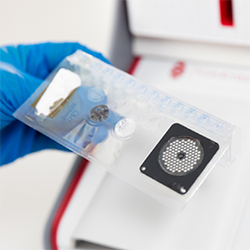
Rapid phenotypic susceptibility tests, by contrast, include several drug classes, but take between four and eight hours for results. “You need to wait and see how that bacterium is going to behave in the presence of the antimicrobial agent, and if anyone says that they can do this quicker than that, it’s hard to believe because the replication cycle of these bacteria is not that quick,” Dr. Humphries said. “Some will provide MICs [minimum inhibitory concentrations], while some just look at the interpretation; some include an organism identification and some don’t. But on the whole, the performance is good.”
Looking to the Future
On the genotypic testing side, new panels coming to market will include information about several extended-spectrum beta-lactamases (ESBLs) and/or “plasmid” AmpC genes, she said. “But the challenge is that many of these genes are inherent in selected gram-negative rods. For example, SHV ESBL is found in nearly all Klebsiella pneumoniae.”
“Unfortunately, it is hard for these companies to stay in the market once they get there. Within the last month, Accelerate Diagnostics filed for bankruptcy, and the Selux system is no longer marketing,” she said in May.
Moving on From Blood Culture
Related Content

Because of the limitations of blood cultures, including a high rate of contamination and negative results—including among patients with sepsis—ID programs are also looking at novel direct-from-blood testing approaches using either targeted nucleic acid detection or a more broad-spectrum test that detects multiple microorganisms.
“One example that is now in development is HelixBind, which looks for 20 pathogens and has a time to results of about four hours,” she said. “The nice thing about this test is that it only looks at intact cells, which means you’re not going to detect remnants from past infections. 3iDx [3i Diagnostics] is similar, but it’s a bit quicker, with results in half an hour. Their primary secret sauce is their cell separation approach.” A third direct-from-blood tool in the pipeline, given FDA Breakthrough designation, is deepull’s UIICORE PCR, a direct-from-blood one-hour multiplex PCR targeting 95% of sepsis-causing pathogens.
mcfDNA
mcfDNA is another novel approach. Karius’ Spectrum test received FDA Breakthrough designation in 2024. A send-out test with next-day results, it detects more than 1,000 fungi, bacteria and DNA viruses associated with deep-seated and difficult-to-diagnose systemic infections. “There are a number of proposals for how we might use this test, potentially including monitoring as well as diagnosis,” Dr. Humphries said.
Metagenomic NGS
Metagenomic NGS also holds potential, she said, although the yield is low and there are few outcome studies. She cited one promising example from the United Kingdom, a routine metagenomics service for ICU patients with respiratory infections. “They use an NGS test they’ve developed on the Oxford Nanopore, which takes about seven hours to run, so they order the test on morning rounds and have the results by evening, when they have a mini-conference among laboratory, physician, pharmacy and ICU attending to discuss the results,” she said. “They’ve been able to show an impact on antimicrobial use in the ICU in about 80% of cases, with 22% a start or escalation, 26% a de-escalation and 32% no change, but reassured the clinician.”
Testing Urine
A number of rapid phenotypic tests for urine have also become available, Dr. Humphries said, including Sysmex Astrego’s AST system, Astek’s JIDDU and Module Innovations’ ASTSense. “With all of these new technologies, we really need more pragmatic clinical studies to determine optimal use cases and interpretation,” she said.
The Impact of New Tests
The effect of RDTs in antimicrobial stewardship depends on the context, Dr. Kunz Coyne said. “The biggest gains are seen in high-acuity ICUs, Candida bloodstream infections and institutions with tailored RDT algorithms. One size does not fit all.”
Educational initiatives, including lab work and clinical simulation as well as guidance documents and algorithms (e.g., standing orders), can help institutions better leverage RDTs, she said.
As an example, she cited a pharmacy-driven rapid bacteremia response program at Norton Healthcare in Louisville, Ky., which empowered pharmacists to provide centralized, comprehensive care such as assessing blood culture results, adjusting antibiotic therapy per protocol, ordering repeat blood cultures, analyzing and interpreting RDT results, and communicating antibiotic recommendations. The program reduced the median time to effective therapy in patients who did not already have active antimicrobial orders from more than 10 hours to less than 1 hour, and reduced 30-day bacteremia mortality by 93% (Am J Health Syst Pharm 2024;81[2]:74-82).
Dr. Humphries reported research grants from bioMérieux, Gradientech, Pattern, Phast and Qiagen; honoraria as a member on the speakers bureau of bioMérieux; and serving as a consultant to bioMérieux, NGD and Qiagen. Dr. Kunz Coyne reported no relevant financial disclosures.
This article is from the August 2025 print issue.