






FDA Awards Fungitell Breakthrough Device Designation
The FDA awarded a Breakthrough Device Designation to ACC (Associates of Cape Cod), for Fungitell testing in the cerebrospinal fluid (CSF) matrix.
The diagnosis of fungal infection of the central nervous system (CNS) represents a challenge since it is not associated with specific clinical signs or symptoms, making missed or delayed diagnoses significant contributing factors to high mortality rates, the company said.
Fungitell is a protease zymogen-based colorimetric assay that measures (1→3)-ß-D-glucan, a major cell-wall component of various medically important fungi. Measurement of CSF (1→3)-ß-D glucan titers may be more predictive of disease than serum titers for the diagnosis and clinical management of CNS fungal infection (Clin Infect Dis 2013;56[10]:1511-1512). CSF (1→3)-ß-D glucan titers may be detected earlier than positive CSF culture and help guide optimal patient care (J Clin Microbiol 2020;58[4]:e02094-19).
Related Content


The Breakthrough Devices Program is reserved for medical devices that provide effective diagnosis of life-threatening or debilitating conditions for which no approved or cleared alternatives exist. The program speeds up the development, assessment and review for premarket approval, 510(k) clearance and De Novo marketing authorization.
“The Breakthrough Device designation for Fungitell testing in the CSF matrix will represent a significant milestone in the diagnosis of CNS fungal infection and will have a tremendous impact on the lives of patients around the world,” said A.J. Meuse, PhD, MBA, the president and CEO of ACC.
bioMérieux’s BioFire RP2.1 Succeeds in Identifying Respiratory Pathogens
The BioFire Respiratory Panel (RP)2.1 (bioMérieux) accurately detects a range of respiratory pathogens and demonstrates qualitative concordance with reference testing methods, according to new data (ESCMID 2025; abstract P2102).
Testing was conducted on 131 specimens: 73 unique specimens and 58 dilutions. The global qualitative performance of the BioFire RP2.1 was strong, with an almost perfect agreement with a Cohen’s kappa of 0.937. Of the 131 samples, 119 showed qualitative concordance between the different methodologies. The number of discrepant results is low and was related to samples with high cycle threshold (Ct) values.
Roche’s Rapid Diagnostic Tool Shows Potential for Identifying Infectious Gastroenteritis
The cobas ePlex GI panel (Roche Diagnostics), which is under development, demonstrates strong analytical feasibility, supporting its potential as a comprehensive, rapid diagnostic tool for infectious gastroenteritis (ESCMID 2025; abstract P2039).
The panel targets a broad range of bacteria, viruses and parasites associated with acute gastroenteritis.
The study assessed limit of detection (LOD), inclusivity and cross-reactivity. Pathogens were spiked into negative stool matrices, with LODs determined as the lowest concentrations yielding at least 95% detection. LODs ranged from 1.00E+00 to 1.60E+04 TCID50/mL for viruses; 4.5E+02 to 3.6E+05 colony-forming unit (CFU)/mL for bacteria; and 7.5E+03 to 1.25E+05 oocyst/mL for parasites. All 242 tested strains were detected, demonstrating 100% inclusivity. Minimal cross-reactivity was observed, with only three of 155 off-panel organisms yielding false-positive results: two for Yersinia enterocolitica and one for the Vibrio group.
Solid Performance, Agreement Shown By Hologic’s Vaginitis Assays
The Aptima Vaginitis Assays (Hologic) show strong concordance with traditional diagnostics, with added advantages in automation, turnaround time and potential for self-sampling (ESCMID 2025; abstract P2028).
The study focused on anonymized samples from 2,236 women undergoing concurrent chlamydia/gonorrhea testing. The assays include multiplex transcription-mediated amplification assays for bacterial vaginosis (BV), Candida and Trichomonas vaginalis (TV). Microscopy using Hay’s criteria and culture were used as comparators for BV and Candida diagnoses, respectively.
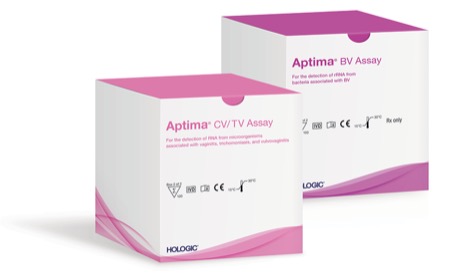
The Aptima BV assay detected BV in 24% of cases compared with 11.6% by microscopy, with a sensitivity of 98.8% and specificity of 77.7%. Candida was cultured in 25.5% of samples and detected by the Aptima CV/TV assays in 31.4%, yielding a sensitivity of 94.9% and specificity of 88.1%. Of note, fluconazole-resistant Candida glabrata was identified in 1.8%. TV was detected in 0.9% of women by Aptima but not assessed routinely by other methods. The panel demonstrated strong concordance with traditional diagnostics, with added advantages in automation, turnaround time and potential for self-sampling.
“The possibility of testing self-collected samples and postal submission of samples could improve access to testing [and] demand management may help to ensure good diagnostic stewardship,” wrote Peter Muir, PhD, FRCPath, and co-investigators from the UK Health Security Agency South West Public Health Microbiology Laboratory, in Bristol, England. “Greater diagnostic standardization may also facilitate clinical trials to identify improved therapies.”
Moderate Agreement Between Diasorin LIAISON and Vircell VirClia Assays for H. pylori Detection
A study comparing the performance of the VirClia Monotest (Vircell) chemiluminescent immunoassay for detecting Helicobacter pylori antigens in stool samples against the LIAISON assay (Diasorin) found moderate agreement between the two assays (ESCMID 2025; abstract P1951).
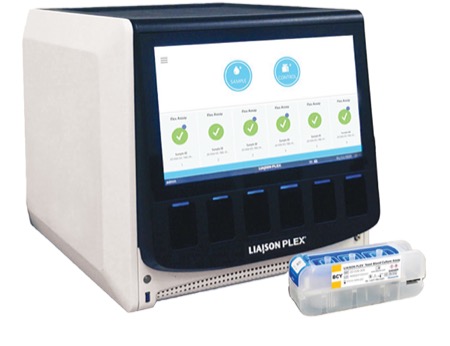
A total of 115 stool samples were analyzed, with four excluded due to indeterminate results. The overall agreement between the VirClia and LIAISON methods was 83.8%, with a Cohen’s kappa index of 0.57, indicating moderate agreement. The percent positive agreement was 52.9%, and the percent negative agreement was 97.4%.
The study authors recommended reviewing assay cutoffs or using standardized reference materials to improve diagnostic accuracy and reduce false positives and negatives in H. pylori antigen detection.
In related news, Diasorin has now commercialized its recently cleared LIAISON PLEX bloodstream infection portfolio (BSI), which features three multiplex molecular assays, offering comprehensive pathogen detection for 48 bacterial and fungal species associated with bloodstream infections and sepsis, and 12 clinically significant antimicrobial resistance genes, enabling physicians to optimize antimicrobial treatment in a timely manner, improve patient management, and potentially reduce hospital costs.
Hardy, Cepheid IVD Kits Show ATM-AVI Effective
Aztreonam-avibactam (ATM/AVI; Emblaveo, AbbVie) shows potent in vitro activity against a wide range of carbapenemase-producing Enterobacterales, according to new data (ESCMID 2025; abstract P2333).
The study also found that common in vitro diagnostic (IVD) kits that screen for resistance determinants from specimens or isolates are of critical importance for selection of effective treatments for infections before susceptibility results can be obtained.
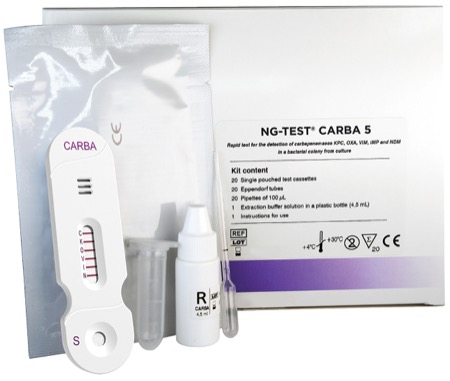
A total of 269 clinical isolates were tested: 90 E. coli, 90 Klebsiella pneumoniae and 89 Enterobacter cloacae complex. Screening was conducted on clinical specimens using the Cepheid Xpert Carba-R kit, or from bacterial isolates using the Hardy Diagnostics NG-Test Carba 5 or Cepheid Xpert Carba-R. The isolates carried genes encoding NDM (75), IMP (40), VIM (40), KPC (29), OXA-48-like (27), NDM+OXA-48-like (14), a combination of these (11) or no detected carbapenemases (33).
The Carba 5 kit detected nearly all carbapenemase genes, including all NDM, IMP, OXA-48-like and KPC, and 45 of 47 isolates with VIM. The Carba-R kit detected all NDM, VIM, OXA-48-like and KPC, as well as 21 of 42 genes encoding IMP.
ATM/AVI exhibited high susceptibility rates of 88.9% to 100% across carbapenemase types.
IMMY Urine Histoplasma Testing Can Cover Blastomycosis Too
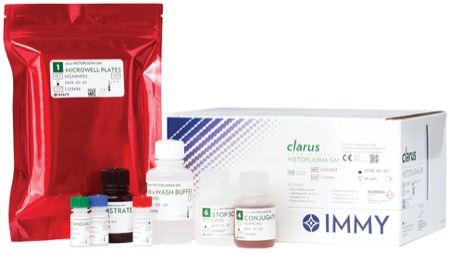
Urine Histoplasma antigen testing alone may suffice for diagnosing both histoplasmosis and blastomycosis, with serum testing reserved for selected high-suspicion cases, according to a study presented during the CPHM06 Saturday Diagnostic Mycology session at ASM Microbe 2025.
The analysis focused on the diagnostic performance of Histoplasma antigen and Blastomyces antigen tests using different specimens with MiraVista reference results from June to December 2022. After the introduction of the IMMY urine Histoplasma assay in the facility, the diagnostic performance of the two assays was compared using data from December 2023 through July 2024.
In the first phase, 25 positive cases were identified among 450 patients. A strong correlation was found between Histoplasma and Blastomyces urine antigen quantification, highlighting significant cross-reactivity. In the second phase, the IMMY urine Histoplasma antigen assay demonstrated excellent sensitivity (100%) and specificity (98.1%) compared with MiraVista’s urine Blastomyces assay. Discrepancies between IMMY urine and MiraVista serum Histoplasma antigen results occurred in 21 events, often after antifungal therapy.
“Urine Histoplasma antigen and urine Blastomyces antigen tests cross-react with each other, making it unnecessary to test for both,” wrote study authors Janiece Glover, PhD, and Lili Tao, PhD, of Vanderbilt University Medical Center, in Nashville, Tenn. “Urine Histoplasma antigen can serve as the primary test for diagnosing histoplasmosis and blastomycosis, while the serum antigen test may be used as a supplemental test in patients highly suspected of having a dimorphic fungi infection.”
False Negatives Illustrate Importance Of Dual-Target PCR Assays
Whole-genome sequencing (WGS) has revealed the cause of a series of Streptococcus pneumoniae strains that tested positive for the pneumococcal autolysin lytA but negative for the Spn9802 gene fragment, according to new research (ESCMID 2025; abstract P2040).
Diagnostic polymerase chain reaction (PCR) tests typically use both the lytA and Spn9802 targets when detecting S. pneumoniae, and this use of a duplex real-time PCR has largely addressed misidentification of S. pneumoniae and S. pseudopneumoniae.
To determine the cause of the Spn9802 PCR-negative results, DNA from the four cultured S. pneumoniae strains were extracted using the Easy-DNA gDNA Purification Kit (Thermo Fisher Scientific), then sequenced and processed.
Results of the WGS revealed an 876 bp insertion within the Spn9802 fragment, which caused the PCR test to fail in detecting this target. The insertion sequences showed high sequence similarity among the strains with a maximum difference of only a single nucleotide.
To address this, a new PCR primer was developed and implemented. Testing found that the updated PCR was able to successfully detect all four of the S. pneumoniae strains, which had previously tested negative.
This article is from the August 2025 print issue.