By Marie Rosenthal, MS
The CDC’s Advisory Committee on Immunization Practices voted to recommend the virus-like particle-based chikungunya vaccine, recombinant (CHIK-VLP; Vimkunya, Bavarian Nordic) for certain populations. However, the CDC has not acted yet on this or other recommendations the ACIP made April 16.
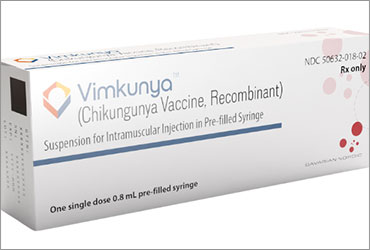
The CHIK-VLP vaccine, an adjuvanted VLP-based vaccine, is indicated for people 12 years of age and older traveling to a country or territory where there is a chikungunya outbreak. In addition, CHIK-VLP may be considered for those traveling or taking up residence for an extended period in a country or territory with an elevated risk for chikungunya, but is not experiencing an outbreak. Finally, the ACIP recommended CHIK-VLP for laboratory workers with a potential for exposure to chikungunya virus.
Chikungunya is a mosquito-borne disease caused by the chikungunya virus, which typically presents with acute symptoms including fever, rash, fatigue, headache, and often severe and incapacitating joint pain. Most patients recover within one to two weeks, but up to 40% of those affected may develop chronic arthritis that can last for months or even years, according to the European Centre for Disease Prevention and Control.
In 2024, there were 620,000 cases of chikungunya reported worldwide, an increase of more than 20% compared with 2023, according to the European agency.
“Chikungunya is a mosquito-borne, viral disease that imposes substantial health and economic burdens,” explained Edwin Jose Asturis, MD, the chair of the ACIP Chikungunya Vaccines Work Group. “[Cases are] likely higher than previously recognized and sometimes can lead to permanent, severe disability, congenital anomalies and early death. This year alone, at least 80,000 chikungunya disease cases and 46 related deaths have been reported in four countries and territories, including at least five countries in South America,” added Dr. Asturis, a professor of pediatrics and infectious diseases epidemiology at the University of Colorado School of Medicine and Colorado School of Public Health, in Aurora.
The FDA licensed the Bavarian Nordic CHIK-VLP vaccine in February for people 12 years and older. This is the second vaccine to be licensed by the FDA. The first, Ixchiq (Valneva Austria), a live-attenuated vaccine, was approved in November 2023 for people 18 years of age and older who are at increased risk for exposure to chikungunya virus. This vaccine already has an ACIP recommendation for use.
The vaccines were licensed under the FDA accelerated approval pathway, which “can be used for products targeting serious conditions when the products fill an unmet medical need,” explained Susan L. Hills, MBBS, MTH, a medical epidemiologist in the CDC’s Division of Vector-Borne Diseases. “Effectiveness is demonstrated based on adequate and well-controlled trials showing the vaccine has an effect on a surrogate end point that is reasonably likely to predict clinical benefits. For CHIK-VLP, the surrogate was a chikungunya-neutralizing antibody titer threshold that prevented viremia in non-human primates challenged with chikungunya virus.”
Regardless of the licensure pathway, all products must demonstrate safety in well-controlled trials with a sample size that is large enough to determine this end point, she added. Bavarian Nordic also must conduct a post-marketing trial to confirm the clinical benefit.
Dr. Hills said the review process for the work group’s recommendation to the committee was rigorous. They analyzed the data and had extensive discussions before bringing it to the committee for a vote. In addition, the group made several presentations during past meetings.
Key results from two randomized controlled trials—one included people 12 to 64 years of age—with about 2,560 people, and one with 189 adults 65 and older, showed that the seroresponse rate was 97% overall, with a higher rate of 98% in those 12 to 64 compared with 87% in the older group. One phase 2 study that included 46 people ages 18 to 45 and collected data for 11 months found a seroresponse rate of 91%, according to Dr. Hills.
Side effects included arthralgia within seven days after vaccination, which was reported by 7% of vaccine recipients and 6% of placebo recipients, which was not significantly different. Severe (0.2%) and persistent arthralgia (0.03%) after vaccination was the same in both vaccine and placebo recipients. “The work group’s interpretation was that the undesirable, anticipated effects were small based on the rates of SAEs [severe adverse events] and all arthralgia, arthritis outcomes,” Dr. Hills explained.
They noted that there could be rare adverse events that won’t be known until the post-marketing surveillance, reiterating the importance of doing that step.
Dr. Hills added that a survey found that a traveler’s perspective on chikungunya vaccine depended on the level of disease risk, with people more likely to want to be vaccinated if their risk was greater.
The recommendation from ACIP is pending final approval by the director of the CDC and the Department of Health and Human Services. Typically, the CDC director responds quickly to the ACIP recommendations, and third-party payors tend to wait for that adoption before covering a vaccine, even though the FDA already approved it for marketing. The Affordable Care Act requires insurers to cover recommended vaccines in the next plan year.
Acting CDC Director Susan Monarez, PhD, recused herself from making this decision because her pending Senate confirmation places “legal limitations” on her decision-making. So, the decision will be up to CDC Chief of Staff Matthew Buzzelli, who is a lawyer with no medical or public health experience.
Repeated requests for comment from the CDC went unanswered.
“The ACIP’s recommendation of our chikungunya vaccine for Americans aged 12 and older is a big step forward to expanding access to this vaccine in the United States. Chikungunya is an emerging public health threat around the world, and today’s decision is another milestone in our mission to protect more people from this virus,” said Paul Chaplin, the president and CEO of Bavarian Nordic, in a statement.