

By Marie Rosenthal, MS
The FDA required and approved safety labeling changes to the prescribing information for respiratory syncytial virus (RSV) vaccines to include a warning about the risk for Guillain-Barré syndrome (GBS) after vaccination.
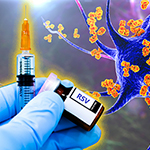
The labeling will apply to both RSVPreF (Abrysvo, Pfizer) and RSVPreF3+AS01 (Arexvy, GSK). The U.S. prescribing information (USPI) for each vaccine has been revised to include the same language in the Warnings and Precautions section—that observational studies suggest an increased risk for GBS during the 42 days following vaccination with either product.
“GSK’s top priority is patient safety. We are committed to monitoring and ensuring the safety of all our products, including Arexvy,” a GKS spokesperson said, adding that the prescribing information has been updated.
“This [label change] was based upon safety information from the initial results of an ongoing retrospective analysis in individuals aged 65 years or older performed by the FDA over one season,” the person said.
GBS is a rare disorder in which the body’s immune system damages nerve cells, causing muscle weakness and sometimes paralysis. The risk after RSV vaccination is still rare, however. According to postmarketing analysis, GBS incidence following vaccination with RSVPreF3+AS01 and RSVPreF was less than 10 cases per 1 million vaccinations. However, that number was still higher than expected background rates, according to a presentation by Patricia Lloyd, PhD, ScM, a health statistician at the Office of Biostatistics and Pharmacovigilance at the FDA, who spoke in October to the Advisory Committee on Immunization Practices.
“During the October 2024 ACIP meeting, the FDA presented an update to their self-controlled case series study in adults 65 and older. Although not statistically significant, the data suggest an increased risk of GBS within 42 days following vaccination with Abrysvo. Based on this data, the FDA has requested an update to the Abrysvo USPI to include a warning about the risk of GBS following vaccine administration,” a Pfizer spokesperson told Infectious Disease Special Edition in an email.
Additional data presented at the October ACIP Meeting found that 80% of the recommended population remains unvaccinated because they do not recognize their risk for RSV. Between 60,000 and 160,000 hospitalizations among those 60 and older in the United States are due to RSV, according to the American Lung Association. It is a leading cause of respiratory disease in older adults.
“GBS risk following RSV vaccination is rare, with fewer than 10 cases per 1 million vaccinations,” the GSK spokesperson added. “While the results of this observational study suggest an increased risk for GBS with Arexvy, available evidence is insufficient to establish a causal relationship.
“We remain confident in the benefit-risk profile of Arexvy for the prevention of RSV-LRTD,” the person added.
Abrysvo was initially approved on May 31, 2023, for the prevention of lower respiratory tract disease (LRTD) caused by RSV in people 60 years of age and older. Subsequently, the FDA expanded the indication for the vaccine to people 18 through 59 years of age who are at increased risk for LRTD caused by RSV and during pregnancy (32 through 36 weeks gestational age) for the prevention of LRTD and severe LRTD caused by RSV in infants from birth through 6 months of age.
Arexvy was initially approved on May 3, 2023, for the prevention of LRTD caused by RSV in people 60 years of age and older. Subsequently, FDA expanded the indication for people 50 through 59 who are at increased risk for LRTD caused by RSV.
The FDA requests that suspected adverse events be reported to the Vaccine Adverse Event Reporting System, which is co-managed by the FDA and the CDC.