By IDSE News Staff
The FDA granted a new indication for GSK’s Arexvy adjuvanted respiratory syncytial virus vaccine to prevent RSV-related lower respiratory tract disease (LRTD) in adults 50 through 59 years of age who are at increased risk for RSV.
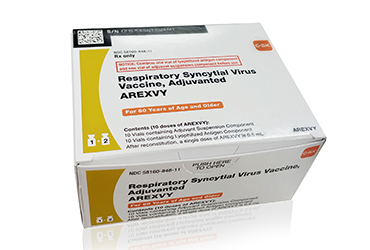
The RSV vaccine contains recombinant RSV glycoprotein F stabilized in the pre-fusion conformation (RSVPreF3).
The agency reviewed positive results from a phase 3 trial (ClinicalTrials.gov Identifier: NCT05590403) evaluating the immune response and safety of RSVPreF3 vaccine in adults in this age group, including those at increased risk for RSV LRTD because of certain underlying medical conditions, such as diabetes and pulmonary, cardiovascular or liver disease.
The study is a phase 3, multi-country, randomized, observer-blind, placebo-controlled trial evaluating the noninferiority of the immune response and safety of the RSVPreF3 vaccine. Researchers assessed the immune response in participants ages 50 to 59 with chronic diseases leading to an increased risk for RSV (n=570) and also in a group of same-age participants without chronic diseases (n=570), compared with adults 60 years and older. They found that RSV-A and RSV-B neutralization titers of the younger groups were similar to the older group one month after receiving one dose of RSVPreF3 vaccine.
Regardless of the age or chronic disease status in the group that received vaccination, all of these participants experienced increases in RSVPreF3-specific CD4+ T cells, according to a GSK presentation at the Advisory Committee on Immunization Practices meeting in October 2023.
All participants were monitored for potential immune-mediated diseases (pIMDs) after vaccination. Of participants 50 through 59 years old, only 0.5% of those vaccinated and 0.3% of those who received placebo had new-onset pIMDs or exacerbations of existing pIMDs with onset within six months after receiving the vaccine or placebo.
Other safety and reactogenicity data were consistent with results from earlier vaccine studies. The most common local adverse event was pain. The most common systemic adverse events were myalgia, fatigue and headache, which were mostly transient and mild to moderate in intensity. For full prescribing information, click here.
“When it comes to the risks associated with RSV, age is just a number-an important number, but not the only factor to consider. Many adults in this age group have underlying health conditions that place them at increased risk for serious illness with RSV infection compared with those without these conditions,” said Ann R. Falsey, MD, a professor at the University of Rochester School of Medicine, in New York, in a company press release.
More than 13 million U.S. adults in this age group have a medical condition that increases their risk for severe RSV outcomes (27th Annual Conference on Vaccinology Research-NFID 2024).
A systematic review of studies showed that RSV is estimated to cause 42,000 hospitalizations each year in adults ages 50 to 64 years (Open Forum Infect Dis 2022;9[7]:ofac246. https://academic.oup.com/ofid/issue/9/7). Adults with underlying medical conditions, such as chronic obstructive pulmonary disease, asthma, heart failure and diabetes are at increased risk for severe disease from an RSV infection compared with those without these conditions, leading to pneumonia, hospitalization and death.
In May 2023, the FDA approved GSK’s RSV vaccine to prevent RSV LRTD in adults 60 years of age and older.