By IDSE News Staff
The FDA approved zopapogene imadenovec-drba (Papzimeos, Precigen), the first and only approved therapy for adults with recurrent respiratory papillomatosis (RRP).
RRP is a rare, debilitating and potentially life-threatening disease of the upper and lower respiratory tract caused by chronic HPV 6 or 11 infection. Based on an internal analysis of claims data and electronic health records, there are approximately 27,000 adult U.S. RRP patients.
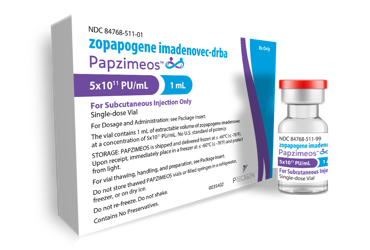
Zopapogene imadenovec-drba is a nonreplicating adenoviral vector–based immunotherapy designed to express a fusion antigen comprising selected regions of HPV types 6 and 11 proteins—the root cause of RRP. Zopapogene imadenovec-drba is delivered via four subcutaneous injections over a 12-week interval.
Precigen completed submission of the rolling Biologics License Application in December 2024 under an accelerated approval pathway; however, the FDA granted zopapogene imadenovec-drba full approval, which does not require a confirmatory clinical trial.
The approval is supported by data from the open-label, single-arm, pivotal study in adult patients with RRP, led by lead investigators Clint T. Allen, MD, and Scott M. Norberg, DO, at the National Institutes of Health, which successfully met its primary safety and prespecified primary efficacy end points: 51% (18/35) of study patients achieved complete response, requiring no surgeries in the 12 months after treatment with zopapogene imadenovec-drba (Lancet Respir Med 2025;13[4]:318-326). These complete responses remained durable for more than 12 months. Of the 18 patients with a complete response in the ongoing study, 15 evaluated at 24 months demonstrated continued complete response.
Zopapogene imadenovec-drba induced HPV 6/11–specific T-cell responses in RRP study patients with a significantly greater expansion of peripheral HPV-specific T cells in responders compared with nonresponders.
Zopapogene imadenovec-drba was well tolerated with no dose-limiting toxicities and no treatment-related adverse events greater than grade 2. The most common side effects include pain/redness/swelling at the injection site, fatigue, chills, fever, muscle aches, nausea, headache, arrhythmia, diarrhea, vomiting and perfuse sweating. For full prescribing information, click here.
RRP can lead to severe voice disturbance, compromised airway and recurrent post-obstructive pneumonia. RRP can lead to a malignant cancer. Management of RRP has primarily consisted of repeated surgeries, which do not address the underlying cause of the disease and can be associated with significant morbidity as well as significant patient and health-system burden.
As the number of lifetime surgeries increases, the risk for irreversible iatrogenic laryngeal injury increases with each surgery, and patients may undergo hundreds of these surgeries over their lifetime. RRP can affect patients’ work and social lives, financial stability, and mental health. Patients with RRP can experience substantial deficits to daily living with decreased quality of life and high healthcare utilization.
Zopapogene imadenovec-drba will be available immediately, and Precigen has established Papzimeos SUPPORT, a comprehensive patient support program offering personalized services, including insurance navigation, financial assistance and ongoing access support. For more information, call (866) 827-8180 or visit www.PAPZIMEOS.com.
“For more than a century, since RRP was first recognized as a distinct disease, patients have had to rely on repeated surgeries to manage this relentless condition. Today marks a historic turning point. With the landmark FDA approval of Papzimeos and broad label, all adult RRP patients are now eligible for access to the first and only approved therapy that targets the root cause of the disease,” said Helen Sabzevari, PhD, the president and CEO of Precigen. “This milestone affirms the power of our AdenoVerse platform and the exceptional capabilities of our team to rapidly advance a wholly novel therapy from discovery to approval considerably faster than industry benchmarks.”