






In a heavily pretreated patient population, rezafungin (Rezzayo, Melinta Therapeutics) was found to be a safe and effective treatment for candidemia, candidiasis and respiratory mold infection, providing support for the successful outpatient treatment of those with various fungal infections.
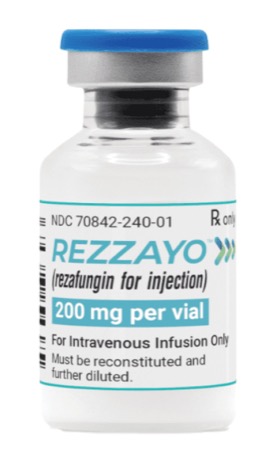
Rezafungin, a novel long-acting IV echinocandin, received FDA approval in 2023. The study’s lead investigator, Lucinda J. Van Anglen, PharmD, presented the results of the retrospective cohort study at ESCMID Global 2025, in Vienna.
“It’s the first real-world experience report,” which can show a different perspective to restrictive clinical trials, said Dr. Van Anglen, the senior vice president of clinical pharmacy and research at Healix Infusion Therapy, in Sugar Land, Texas, which manages infusion centers for physician practices. In addition, the study was conducted in outpatient settings, where once-weekly dosing regimens eliminate the need for central venous catheters and daily medication, the investigators noted in their report.
“We found rezafungin to be safe and effective in patients with Candida fungal infections; 88% of all patients had treatment success at the completion of therapy,” Dr. Van Anglen said. “It was used in a population heavily pretreated with other antifungal agents, including over half with prior intravenous agents. Candida glabrata represented the highest incidence of the pathogens, which, along with other non-albicans isolates, are frequently resistant to azole antifungals.”

From September 2023 to November 2024, 35 patients received 40 episodes of treatment. There was a median of two rezafungin doses (IQR, 1-4), including an initial 400-mg loading dose for all patients. Of all patients, 43% were hospitalized before rezafungin treatment, and the median Charlson Comorbidity Index score was 4. Rezafungin was used to treat invasive candidiasis in 27 patients, candidemia in seven patients, and mold infection in one patient. Nearly all (32/35) received prior antifungals.
Related Content


Clinical success was achieved in 29 (82.8%) patients, three (8.6%) were unsuccessful, and three (8.6%) could not be evaluated in the study. Four patients underwent retreatment and achieved clinical success. Three (9%) incurred nonserious adverse events, but none required discontinuation.
A New Option for Certain Patients
Experts not involved in the study found the findings to be encouraging but cautioned that the small analysis is limited.
“This study is about a new antifungal in a therapeutic class that physicians have used before for fungi, especially for yeast. Used once a week, it could be beneficial and less disruptive to patients’ lifestyles,” said Waleed Javaid, MD, MBA, MS, an epidemiologist and the director of infection prevention and control at Mount Sinai Downtown, in New York City.
Although rezafungin can help decrease the number of patient visits, it doesn’t help with all fungal infections. “The study shows the antifungal has less than 90% success, so about one out of 10 people will require a different therapy,” Dr. Javaid said. “This is a retrospective study that potentially lays the groundwork for future comprehensive research to determine the benefits and impact of this drug more effectively.”
In addition, rezafungin “also has enhanced activity against some of the more resident species of Candida,” said Jennifer Grant, MD, the system medical director of infection prevention and control at Endeavor Health, in Evanston, Ill., and other Chicago suburbs. “In a world where drug resistance is increasing, both more convenient dosing and better efficacy against more resistant strains are helpful features.”
However, Candida infections requiring this type of therapy are not common and occur in patients with underlying risk factors, such as immunosuppression. Most Candida infections are mild—for instance, thrush, skin rash or vulvovaginal infections—which mostly respond to oral antifungals, Dr. Grant said.
“But even many severe Candida infections respond to the oral agents, so it is a smaller subset of patients who need this type of drug,” Dr. Grant noted. “That being said, the strains of Candida that may need intravenous drugs are increasing.”
Drs. Grant and Javaid reported no relevant financial disclosures. Dr. Van Anglen reported that the study received support from Melinta Therapeutics.
This article is from the October 2025 print issue.