By IDSE News Staff
Researchers have discovered that a virus living inside the fungus Aspergillus fumigatus significantly boosts the fungus’s ability to survive stress and cause severe infections in mammals (Nat Microbiol 2025;10[9]:2179-2193).
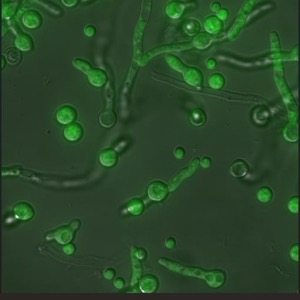
Removing the virus weakened the fungus and made it less virulent, while antiviral treatments improved survival outcomes. This finding reveals a hidden factor driving the deadliness of fungal infections and opens the door to potential new treatments that target the virus rather than the fungus itself.
Researchers at the Hebrew University of Jerusalem and the Institute of Microbiology at Friedrich Schiller University have uncovered an unexpected culprit fueling the severity of one of the most dangerous fungal infections in humans: a virus living inside the fungus itself.
A. fumigatus is already notorious. Responsible for most of the invasive fungal infections in humans, it’s especially lethal for the immunocompromised. Despite decades of research, mortality rates from infections remain alarmingly high—approaching 50%.
But Neta Shlezinger, PhD, of the Koret School of Veterinary Medicine at the Hebrew University, and her team found a double-stranded RNA virus, quietly riding along inside the fungus, appears to act like a hidden booster pack for the pathogen. When this virus is present, the fungus becomes far more adept at surviving environmental stress, including the heat and oxidative conditions inside the lungs of mammals.
To test the effect of the virus, the researchers removed it from fungal strains and compared their behavior with their virus-infected counterparts. The virus-free fungi lost their ability to reproduce effectively, showed weaker defenses like reduced melanin production and became significantly less dangerous when introduced into mammalian lungs.
The findings suggest that these “mycoviruses” may play a quiet but critical role in the development and progression of fungal diseases in humans—a role that has largely gone unnoticed in the field of medical mycology.
Perhaps most promising of all: When antiviral treatments were used to suppress the virus during infection, survival outcomes improved in the mammalian model. This hints at a whole new treatment avenue—not just targeting the fungus itself, but the virus helping it thrive.
“These viruses are like molecular backs seat drivers,” Dr. Shlezinger said. “They don’t cause disease on their own, but they influence how aggressively the fungus behaves once it’s inside the body.”
This discovery opens the door to rethinking how fungal infections are treated. By targeting the virus within the fungus, researchers may one day weaken the pathogen enough for the immune system—or existing antifungal drugs—to fight back more effectively.