By IDSE News Staff
A common skin fungus, Malassezia globosa can invade deep tissues and may contribute to tumor growth, according to a new study (mBio 2024 Sep 5. doi:10.1128/mbio.01993-24).
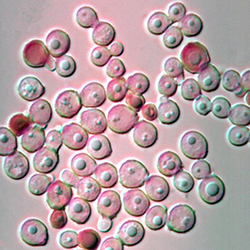
An increasing number of studies have shown a relationship between fungus and cancer. In the new study, Qi-Ming Wang, PhD, and colleagues subjected mouse breast cancer cells to tumor transplantation and then injected the M. globosa into the mammary gland fat pad.
At the end of the experiment, they collected the tumor tissue to measure the tumor size and observe the content of intertumoral M. globosa. The researchers discovered that M. globosa colonizes in breast fat pads leading to tumor growth.
As a lipophilic yeast, the breast fat pad may provide an external source of lipids for the development of M. globosa, the researchers explained. They also found that the pro-inflammatory cytokine interleukin (IL)-17a/macrophage axis plays a key role in mechanisms involved in M. globosa–induced breast cancer acceleration from the tumor immune microenvironment perspective.
“It is important to take care of skin not only for beauty but also for health,” said Dr. Wang, a professor in the School of Life Sciences, Institute of Life Sciences and Green Development, Hebei University, in China. “As a factor promoting tumor growth, intertumoral microorganisms need to be paid more attention.”
More people are looking at the relationship between microbes and cancer, according to Dr. Wang.
For example, two gastrointestinal cancers have been linked to Helicobacter pylori and Fusobacterium nucleatum, with the former causing gastric cancer and the latter being a colorectal cancer biomarker in stool that is found in the tumor microenvironment.
Bacteria or fungi may play a direct (e.g., toxins) or indirect (e.g., inhibition of antitumoral immune responses) role in the tumorigenesis pathways, according to Dr. Wang. “The imbalance of the microflora in the tumor may lead to disorder in the tumor microenvironment,” Dr. Wang said.
Although the researchers found that M. globosa can promote the growth of tumors, the related transmission route is still unclear.