

This story was updated on May 22 at 3:40 pm to reflect a third human case of H5N1.
By Ethan Covey and Marie Rosenthal, MS
The U.S. milk supply is safe from potential contamination with highly pathogenic avian influenza infection, according to testing of retail dairy products. The news comes amidst growing concern regarding the H5N1 avian influenza outbreak among dairy cows, which has been linked to cattle in nine states.
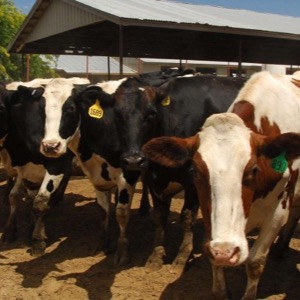
A total of 297 retail dairy samples from locations in 17 states were collected by specialists in the FDA’s Office of Regulatory Affairs from April 18-22. The USDA Agricultural Research Service’s U.S. National Poultry Research Center analyzed the samples and found no indication of live, infectious virus.
“It’s worth noting that highly pathogenic means that it causes significant disease to birds, but that’s not necessarily true in humans,” said Maximo Brito, MD, MPH, a professor of medicine and the director of the Urban Global Medicine Program at the University of Illinois College of Medicine in Chicago, although he called the transmission to cattle a surprise. “This kind of transmission is not common,” he said at a press briefing sponsored by the Infectious Diseases Society of America (IDSA).
“The FDA has conducted testing of a national sample of retail milk and has found parts of the virus in some of the samples. However, these viruses have not grown in culture media, which means that they’re not live and are unlikely to transmit disease to humans. Further tests have confirmed that pasteurization, that is, the procedure that all milk goes through before getting into the public, deactivates the virus,” he said.
Although the risk for transmission of virus by drinking milk is only theoretical, both Dr. Brito and Amy Tan, MD, the president-elect of the IDSA, and a professor of pediatrics and the medical director of the International Patient Services Program, Ann & Robert H. Lurie Children’s Hospital of Chicago, suggested that people, especially children, refrain from drinking raw milk.
“I have no evidence, but if milk is going to transmit this virus, it is going to be raw milk, because we know that the process that we use to pasteurize and sanitize the milk is inactivating the virus,” Dr. Brito said.
In addition, many other infections can be “picked up from drinking unpasteurized raw milk or from eating raw eggs. And so this would be the opportunity to encourage the public to just drink pasteurized milk and eat cooked eggs,” Dr. Tan said.
Despite the concern, to date, three people have developed H5N1 influenza in the United States, and all three worked with infected animals, the experts reassured. The third case was reported on May 22 in a Michigan dairy farm worker. This is the second case associated with an ongoing multistate outbreak of A(H5N1) in dairy cows. As with the case in Texas, the individual is a worker on a dairy farm where H5N1 virus has been identified in cows. While a nasal swab from the person tested negative for influenza in Michigan, an eye swab from the patient was shipped to CDC and tested positive for influenza A(H5) virus, indicating an eye infection. Similar to the Texas case, the patient only reported eye symptoms. CDC has been watching influenza surveillance systems closely, particularly in affected states, and there has been no sign of unusual influenza activity in people, including in syndromic surveillance.
“I think we’re in a good place,” William Schaffner, MD, a professor of preventive medicine, Department of Health Policy, and a professor of medicine, Division of Infectious Diseases, at Vanderbilt University Medical Center, in Nashville, Tenn., told Infectious Disease Special Edition. “The important thing to recognize is that at the moment the virus has not developed the capacity to spread readily in people and from person to person.”
In a recent meeting with public health partners, CDC Principal Deputy Director Nirav D. Shah, MD, JD, recommended state and local influenza surveillance systems continue operating at enhanced levels during the summer to increase the number of positive influenza A virus samples submitted for subtyping to help detect even rare cases of human H5N1 virus infection.
Dr. Shah emphasized the importance of remaining vigilant and outlined a nationwide influenza virus monitoring plan for the summer season, which is a time when influenza activity and testing typically decline. The goal is to maintain heightened awareness of circulating influenza viruses, given the ongoing outbreak of H5N1 among poultry and U.S. dairy cattle.
Dr. Shah asked jurisdictions to work with clinical laboratories to increase submissions of positive influenza virus samples to public health laboratories for subtyping. Subtyping is a process that determines whether the influenza A sample is a common seasonal influenza virus or a novel virus like H5N1.
Dr. Schaffner noted the ongoing importance that surveillance efforts play in monitoring the outbreak, and indicating whether any changes—such as the ability to easily infect humans—occur.
“Surveillance is akin to developing an early-warning radar system,” he said. “You want to do surveillance to find out as much as you can about this virus, its distribution and the changes that are underway.”
However, to effectively maximize research of this ongoing threat, Dr. Schaffner highlighted that surveillance efforts need to be expanded and refined.
“Although we are doing good work, many people, myself included, would hope that the resources soon would become available so that we could expand our surveillance system even further,” he said.
Such efforts would likely include increased surveillance of wild bird populations and poultry farms, as well as dairy farms and testing for potential occupational exposure occurring among workers at these facilities.
“Now that we’ve found—to everyone’s surprise—that this virus can get into dairy farms, the expansion of surveillance into herds that provide milk and people who work on these dairy farms is critical,” he said. “The thought is that should the virus develop the capacity to spread in humans, this population might be first affected.”
Whereas long-standing knowledge of the risks associated with avian flu have helped develop strong relationships among individuals in public health, veterinary medicine, agriculture and the poultry industry, ties are not yet as strong with representatives from the dairy industry.
“Steps are being taken to build these relationships,” Dr. Schaffner said. “But we need to open up those proverbial doors.”
In addition to animal surveillance, expanded surveillance of influenza in the U.S. human population will help to rapidly detect H5N1 cases if they do begin to spread among humans.
“Routine influenza surveillance, which typically ends in late April and picks up again in October, is being extended through the summer,” Dr. Schaffner said. “And physicians are being asked to test people who develop respiratory symptoms more aggressively in order to cast the surveillance net more widely to pick up cases of H5N1, should they occur.”
In this situation, being able to study populations and quickly analyze results are of the utmost importance.