By IDSE News Staff
The old practice of lending based on race is still affecting health today, linking these discriminatory policies to delays in effective HIV treatment within affected neighborhoods, according to a recent study (JAMA Intern Med 2024;184[11]:1329-1337).
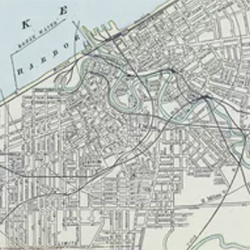
The lending practice, called redlining, was abolished in 1968. Yet, those living in once historically redlined neighborhoods experience 15% longer delays in achieving viral suppression of HIV compared with those in non-redlined areas. The disparity can affect both individual health outcomes and public health efforts to curb the spread of HIV, said senior author Scott Batey, PhD, a professor in the Tulane University School of Social Work, in New Orleans.
“HIV is, in many ways, a disease of poverty, and this shows how discriminatory practices that limited economic opportunities for previous generations can have a cascading effect upon the neighborhoods in which we live today,” Dr. Batey said.
Redlining involves denying services to residents in certain areas based on their race or ethnicity. The term comes from the practice of mortgage lenders drawing red lines on maps to indicate areas where they would not make loans. The divestment from those neighborhoods created long-term gaps in healthcare access, education and household income that affected residents for decades.
The study, which is the first to examine the impact of redlining on HIV treatment, sheds light on how historical discrimination continues to affect modern-day health outcomes. It was conducted with the Louisiana Department of Health and the University of Alabama at Birmingham.
Researchers examined 1,132 New Orleans residents newly diagnosed with HIV between 2011 and 2019 and found that, post-diagnosis, those living in once-redlined neighborhoods were estimated to achieve viral suppression of HIV almost a month later than those living in non-historically redlined neighborhoods (193 vs. 164 days).
Once diagnosed, HIV can be treated in as little as a month, and treatment is as simple as taking a once-daily pill. The longer the time between diagnosis and treatment, however, the higher the chances of HIV spreading.
In the case of one resident of a redlined neighborhood, there was a four-year gap between diagnosis and suppression.
“The reasons some lag behind in treatment are obviously much more complex, from stigma to denial,” Dr. Batey said. “However, this paper shows us that environment does play a factor. Place matters, and we are unable to escape historical implications and characteristics of the neighborhoods in which we live.”
Of the residents included in the study, 62% lived in previously redlined neighborhoods. The majority were men ages 25 to 44 years, and despite New Orleans’s population being majority Black, the study found more Black individuals in redlined neighborhoods than non-redlined.
Of note, the delay in treatment did not change based on whether a neighborhood was experiencing gentrification.
Previous studies have linked living in a historically redlined neighborhood to higher risks for heart failure, obesity, high blood pressure and other conditions that increase risk for early death.
While the study only included New Orleans residents, the findings are significant for cities across the Deep South, where redlining was historically prevalent and more than 50% of the new HIV cases are currently being reported.
Dr. Batey said by better understanding which areas are seeing longer delays in HIV treatment outcomes, healthcare workers can work to more effectively promote and deliver HIV treatment—and hopefully curb the spread of the disease.
“If we can make services more accessible and get people virally suppressed sooner, I think the impact on the HIV epidemic can be quite significant,” Dr. Batey said. “More education, on-site testing, telehealth appointments, those kinds of things can happen at grassroots level in all communities and begin to help people to start on equitable ground.”