





An earlier version of this article appeared online before the September/October 2025 issue.

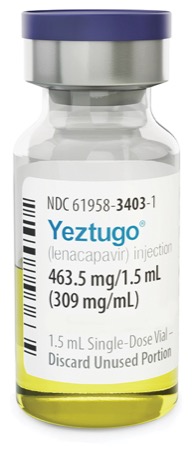
Lenacapavir (Yeztugo, Gilead) should be one choice available for people at risk for HIV to use as pre-exposure prophylaxis (PrEP), according to new guidelines released by WHO during IAS 2025, in Kigali, Rwanda.
Twice-yearly lenacapavir, which was just approved by the FDA in June, should be considered a PrEP option along with other WHO-recommended treatments: daily oral PrEP, injectable cabotegravir (Apretude, ViiV Healthcare) and the dapivirine vaginal ring. (The dapivirine ring is not approved by the FDA for use in the United States.)
“While an HIV vaccine remains elusive, lenacapavir is the next best thing: a long-acting antiretroviral shown in trials to prevent almost all HIV infections among those at risk,” WHO Director-General Tedros Adhanom Ghebreyesus, PhD, MSc, said in a press statement. “The launch of WHO’s new guidelines, alongside the FDA’s recent approval, marks a critical step forward in expanding access to this powerful tool. WHO is committed to working with countries and partners to ensure this innovation reaches communities as quickly and safely as possible.”
Along with the addition of lenacapavir to the PrEP arsenal, the new WHO guidelines recommend rapid diagnostic testing before and during long-acting injectable PrEP. “The simplified testing recommendation removes a major access barrier by eliminating complex, costly procedures and enabling community-based delivery of long-acting PrEP through pharmacies, clinics and telehealth,” experts wrote.

The recommendation was a welcome additional resource to the fight against HIV/AIDS, Paul Sax, MD, told Infectious Disease Special Edition. Dr. Sax is the clinical director of the Division of Infectious Diseases and Bruce A. Beal and Robert L. Beal Endowed Chair in Infectious Diseases at Brigham and Women’s Hospital, in Boston. “This is excellent news,” he said. “Lenacapavir represents a major scientific advance; it’s the first long-acting injectable HIV prevention strategy that requires dosing just twice a year. For some individuals, especially those who have difficulty adhering to daily or even bimonthly prevention strategies like oral PrEP or cabotegravir, this would be especially welcome.”
Related Content

The lenacapavir recommendation comes in tandem with new research presented at IAS 2025 that shows benefit from the drug as PrEP. (Lenacapavir has been used for treatment in the United States under the brand name Sunlenca.) Data presented from the PURPOSE 1 and PURPOSE 2 trials (ClinicalTrials.gov Identifiers: NCT04994509 and NCT04925752) showed benefit in different demographic groups, including pregnant people, teenagers and young adults. Of 184 participants who were pregnant or lactating during the PURPOSE 1 trial, none acquired HIV (abstract 3535). In the 2,884 adolescents and young adults (between 16 and 25 years) taking PrEP, only two participants taking lenacapavir acquired HIV despite therapeutic drug levels, said primary investigator Katherine Gill, MBChB, MPH, at IAS 2025 (abstract 3474). (Find out more on page 32.) Those two infections are compared with 61 adolescents and young adults who were infected while taking daily emtricitabine-tenofovir alafenamide (Descovy, Gilead) or emtricitabine-tenofovir disoproxil fumarate. In both analyses, the drug was well tolerated, safe and efficacious, the investigators said.
“Overall, [lenacapavir] is a highly effective and promising long-acting HIV prevention option across diverse populations,” said Dr. Gill, a senior researcher at the Desmond Tutu Health Foundation, in Cape Town, South Africa.
Global Access to PrEP
Access to lenacapavir needs to be expanded, the WHO said, requesting that governments, donors and global health partners work to introduce the drug immediately while also collecting data about its uptake, patient adherence and real-world impact.
Gilead is working to expand access to lenacapavir in resource-poor countries. On July 9, the company announced a partnership with the Global Fund to Fight AIDS, Tuberculosis and Malaria to supply enough doses to reach up to 2 million people over three years. Gilead will not make a profit in this partnership, the company stated.
This follows an initiative by Gilead in October 2024, where nonexclusive, royalty-free licensing agreements to manufacture and supply generic lenacapavir were arranged in 120 low-income and lower-middle–income countries where HIV incidence is high. The agreements stand until licensed generic versions are available in the countries that can fully meet demand.
The emergence of lenacapavir comes at a critical time. In 2024, there were 1.3 million new HIV infections, with disproportionate impact in populations such as sex workers, men who have sex with men, transgender people, people who inject drugs, people in prisons, and children and adolescents. “The new guidelines come at a critical moment as HIV prevention efforts stagnate,” WHO said. “WHO’s recommendation on [lenacapavir] signals a decisive move to expand and diversify HIV prevention, giving people more options to take control over their health with choices that fit their lives.”
Dr. Gill reported no relevant financial disclosures. Dr. Sax reported that he serves on the scientific advisory board of Gilead. Gilead funded the PURPOSE 1 and 2 trials.
This article is from the October 2025 print issue.