






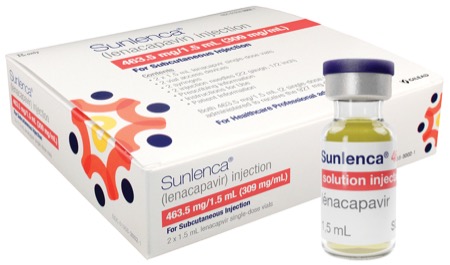
Lenacapavir (LEN; Yeztugo, Gilead) twice yearly given as pre-exposure prophylaxis (PrEP) is safe and efficacious in adolescents and young adults, according to data from the PURPOSE-1 trial.
The findings address a key population that often is not included in clinical trials, investigators said. “Adolescents are often excluded from clinical trials due to stringent ethical and regulatory guidelines intended to protect them,” said Katherine Gill, MBChB, MPH, a senior researcher at the Desmond Tutu Health Foundation, in Cape Town, South Africa.
Engaging With Adolescents
However, the PURPOSE program, which is supported by Gilead Sciences, was organized intentionally to include adolescents 16 and 17 years old.
“[This marks] a significant step toward equitable HIV prevention research, and is important as adolescents continue to account for a significant proportion of global HIV infections, yet there are often prolonged delays between the availability of adult data and adolescent-specific data,” Dr. Gill said. “Additionally, many adolescents face challenges with adhering to daily oral medications due to factors such as stigma, pill fatigue and complex daily routines.”
She noted that “recognizing these barriers, many young people have actively expressed a strong preference for long-acting alternatives that offer a more discreet and convenient option for HIV prevention.”
While conceptualizing the PURPOSE-1 trial, investigators worked to ensure that a broad, diverse group of stakeholders was engaged to provide guidance about the inclusion of adolescents and how to ensure appropriate consent, maximize best practices and create a supportive environment for the study participants.
“It was through these engagements with young people directly affected by HIV that the study leadership made the decision to include adolescents in the main trial,” Dr. Gill said.
Option of Long-Acting PrEP
The multicenter, double-blind, randomized trial enrolled sexually active adolescent girls and young women who were not using PrEP and had not tested for HIV in the past three months. Participants were randomized 2:2:1 to receive either LEN injection every 26 weeks, daily oral tenofovir alafenamide/emtricitabine (F/TAF; Descovy, Gilead) or daily oral (F/TDF). The groups had matching placebos: For instance, the LEN group received LEN and a placebo tablet, and the participants taking tablets got placebo injections.

A total of 124 adolescents were enrolled, of whom 56 received LEN, 45 received F/TAF and 23 were given F/TDF. No HIV infections among adolescents receiving LEN injections were reported. In the subgroup analysis, no HIV infections were observed across any of the three study arms in the adolescent cohort.
Related Content


LEN was safe and well tolerated, with a safety profile similar to that seen in adult participants.
The investigators noted that early and robust study enrollment of adolescents—approximately 2.5 to five times higher than typically seen in adolescent trials—suggested broad interest in solutions for this population.
“PURPOSE-1 ... provides valuable insights for designing future phase 3 studies to include vulnerable groups from the outset.
“We’re excited to advance this new long-acting prevention option and its potential impact on HIV prevention for young women,” Dr. Gill concluded.
This article was based on abstract 120, which was presented at CROI 2025, in San Francisco. Dr. Gill reported no relevant financial disclosures.
This article is from the October 2025 print issue.