By Gina Shaw
Virologic rebounds following mpox vaccination appear to be uncommon in people living with HIV (PLWH), according to a new study presented by investigators with the Fondazione Policlinico A. Gemelli IRCCS and the Università Cattolica del Sacro Cuore, in Rome.
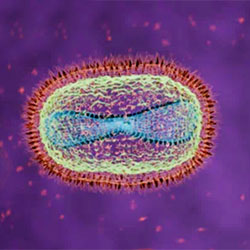
The analysis, presented by Pierluigi Francesco Salvo, MD, at IDWeek 2025, in Atlanta, evaluated whether the modified vaccinia Ankara–Bavarian Nordic (MVA-BN) vaccine, used globally to prevent mpox, might influence viral load dynamics in patients with well-controlled HIV infection (P-736).
The 2022 multinational mpox outbreak, which was first detected in the United Kingdom and rapidly spread across Europe and North America (with the highest case counts in the United States, Spain, the United Kingdom, Germany, and France), prompted the global rollout of the MVA-BN vaccine as a key containment measure.
However, data about its immunologic or virologic effects in PLWH remain limited. Earlier studies, including a report from investigators at San Raffaele University, in Milan, have found rare viral blips or confirmed virologic failures in this population (AIDS 2023;37[15]:2365-2369).
In the current study, between August 2022 and April 2024, investigators enrolled 74 adult men with HIV who received MVA-BN and had maintained undetectable viral loads (target not detectable) for at least 12 months before vaccination. All participants had been on the same antiretroviral therapy (ART) for a minimum of six months and had CD4 counts of at least 200 cells/mm³ when they were vaccinated. Each had at least one HIV RNA measurement within six months after completing the vaccine series.
The team defined viral blips as single HIV RNA results above 50 copies/mL followed by a result below that threshold, and virologic failure as either one value above 1,000 copies/mL or two consecutive values above 50 copies/mL. Using Kaplan-Meier and Cox regression analyses, the researchers assessed the timing and predictors of any postvaccination rebound.
Across the cohort, there were eight viral blips—an incidence rate of 1.93 per 100 person-months of follow-up (95% CI, 0.59-3.27)—and one virologic failure, with an HIV RNA level of 7,410 copies/mL (incidence 0.24/100 person-months; 95% CI, 0.00-0.71). All events exceeded 100 copies/mL but were transient, with no changes in ART regimen or adherence lapses documented. Every participant subsequently returned to an undetectable viral load on follow-up testing.
In multivariate analysis, a history of low-level viremia—defined as at least two consecutive viral load measurements between 50 and 200 copies/mL within the year before vaccination—was the only significant predictor of postvaccination rebound (adjusted hazard ratio, 13.8; 95% CI, 2.2-88.0; P=0.005).
“Although rare, the occurrence of virologic rebound following MVA-BN in people with HIV suggests the need for careful monitoring of HIV RNA levels after vaccination, especially in individuals with a history of viral load fluctuations,” Dr. Salvo noted. The authors emphasized that all participants remained clinically stable and that vaccine-related immune activation, as opposed to vaccine failure or adherence issues, may underlie the transient events.
The findings add to a growing body of evidence indicating that MVA-BN vaccination is generally safe and virologically stable in PLWH on effective ART, the investigators concluded. However, they cautioned that vigilance remains warranted, and further research will be needed to confirm mechanisms and assess whether rare rebounds have any long-term clinical significance.