By Marie Rosenthal, MS
CROI 2025, in San Francisco, is taking place during a tumultuous period for the scientific community here and abroad, particularly for those treating or researching HIV and other infectious diseases, because of recent actions by the presidential administration, according to Diane V. Havlir, MD, the CROI conference chair.
CROI is an independent conference that receives no federal funding; however, many government researchers present at the annual meeting, she said in her remarks to kick off the opening session. This year, many such scientists were prevented from attending the conference. The conference set up a mechanism to allow some to present virtually, so their data could be shared. More than 98% of the 1,170 accepted abstracts will still be presented at the meeting, she said.
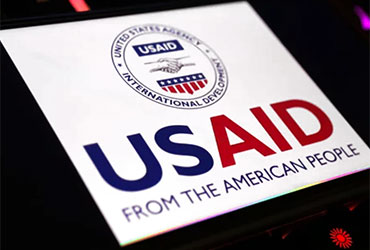
The government has withdrawn or frozen funding for an estimated 5,800 projects financed by the U.S. Agency for International Development (USAID), according to the New York Times. The money included funding for polio vaccination, tuberculosis and HIV programs, as well as others.
“We condemn the censoring of science and the targeting of scientists, their institutions and the communities they serve; the withdrawal of funding for research; and the abrupt withdrawal of programs based on evidence-based advances that we have made in science for both treatment and prevention,” said Dr. Havlir, a professor at the University of California, San Francisco, and the chief of the HIV, Infectious Diseases and Global Medicine Division at Zuckerberg San Francisco General Hospital and Trauma Center.
“We are facing a cataclysmic and cruel precipitous disruption of HIV services, the U.S. planned withdrawal from WHO, support for USAID, and uncertainty of research funding,” she said.
CROI’s mission is to advance the prevention, treatment and care of HIV and its complications, and other viral emerging infections of global significance. “We share research; we network; we have discourse on science. We engage the community. We support our new investigators, and we disseminate our findings,” Dr. Havlir said.
This investment has brought returns not just for people with HIV, according to Dr. Havlir, including in the fields of vaccinology, other viruses, gene therapy, cancer immunotherapy, and the treatment of hepatitis B and C.
“Let’s take a look at what the scientific investments in HIV had brought us,” she said, pointing to the extraordinary progress of HIV research, including the discovery of HIV, the pathogenesis of HIV, treatment for HIV and its complications across the life span, prevention of HIV, as well as implementation of HIV prevention and treatment.
“We know that tens of millions of lives have been saved, and millions have benefited from these advances,” she noted. Withdrawing support for these programs will “be a disaster,” she said because it will undermine years of progress made in changing HIV from a death sentence to a chronic disease. “We have been making steady progress. We will lose it quickly with a measurable suffering and cascading effects,” Dr. Havlir said.
Another speaker, Adeeba Kamarulzaman, MD, the dean of the Faculty of Medicine, University of Malaya, and an adjunct associate professor at Yale University, in New Haven, Conn., said U.S. funding helped her bring drug treatment and needle exchange programs to Malaysia, greatly reducing the number of HIV cases among people who inject drugs in that country. That work would not have been done without U.S. and other support, she said.
Many of the scientists attending the meeting will join the protest, “Save Our Sciences—Rally to Protect HIV Research,” on March 10 at Yerba Buena Gardens, in San Francisco.
In a statement released at the meeting, the CROI Foundation said: “We stand united with our colleagues and partners in this country and around the world as together we navigate these difficult times. Every year CROI brings together a community of exceptional individuals dedicated to advancing scientific research and action; this year is no different. Indeed, in times like this, it is more crucial than ever for the scientific and advocacy communities to come together to support research and forge a path that enhances the lives of people around the world.”