





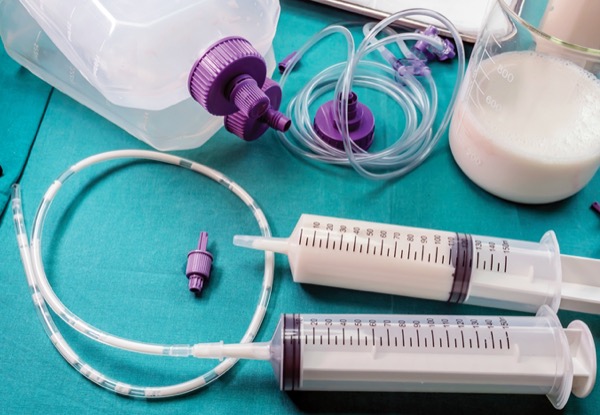
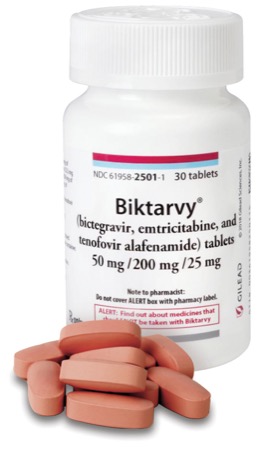
Providing dissolved or crushed bictegravir-emtricitabine-tenofovir alafenamide (B/F/TAF; Biktarvy, Gilead) through an enteral tube can achieve viral suppression and may be a good option for hospitalized patients with HIV, according to new research presented at CROI 2025, in San Francisco (poster 704).
In a small study, some 89% of 19 patients were virally suppressed and in care within one year of receiving therapy in this manner, said study co-author Kayla Bey, a PharmD candidate and medication history intern at Massachusetts General Hospital, in Boston.
“This suggests that providing dissolved or crushed B/F/TAF—with dissolved being the preferred method per pharmacokinetic studies—is a reasonable alternative to changing antiretroviral therapy,” Ms. Bey said (J Antimicrob Chemother 2022;78[1]:161-168). “However, further therapeutic drug monitoring is needed to evaluate the efficacy long term.”
Current practice at Mass General is to administer crushed or dissolved B/F/TAF through a tube for hospitalized patients with HIV requiring enteral feeding, despite limited clinical evidence regarding the crushed formulation and little clarity about this in the manufacturer's label, said study co-author Joshua Mercure, a PharmD candidate and pharmacy intern at Massachusetts General Hospital.
Ms. Bey, Mr. Mercure and colleagues reviewed and analyzed electronic health records for patients who received crushed or dissolved B/F/TAF at Mass General and Brigham and Women’s Hospital from December 2016 to December 2023. They included patients who received at least seven days of crushed or dissolved B/F/TAF and had a viral load measured within one year of treatment. The primary end point was viral suppression (<200 copies/mL) after administration of the medication within a 12-month follow-up period. Secondary end points included the development of antiretroviral resistance within one year of follow-up and a change in antiretroviral therapy during hospital admission.
They evaluated 54 patients, 35 of whom were excluded based on inclusion criteria, leaving 19 in the analyzed cohort. Within the cohort, median patient age was 54 years, and 84% were male. The virus of 58% of patients was suppressed or undetectable prior to the initiation of crushed medication, and 42% had documented resistance before the start of the study. Median duration of crushed or dissolved medication administration was 19 days.
Eighty-four percent of included patients were admitted to the ICU during their hospitalization. Most had intubation listed as the primary reason for the administration of crushed/dissolved medication. Some 42% of patients were documented to receive crushed medication, and 11% were documented to receive it dissolved. The administration method for the remaining patients was not described in the health records.
Looking at viral load, 17 patients (89%) were virally suppressed within one year of care. Most were undetectable prior to administration of crushed or dissolved B/F/TAF and remained undetectable throughout the study period. About 31% of patients were detectable upon medication initiation and achieved viral suppression. In two patients who did not achieve viral suppression during the study period, significant reductions in viral load were observed. Two patients underwent a therapy change during admission and had no documented resistance. Three patients were continued on crushed medication upon discharge.
Eight patient deaths occurred in the study period: two from HIV-related causes and five due to other infection. Most patients had comorbid conditions contributing to their deaths. No mortalities were determined to be related to the administration of crushed/dissolved B/F/TAF, according to Mr. Mercure.
The study was well done, albeit with some limitations due to the retrospective, observational nature of how the data were collected, commented Tanner Johnson, PharmD, RPh, an infectious diseases pharmacist at Mayo Clinic, in Rochester, Minn. “But, we have minimal case reports on this topic,” he told Infectious Disease Special Edition. “This is the largest study I’ve seen to date reporting clinical outcomes on this.”
His hospital has a guidance document with specific instructions for how products such as B/F/TAF should be manipulated and prepared for administration though nasogastric or enteral feeding tubes, following the same protocol used in the SOLUBIC trial (J Antimicrob Chemother 2023;78[1]:161-168). “It seems like dissolving is probably better than simply crushing the tablets, at least based on the pharmacokinetic data,” Dr. Johnson said. “You retain the original absorption and similar drug levels of all three components.”
Gilead has information on its website about manipulating the product properly, he said (askgileadmedical.com/docs/biktarvy/biktarvy-crushing-dissolving-or-splitting).
Ms. Bey, Dr. Johnson and Mr. Mercure reported no relevant financial disclosures.

This article is from the June 2025 print issue.