By IDSE News Staff
Traditional approaches to developing an HIV vaccine have not worked, largely because HIV mutates rapidly and hides key parts of itself from the immune system.
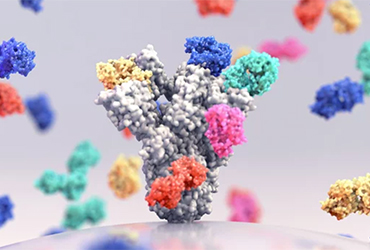
Now, a new study combining data from two separate phase 1 clinical trials shows that a targeted vaccine strategy can successfully activate early immune responses relevant to HIV. Conducted by an international team led by scientists at IAVI and Scripps Research, the trials included nearly 80 participants from both North America and Africa, laying essential groundwork for a future HIV vaccine with global potential (Science 2025 May 15. doi:10.1126/science.adr8382).
One of the trials tested a stepwise vaccination strategy, in which a priming dose and distinct booster dose were given sequentially to guide the immune system through stages of antibody development. That trial demonstrated that heterologous boosting could further advance the immune response in humans. The second trial focused on the priming stage and showed that an initial vaccine dose could successfully activate the desired immune cells in African participants, supporting the use of this approach in regions most affected by HIV. In both trials, the vaccines were delivered using an mRNA-based vaccine platform, which enabled faster production and clinical testing, and provided strong immune responses.
“We’ve now shown in humans that we can initiate the desired immune response with one shot and then drive the response further forward with a different second shot. We’ve also shown that the first shot can work well in African populations,” said senior author William Schief, PhD, a professor of immunology and microbiology at Scripps Research; the vice president of protein design in infectious disease research at Moderna Inc.; and the executive director of vaccine design at IAVI’s Neutralizing Antibody Center, in a press release. “These trials provide proof of concept for a stepwise approach to elicit custom-tailored responses—not just for our vaccine but for the vaccine field at large, including non-HIV vaccines.”
Broadly neutralizing antibodies (bnAbs) are a rare type of immune defense that can recognize and block a wide range of HIV variants. Unlike standard antibodies, which often only recognize a specific variant of the virus, bnAbs target parts of HIV that remain unchanged, even as the virus mutates. Scientists have long viewed bnAbs as the immune system’s best shot at preventing HIV infection.
The first step in helping the body produce bnAbs is through germline targeting, using a priming vaccine as an initial dose designed to activate rare naive B cells with the potential to eventually produce bnAbs. Later vaccine boosters guide the cells through a process of maturation toward producing HIV-targeting antibodies. Even though these trials weren’t intended to generate bnAbs themselves, they demonstrated that the vaccine strategy to deliver a series of different shots to guide the immune system to produce bnAbs has great promise.
This work builds on two key lines of earlier research emerging from Dr. Schief’s lab: results published in 2022 from the IAVI G001 clinical trial, which showed how a protein-based vaccine could successfully activate the rare immune cells needed to initiate bnAb development, and a series of four preclinical studies published in 2024 that demonstrated how a multistep vaccination strategy could guide the immune system toward producing protective antibodies.
The new study analyzed data from two distinct phase 1 clinical trials: the IAVI G002 trial, conducted in North America, and the IAVI G003 trial, conducted specifically in South Africa and Rwanda—countries that are among the most affected by HIV in sub-Saharan Africa. G002 enrolled 60 participants, while G003 enrolled 18. Both trials used germline targeting.
In G002, participants received either the priming vaccine alone or the priming vaccine followed by a slightly different booster, the latter being the heterologous boosting strategy. This two-step process is designed to guide the immune response further along the path toward bnAb development by generating VRC01-class antibodies—early immune defenses with key features of bnAbs. Named after a well-studied bnAb that neutralizes a wide range of HIV variants, VRC01-class antibodies block HIV from binding to a host cell’s entry receptor by targeting a region of HIV that rarely changes, despite the virus’s rapid mutation. Thus, these antibodies are considered among the most promising leads in HIV vaccine development.
All 17 participants in G002 who received both the priming vaccine and the booster developed VRC01-class responses, and more than 80% of them showed elite responses, meaning their immune cells acquired multiple helpful mutations linked to bnAb development. Participants who received only the priming vaccine also generated VRC01-class responses, but their antibody responses were generally less mature. Of note, giving just one priming dose before the booster was more effective than giving two priming doses before the boost.
In G003, participants received two doses of the priming vaccine but no booster. The vaccine successfully triggered VRC01-class responses in 94% of participants, showing similarly high levels of antibody mutation and diversity as seen in G002. Although one participant didn’t respond due to a gene variant that made the vaccine less effective, all other participants showed activation of the target naive B cells.
“These incredibly exciting results underscore the importance and capability of global partnerships to drive cutting-edge science,” Julien Nyombayire, MS, MBBS, the executive director of the Center for Family Health Research, in Kigali, Rwanda, and one of the lead principal investigators of G003, said in the press statement. “It was essential to conduct this evaluation in African populations to ensure that our results reflect the safety and immunologic data from high-burden communities who would deeply benefit from an HIV vaccine.”
Besides the occurrence of dermatologic reactions, the vaccine regimen was generally well tolerated. In G002, 18% of participants experienced skin reactions such as itching and urticaria, and 10% developed chronic urticaria, defined as symptoms lasting six weeks or longer. These events were typically mild or moderate, often managed with antihistamines, and all ultimately resolved. In G003, there were no cases of urticaria, although two participants (11%) experienced mild, short-lived itching managed with antihistamines.
Dr. Schief noted that a follow-up study is planned in South Africa to evaluate the same prime-boost approach tested in G002, but at a lower dose, building on the elite responses seen in the boosted group.
“We also now have a better idea of what kinds of immune cells we need to target to keep moving the response forward,” he said.
Based on a press release.