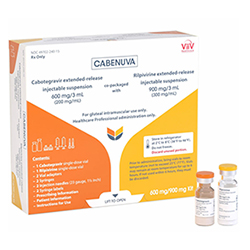
Lenacapavir (Yeztugo, Gilead) is safe, effective and well tolerated in individuals who are pregnant and breastfeeding, according to new data presented at IAS 2025, in Kigali, Rwanda.
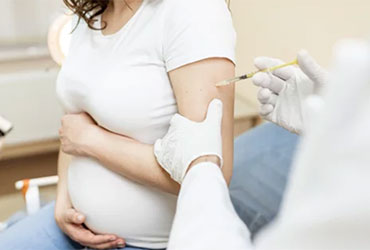
That data come from the PURPOSE 1 trial, which is the first study of lenacapavir to purposefully include pregnant and lactating people (abstract OAC0505). The researchers—led by Linda-Gail Bekker, MBChB, DTMH, DCH, FCP (SA), PhD, the director of the Desmond Tutu HIV Centre at the University of Cape Town, in South Africa—consulted with community stakeholders, regulatory agencies, ethics committees, and maternal and pediatric health experts to “responsibly include” pregnant and lactating people in their clinical trial. Although researchers offered contraception, they did not require it, “to respect autonomy and reproductive choice,” Dr. Bekker and colleagues wrote. Trial participants who became pregnant were offered the chance to remain or leave the clinical trial.
In those who decided to remain in the trial, lenacapavir plasma concentrations were taken during each trimester and in the postpartum period, and then those concentrations were compared with nonpregnant people using a population pharmacokinetics model. They also had a subset of participants who had their breastmilk and infant’s plasma measured.
Of 2,140 study participants receiving lenacapavir in the full trial, 184 participants had 193 pregnancies. Less than half of those people are currently pregnant (45.6%). Of the 105 remaining pregnancies, there were 52 live births and 53 losses, including 30 induced/elective abortions, 20 spontaneous abortions and 3 stillbirths. They found that maternal pregnancy–associated adverse events (AEs) were uncommon. Four participants developed gestational hypertensions or preeclampsia and three developed hyperemesis gravidarum. Of note, no HIV infections occurred in any of the pregnant or lactating participants.
In the population pharmacokinetics analysis, the researchers found that predicted lenacapavir exposure was not statistically different at any trimester or during postpartum when compared with nonpregnant individuals.
Although lenacapavir was present in breastmilk (median milk-to-plasma ratio, 0.63 [n=8 matched pairs), the amount found in infant plasma was minimal (median breastfed infant-to-mother plasma ratio, 0.05 [n=11 matched pairs]).
The researchers said they believe the data could help support lenacapavir as pre-exposure prophylaxis (PrEP) during pregnancy and breastfeeding. “Lenacapavir was efficacious, safe and well tolerated, with no clinically significant exposure differences in [pregnant and lactating people, or PLP] and minimal exposure in breastfed infants,” they wrote. “Proactive evaluation of lenacapavir efficacy, safety and [pharmacokinetic] data in [pregnant and lactating people] can support accelerated access to lenacapavir for PLP who need or want PrEP.”