By Ethan Covey
The CDC has issued updated recommendations for antiretroviral post-exposure prophylaxis (PEP) for nonoccupational exposure to HIV (MMWR Recomm Rep 2025;74[1]:1-56).
“Tens of thousands of people in the U.S. acquire HIV annually, even though it is preventable through various interventions like PEP,” said author Katrina Byrd, MD, a medical epidemiologist with the National Center for HIV, Viral Hepatitis, STD, and TB Prevention, at the CDC.
“Exposure to HIV is a medical emergency,” Dr. Byrd said. “PEP can prevent HIV if it is given as soon as possible after a possible exposure. CDC’s updated guidelines give healthcare providers the information they need to prevent HIV based on the latest available tools and evidence.”
Nonoccupational exposure includes exposure via sexual contact, injection drug use or other route to nonintact skin or mucous membranes that presents a substantial risk for HIV transmission. The updated recommendations build on the previous version, which was released in 2016 (Updated guidelines for antiretroviral postexposure prophylaxis after sexual, injection drug use, or other nonoccupational exposure to HIV — United States, 2016. U.S. Department of Health and Human Services, CDC; 2017).
Key to the revised recommendations, Dr. Byrd said, are three updates.
The first recommends that people who may have been exposed to HIV should start nonoccupational PEP (nPEP) as soon as possible—ideally within 24 hours of exposure but no later than 72 hours—to maximize the effectiveness of nPEP. The initial dose of nPEP should not be delayed due to pending laboratory test results, and the course of nPEP should last for a recommended 28 days.
Assessing the risk for whether HIV infection is likely following exposure “requires consideration of multiple factors, including whether the source has HIV, the source’s level of viremia, the body fluid involved in the exposure, the exposure site, presence of barriers to body fluid exposure, and whether the exposed person is on PrEP [pre-exposure prophylaxis],” the authors of the report wrote.
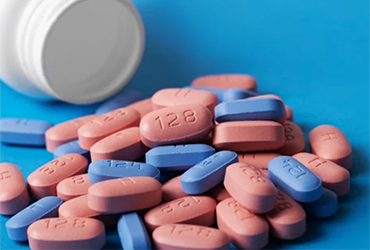
Second, a one-pill regimen that incorporates newer FDA-approved treatment drugs is now recommended as a first-line nPEP therapy. In adults and adolescents without any contraindications, the preferred nPEP regimens are bictegravir/emtricitabine/tenofovir alafenamide (Biktarvy, Gilead), or any of these dolutegravir combinations: dolutegravir plus either tenofovir alafenamide or tenofovir disoproxil fumarate, plus also either emtricitabine or lamivudine.
Third, the recommendations state that providers should use both HIV antigen/antibody tests and nucleic acid tests in certain scenarios, especially for patients who recently have used long-acting injectable PrEP.
“Beyond these points, the guidelines also expand indications for nPEP and encourage PrEP counseling for anyone who could benefit after they complete nPEP,” Dr. Byrd said.
Although important questions regarding nPEP remain, the guidelines aim to incorporate the latest scientific developments and advancements in HIV prevention and care via updates from published data, clinical experience and subject matter expertise since the previous update.
“CDC actively works to make sure our guidelines reflect the latest science,” Dr. Byrd said. “These updated nPEP guidelines incorporate recent advances in HIV prevention since the last update in 2016.”
The sources reported no relevant financial disclosures.