By IDSE News Staff
Two doses of hepatis E (HepE) vaccine, instead of three appear effective in controling outbreaks.
Hepatitis E (HEV) is transmitted through contaminated water, increasing the risk for people with limited access to safe water and sanitation. In South Sudan, outbreaks have regularly ravaged camps for internally displaced people and their host populations. Although a vaccine has been available since 2011, its three-dose regimen makes it difficult to administer in such a context (Lancet Infect Dis 2025 Jan 8. doi:10.1016/S1473-3099(24)00657-1).
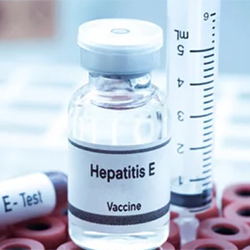
A multicenter team conducted clinical and lab studies after a vaccination campaign to assess its effectiveness in protecting individuals and helping to control the epidemic. Their results showed that the vaccine was effective with just the first two doses.
HEV is a viral infection that is particularly dangerous during pregnancy and among people with chronic illnesses, with a mortality rate of up to 10% to 50%.
“Symptoms of hepatitis E are similar to other diseases that cause acute jaundice, making it difficult to detect. While we don’t have precise estimates of the global burden, some have put it at around 50,000 deaths a year,” explained Andrew Azman, PhD, MHS, MS, an epidemiologist at Geneva University Hospitals and the Faculty of Medicine of the University of Geneva Centre for Emerging Viral Diseases, Médecins Sans Frontières (MSF; also known as Doctors Without Borders) and the John Hopkins University, in Baltimore, who led this research. “The Bentiu camp in South Sudan, home to more than 100,000 people who have been displaced due to civil war, is a regular victim of hepatitis E and other waterborne disease outbreaks, likely due to the poor sanitation conditions and frequent flooding.”
The WHO has recommended the Hecolin (recombinant hepatitis E) vaccine, developed in China and licensed in some countries since 2011, as a potential tool in outbreaks. However, until this use in an outbreak, HepE vaccine had only been used in the context of controlled clinical trials and travel medicine in China, which is why it was important to test during an outbreak.
“The vaccination campaign targeted individuals aged 16 years and took place in three rounds, in March, April and October 2022,” explained Iza Ciglenecki, MD, the operational research coordinator at MSF Switzerland. “Our study then compared the vaccination status of 201 patients testing positive for hepatitis E between May and December 2022 with that of others in their neighborhood presenting no symptoms. Despite fewer hepatitis E cases than expected after vaccination, our study revealed that two doses of vaccine was effective, an excellent result given the particular context of a camp for displaced people.”
The samples were sent to the laboratories of the Centre for Emerging Viral Diseases to determine the biological characteristics of the virus and immune responses.
The study confirmed the protection provided by two doses of this vaccine, even during an epidemic, and the reduction in the incidence of the disease. “Our results combined with others helped lead to recent approval by WHO’s International Coordinating Group on Vaccine Provision of a stockpile of hepatitis E vaccines for emergencies. This stockpile has the potential to save many lives, and we’re looking forward to seeing it in action. These results have also already contributed to the WHO recommendations on the use of a two-dose schedule,” Dr. Azman concluded.