By IDSE News Staff
Biofilms make ventilator-associated pneumonia (VAP) even harder to treat, and adding enzymes to antimicrobial treatment could be a solution, according to researchers at the University of Warwick.
VAP is a common infection in patients using ventilators. Up to 40% of ventilated patients in intensive care wards will develop VAP, with 10% of those patients not surviving.
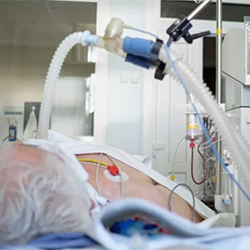
In a recent study, researchers in the laboratory recreated hospital conditions to improve understanding of the infection (Microbiology 2024;170[8]. doi:10.1099/mic.0.001480). They used the same type of tubes that are inserted into patients' airways and created a special mucus to simulate the conditions in a human body. Bacteria and fungi formed a biofilm on these tubes.
“Our study found that the biofilms in our model were different and more complex than those usually grown in standard lab conditions, making them more realistic,” said Dean Walsh, a PhD student and a research fellow at the University of Warwick, in Leicester, England.
The investigators added matrix-degrading enzymes and combined them with several older antimicrobials: amphotericin B, colistin and gentamycin. The enzymes, with proteinase K being most effective, helped to break down the biofilms.
“Significantly, when we combined antibiotics with enzymes that break down the biofilm's protective slime layer, the biofilms were more successfully removed than with antibiotics alone,” Mr. Walsh said.
“With the enzymes, we could halve the concentration of antibiotics needed to kill the biofilms. So that suggests we can use our model to identify new VAP treatments that attack the slime layer.”
Currently, there is no way to prevent this colonization from forming on the tubes, according to Freya Harrison, PhD, of the School of Life Sciences, University of Warwick, but perhaps this study will spark cost-effective ways of making the tubes harder for microbes to colonize and develop biofilms, she added.
This project was part of an international research program in antimicrobial resistance that brings together colleagues at the University of Warwick and those at Monash University in Melbourne, Australia, and is supported by the Monash-Warwick Alliance.