By Aaron Tallent
Most patients who did not survive following a case of non-ventilator hospital-acquired pneumonia (NV-HAP) were found to have multiple, severe underlying comorbidities, with only a small percentage of deaths being potentially preventable. However, the study authors stressed that the findings should not lessen the importance of NV-HAP prevention programs (Clin Infect Dis 2024 Aug 19. ciae418. https://doi.org/10.1093/cid/ciae418).
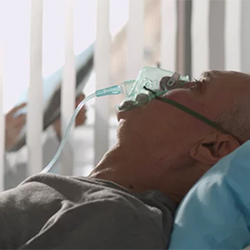
“It’s a double-edged sword because NV-HAP preferentially affects a vulnerable population. So on one hand, you need to make every effort to protect these patients, but on the other hand, a lot of these patients are already unfortunately predisposed for poor outcomes regardless of whether they get NV-HAP or not,” said Michael Klompas, MD, MPH, the senior author of the study. “So, we need to do more to protect this population while also acknowledging that it is a tough population to protect.”
NV-HAP occurs in patients who are not intubated and who develop pneumonia at least 48 hours after hospital admission. It affects about one in 100 hospitalized patients and increases the likelihood of mortality and longer hospital stays.
“Pneumonia is the most lethal infection in the U.S. and in the world, so it makes sense that it also has the highest mortality in healthcare-associated infections,” said Richard Wunderink, MD, a professor of medicine at Northwestern University Feinberg School of Medicine, in Chicago. “Others are either much less common (meningitis), are remediated easier (central-line infections), or do not have associated mortality (urinary tract infections).”
For the study, two infectious disease physicians conducted detailed medical record reviews of 150 randomly selected adult patients from four hospitals. The patients died in the hospital between April 2016 and May 2021, after developing NV-HAP. The patients’ median age was 69.3 years, and 43.3% were female. In the analysis, reviewers assessed risk factors, estimated the preventability of NV-HAP, identified causes of death and estimated the preventability of death.
“If you really want to understand what's happening here, you need to go beyond summary statistics and read patients’ charts. You have to dive deeply into the day-to-day details of what happened to these patients to understand why they got pneumonia and to what extent pneumonia contributed to their deaths,” said Dr. Klompas, MD, MPH, an infectious disease physician at Brigham and Women’s Hospital, and a professor of population medicine at Harvard Medical School, in Boston.
Of the patients, 57% had cancer, 30% had chronic kidney disease, 29% had chronic lung disease and 27% had heart failure. In addition, 54% of patients had at least one hospice-eligible condition before NV-HAP; 24% had a “do not resuscitate” order; and 99% had difficult-to-modify NV-HAP risk factors, with altered mental status (76%), dysphagia (35%) and nasogastric/orogastric tubes (27%) being the most prevalent. The analysis also found that NV-HAP was deemed possibly or probably preventable in 21% of patients, and death was likely or very likely preventable in 8.6%.
“We identified, with our study, that the kinds of patients who are getting pneumonia and particularly those who are dying were very frail and vulnerable with lots of underlying conditions that predispose them to pneumonia. We think pneumonia is caused by people aspirating microorganisms from the mouth into the lungs,” Dr. Klompas said.
In preventing NV-HAP, both Drs. Klompas and Wunderink stressed that there is no one-size-fits-all approach, in part because the pathogens are different depending on the patient’s disease. Drilling down further, Dr. Wunderink noted that “we need very different strategies for a patient being admitted for a [video-assisted thoracoscopic surgery] procedure for a pulmonary nodule than we do for a lung cancer patient admitted for cytotoxic chemotherapy, although both may have underlying [chronic obstructive pulmonary disease].” He recommended that clinicians determine the patient populations who are at highest risk for NV-HAP in their hospital and then design a customized prevention strategy.
“The important application of the findings from this study is to not expect prevention of death from NV-HAP to be the main outcome. You would have to define end points that make the most sense for that population, e.g., length of stay for elective surgical admissions, need for ICU care for acute chemotherapy patients, etc.,” Dr. Wunderink told Infectious Disease Special Edition.
Drs. Klompas and Wunderink reported no relevant financial disclosures.