By Marie Rosenthal, MS
The Advisory Committee on Immunization Practices (ACIP) voted to recommend two vaccines for people who travel or live abroad to areas with endemic disease.
The first set of recommendations concern a rare disease transmitted by ticks, tickborne encephalitis (TBE). The ACIP voted to recommend TBE vaccine (TicoVac, Pfizer) for people 12 months of age and older, who may be exposed to the virus by being in TBE-endemic areas or who could be exposed through laboratory work, regardless of where they live.
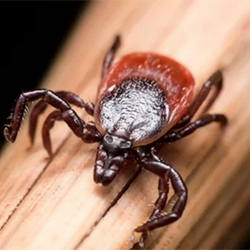
TBE is caused by a rare but serious flavivirus related to the Powassan virus, which causes neuroinvasive disease. The virus is transmitted to people through the bite of the Ixodes species of tick, which is focally endemic in parts of Europe and Asia. About 5,000 to 10,000 cases are reported each year. The risk is seasonal and typically lasts from April to November. The incidence varies from country to country, within countries and year to year, according to Susan Hills, MBBS, MTH, a medical epidemiologist at the Arborviral Diseases Branch, CDC.
There is currently no cure or specific treatment for TBE, but management of symptoms is possible.
The risk is low to Americans, Ms. Hills added. Only 11 cases occurred in U.S. travelers from 2001 to 2020, and nine cases among military personnel assigned overseas between 2006 and 2020. Still, one in three people can have long-lasting effects after exposure that include cognitive changes, muscle weakness or permanent paralysis, and in rare cases, death can occur.
A factor limiting exposure is that a person must come into contact with the ticks, so a person’s planned activities while visiting an endemic area are key to their exposure.
The ACIP made three recommendations for the vaccine:
- TBE vaccine is recommended for people who are moving to or traveling to a TBE-endemic area and will have extensive exposure to ticks based on their planned outdoor activities and itinerary.
- TBE vaccine may be considered for those traveling or moving to a TBE-endemic area who might engage in outdoor activities in areas where ticks are likely to be found. The decision to vaccinate should be based on an assessment of their planned activities and itinerary, risk factors for a poorer medical outcome, and personal perception and tolerance of risk.
- TBE vaccination is recommended for laboratory workers with a potential exposure to the TBE virus.
The FDA approved TicoVac on Aug. 13, 2021, for active immunization to prevent TBE in individuals 12 months of age and older.
In clinical trials, the safety and immunogenicity of the TBE vaccine were assessed in two age groups (12 months to 15 years, and 16 years and older). In these studies, seropositivity rates were 99.5% in the younger group and 98.7% to 100% in people 16 years and older following three doses. The most common adverse reactions in both age groups were local tenderness, headache, local pain, fever, restlessness, fatigue and muscle pain.
ACIP voting member Camielle Nelson Kotton, MD, an associate professor of medicine at Harvard Medical School, in Boston, said she was glad for the recommendation because it provided flexibility and a mechanism for shared decision making between the healthcare provider and patient.
Wilber H. Chen, MD, MS, a professor of medicine at the Center for Vaccine Development and Global Health, University of Maryland School of Medicine, in Baltimore, also was glad for the recommendations but for a different reason: global warming.
“Even though we don’t perceive that the burden of TBE is large and it might be difficult to perhaps implement this vaccine because of the complexity of trying to understand where the tick habitat is, with the trend of global warming, we are seeing tick habitats and mosquito habitats and flaviviruses continue to circulate, so it’s just a reminder that flaviviruses—among which are dengue, West Nile, yellow fever—continue to scorch the world,”said Dr. Chen, who is also a voting member of ACIP. “So, I think we will see these types of vaccines becoming more and more important.”
The second travel vaccine that was recommended was lyophilized CVD 103-HgR cholera vaccine (Vaxchora, Emergent), which is now recommended for children and adolescents 24 months to 17 years of age, who are traveling to an area with active cholera transmission. Fourteen of the 15-member panel voted in favor of the vaccine. Dr. Chen abstained because of a potential conflict of interest: His institution received a grant from Emergent Biosolutions for a Shigella vaccine.
Vaxchora, a live attenuated bacterial vaccine, was approved in June 2016, and the ACIP had recommended it for adults ages 18 years through 64 years who are traveling to areas with active cholera transmission. It is the only vaccine licensed for this use in the United States, according to Jennifer P. Collins, MD, MSc, a medical epidemiologist at the CDC. The company temporarily stopped making the vaccine in December 2020, due to the COVID-19 pandemic, but Emergent said production would have vaccine available beginning May 1, Dr. Collins said.
So far, 62,179 doses of CVD 103-HgR have been sold, but Dr. Collins said it is unknown how many doses have been given.
Cholera is a disease caused by the bacterium Vibrio cholerae that occurs in places where sanitation is poor and there is limited access to safe drinking water. It can be transmitted person-to-person and causes severe diarrheal disease.
As of Feb. 25, there are 16 countries, mostly in Africa but also some parts of Asia, that have active cholera transmission: Benin, Cameroon, Democratic Republic of Congo, Ethiopia, Kenya, Mozambique, Niger, Nigeria, Somalia and Uganda in Africa; and Afghanistan, Bangladesh, India, Nepal and Yemen in Asia, according to the CDC.
“Regardless of cholera vaccination status, travelers to cholera-affected areas should use personal protective measures. That is, they should consume safe food and water; wash hands often with soap and safe water; and follow recommended sanitation practices, including using latrines or burying stool,” Dr. Collins said.
“The buffer and active component packets of vaccine should be refrigerated at 36° to 46° Fahrenheit. Packets should not be out of refrigeration for more than 12 hours before reconstitution, and they should not be exposed to temperatures exceeding 80° Fahrenheit,” Dr. Collins explained. “They should also be protected from light and moisture.”
Only cold or room-temperature purified, bottled or spring water should be used to reconstitute the vaccine. Tap water should not be used because chlorine affects the vaccine’s efficacy.
The buffer solution should be mixed with a disposable stirrer until it completely dissolves. For children younger than 6 years, half of the reconstituted buffer solution should be discarded after mixing. The active component packet is then added, and again, stirred until it disperses to form a slightly cloudy suspension that may contain white particles. “If the packets are reconstituted in the improper order, the vaccine must be discarded,” Dr. Collins said. The prepared vaccine must be consumed within 15 minutes.
Because of the intricacies in reconstituting and giving this vaccine, the ACIP had recommended that the vaccine be given at a travel clinic, but since many of them closed during COVID-19 and may not reopen, it can be given in a medical office.
An issue for children is taste. However, the vaccine cannot be mixed with medicine flavorings that contain propylene glycol, or food such as rice cereal, applesauce, juice or milk, and drugs. In fact, vaccine recipients should not eat food or drink beverages for 60 minutes before and after consuming the oral vaccine.
“However, data support that the vaccine is compatible when mixed with 1 g to 4 g of sucrose, table sugar or 1 g of Stevia sweetener. Ninety-three percent [of] vaccine recipients age 2 through 17 years in the clinical trial consume the vaccine” when it was sweetened, Dr. Collins noted.
Data show the vaccine is effective for up to three months, and protection beyond three months is unknown, she said.
This vaccine can be shed in the stool for up to seven days after vaccination, so patients may be counseled to make sure they wash their hands thoroughly after going to the bathroom. In a small study of the preliminary formulation, there was no household transmission of CVD 103-HgR, according to Dr. Collins, although stool shedding did occur in 11% of vaccine recipients.
Vaccine efficacy can also be affected by antibiotics and chloroquine administered for malaria prophylaxis.
“Antibiotics may be clinically necessary after [administration of] the vaccine, such as to treat an unrelated infection. Nearly all vaccine recipients and clinical trials had zero conversion by 10 days, suggesting administration of antibiotics after this may not affect protection,” Dr. Collins said.
“Chloroquine may diminish the immune response to CVD 103-HgR, therefore CVD 103-HgR should be administered at least 10 days before starting chloroquine,” she added.
There are no data on administering cholera vaccine with other vaccines. “CVD 103-HgR is not licensed for children aged less than 24 months or adults aged more than 65 years, and no data exists about the safety and effectiveness of the vaccine in these populations,” she noted.
“I think that having a cholera vaccine is terrific, but this also just reminds me to mention that there are a lot of other diarrheal agents throughout the world, and these are diseases that afflict vulnerable populations like very young children, but also low- and middle-income countries—countries that don’t have clean water, sanitation and hygiene,” Dr. Chen said, causing large inequities among populations in these countries.
“I am happy to see this kind of vaccine being available here in the U.S., but I continue to want to aspire to see these types of vaccines be available in the countries in which these diseases are endemic.”