By IDSE News Staff
In response to growing concerns over vaccine misinformation, declining public trust in science and recent outbreaks of vaccine-preventable diseases, a coalition of 34 scientific and medical organizations, led by the American Association of Immunologists (AAI) and American College of Physicians (ACP), issued a statement emphasizing the critical role of vaccinations in public health.
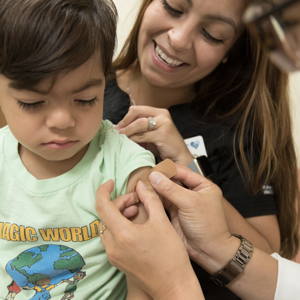
The statement calls vaccination a cornerstone of public health and “a vital tool in the fight against preventable diseases.”
The statement urges adults and children to adhere to the vaccination schedules.
“Vaccines are one of the greatest achievements of biomedical research, made possible by decades of rigorous scientific investigation and investment in discovery. The development of safe and effective vaccines requires a strong, well-funded scientific enterprise, from basic immunology research to large-scale clinical trials. Ensuring continued support for science is essential to protecting public health and combating emerging infectious diseases,” said AAI President Stephen C. Jameson, PhD, the LMP Professor and Harry Kay Chairman’s Fund Professorship in Experimental Pathology at the University of Minnesota, in Minneapolis.
Recent studies have highlighted a worrisome decline in public confidence toward scientific institutions. A Pew Research Centersurvey showed that the percentage of Americans who believe science has a mostly positive effect on society dropped from 73% in 2019 to 57% in 2023. Furthermore, a study by Columbia University’s Mailman School of Public Health found that misinformation about vaccines on social media contributes to vaccine hesitancy.
The tangible consequences of declining vaccination rates are evident. An ongoing measles outbreak in Texas has already resulted in more than 300 cases and the tragic death of an unvaccinated child—the first such death in the United States in a decade, the organizations said.
Vaccines are one of the most significant public health achievements, providing safe and effective protection against many infectious diseases. Vaccination programs have dramatically reduced or eliminated diseases that once caused widespread illness, suffering or death. Key achievements include:
- Globally, more than 150 million lives saved in 50 years: In the United States, immunization efforts have prevented an estimated 508 million cases of illness, 32 million hospitalizations and more than 1 million deaths. These efforts saved $540 billion in direct costs and $2.7 trillion in societal costs.
- Eliminating measles in the United States: Before the introduction of the measles vaccine in 1963, the United States recorded more than 500,000 cases and nearly 500 deaths each year. Widespread vaccination campaigns reduced U.S. cases to the point that in 2000 it was declared that measles was eliminated. However, recent outbreaks have highlighted the importance of maintaining high vaccination coverage. Globally, the vaccine has prevented more than 60 million deaths between 2000 and 2023.
- Near eradication of polio worldwide: U.S. polio infections peaked in 1952, with more than 21,000 people suffering from paralysis because of their infection. Thanks to vaccination, the United States was declared polio-free in 1979. Polio vaccination campaigns have brought the world to the brink of eradication. Cases have declined by more than 99% since 1988, from 350,000 cases annually to less than 200 in 2022.
- Preventing cancer: Vaccination programs to reduce the spread of HPV, the cause of nearly all cases of cervical cancer, as well as some anal and oral cancers, have proven to be highly effective.
“As internal medicine physicians on the front lines of patient care, we understand what needs to be done to mitigate the spread of preventable diseases. Vaccines are safe, effective and vital to our ability to prevent diseases that threaten public health. ACP remains concerned about the spread of disinformation and misinformation regarding vaccination and treatment and strongly supports evidence-based guidance. With the current measles outbreak and the threat of other preventable infectious diseases, we need to ensure that members of the public have reliable, accurate information to guide their choices,” said ACP President Isaac O. Opole, MBChB, PhD, MACP, an associate vice chancellor for student affairs and the Ruth Bohan Teaching Professor of Medicine
at the University of Kansas Medical Center, in Kansas City.
In light of the current climate, the coalition calls upon individuals to consult with trusted healthcare professionals regarding any concerns about vaccines and to rely on credible, science-based information when making health decisions.
A full copy of the statement is available on the AAI website.