By Marie Rosenthal, MS
The number of measles cases throughout the world almost doubled in 2023, and that unfortunate trend seems to be repeating itself in 2024, according to speakers at the 2024 ESCMID Global Congress (formerly ECCMID), in Barcelona, Spain.
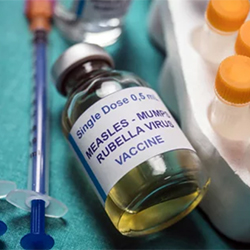
The provisional global total of 321,582 cases of measles in 2023 was 88% higher than the 2022 figure, which was 171,153 cases, according to Patrick O’Connor, MD, MPH, of the World Health Organization, who gave an update at the meeting (oral presentation 3933-1).
By early April 2024, the number of reported cases was 94,481, but because of delays in reporting, the true figure is probably higher, he said. “I think we can anticipate similar case counts this year [as last], considering the large number at the beginning of the year,” Dr. O’Connor said.
In addition, the number of countries suffering large or disruptive measles outbreaks—defined as 20 cases per 1 million population continuously over a 12-month period—has tripled from 17 to 51.
The COVID-19 pandemic contributed to some of the increases because the it not only interrupted global efforts to vaccinate against measles but also disrupted routine surveillance in many countries.
“During the pandemic, many children remained unvaccinated, and catch-up vaccinations have not reached them. Therefore, we now see cases increasing again in various regions of the world,” said Hanna Nohynek, MD, PhD, of the Health Security Section, Finnish Institute for Health and Welfare, in Helsinki, who also spoke at ESCMID Global.
On the positive front, Dr. O’Connor said surveillance appears to be improving since the pandemic emergency ended. “As surveillance systems start to recover post pandemic, we are starting to see more cases as well, so some of this additional reporting could be due to better surveillance,” he said.
Health Disparities Continue
Most global measles cases are occurring in low- and lower middle-income countries that have seen their proportion of cases increase from 80% in 2017 to 94% in 2022, while the proportion of cases among high-income countries fell from 5% to 1% in the same period.
“About 51% of cases were in lower middle-income countries, and about 43% were in low-income countries, [as defined by the World Bank], while high-income countries represent about 1% and upper middle about 5%,” Dr. O’Connor said.
“Measles cases were high in 2019, with the majority seen in Africa, where measles vaccine coverage has been lowest in the world allowing for an unprotected population and as a consequence, periodic outbreaks,” Dr. Nohynek added.
“Measles cases are not equally distributed globally,” Dr. O’Connor said. “We see this as a huge equity issue.”
Total cases globally have fluctuated wildly in recent years:
- 2018: 276,157
- 2019: 541,401
- 2020: 93,840
- 2021: 59,619
- 2022: 171,153
At first glance, the greatly reduced cases during the height of the pandemic in 2020-2021 might seem counterintuitive since vaccination rates were low. However, some protection probably was offered by stay-at-home requirements, Dr. Nohynek explained, especially for highly transmissible organisms like measles. “During the COVID-19 pandemic with closure of the society and limiting the number of human contacts, the transmission of all airborne viruses was reduced, including measles,” she said.
“Measles is a very clever virus, and it moves around very quickly,” Dr. O’Connor said. This was shown as the pandemic ended and people started international travel—cases shot right back up.
Measles Elimination Threatened
An infectious disease is declared eliminated when it is no longer found or transmitted at a sustained rate within a geographic area, Dr. Nohynek said. For measles elimination, the WHO requires documentation that endemic measles transmission has been interrupted for at least 36 months after the last known endemic case; surveillance that is sensitive and specific enough to detect imported and imported-related cases is available; and proof that the country can genotype the virus.
Eighty-three member states have eliminated measles, explained Dr. Nohynek, although in places such as the United States, elimination status is in jeopardy because of these rising cases.
She highlighted the Region of the Americas program as a successful way to eliminate measles. In 2016, measles was the fifth vaccine-preventable disease to be eliminated from the Americas, she explained. The successful strategy involved a one-time national campaign to bring children between 12 months and 14 years of age up to date with measles vaccination; strengthened routine vaccination to reach a minimum of 95% of children every year; and undertook large follow-up campaigns every four years, to reach a minimum of 95% of children 12 months to 4 years with a second dose of vaccine. In addition, good technical support, laboratory capacity, and social and political will played their part, she added.
Social and political will are very important, she said. Misinformation about vaccination can dissuade parents from having their children vaccinated and are another component leading to lower vaccination rates. “Vaccine hesitancy is only one component that can contribute to lower coverage—misinformation about vaccines, access to immunization services and on-time vaccination cause immunization gaps,” Dr. Nohynek said.
By 2022, global measles first-dose coverage was 3% below the pre-pandemic peak of 86%, which was too low to prevent the epidemics of 2019. In 2022, 33 million children who should have received a routine measles dose did not (22 million first-dose and 11 million second-dose children).
The benefits of measles vaccination cannot be underestimated, according to Dr. O’Connor, who estimated 57 million measles deaths were avoided from 2000 to 2022.
“Measles is a crisis among many crises,” Dr. Nohynek added. Forty-five percent of outbreaks are in countries in crisis, suffering conflict, drought, floods and an influx of refugees, to name just a few, she said. “All of these make it more difficult to deliver routine immunization services.”