By Ethan Covey
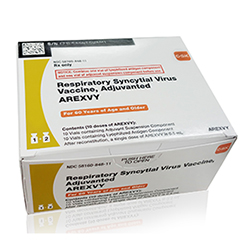
Early post-marketing findings suggest that the safety profiles of the two FDA-approved respiratory syncytial virus (RSV) vaccines are consistent with vaccine safety data seen in clinical trials among adults 60 years of age and older. This includes a higher-than-expected number of verified cases of Guillain-Barré syndrome (GBS) (MMWR Morb Mortal Wkly Rep 2024;73[21]:489-494).

“CDC has been closely monitoring GBS since it was identified as a potential safety concern in clinical trials of both GSK’s Arexvy and Pfizer’s Abrysvo RSV vaccines,” said Anne M. Hause, PhD, an epidemiologist and program lead for V-safe in the CDC’s Immunization Safety Office.
“GBS is a rare disorder where the body’s immune system damages nerve cells,” Dr. Hause said. “It often occurs after an infection with a virus or bacteria, and on rare occasions can develop in the days or weeks after getting a vaccine. When GBS occurs, the immune system mistakenly attacks part of the nervous system, resulting in symptoms that can range from mild muscle weakness to paralysis.”
While most people who get GBS—an estimated 3,000 to 6,000 each year in the United States—fully recover from the syndrome, some are left with permanent nerve damage. Adults ages 50 and older are at greatest risk.
Overall, most (91%) reports of GBS to the Vaccine Adverse Event Reporting System (VAERS) after RSV vaccination in adults ages 60 and older were classified as nonserious. However, between May 2023 and April 2024, data from the V-safe and VAERS surveillance systems determined that rates of GBS were more common than expected background rates. GBS had 5.0 and 1.5 reports per million doses of Abrysvo and Arexvy vaccine administered, respectively. During this time, approximately 7.2 million adults ages 60 and older received the GSK RSV vaccine, and 3.4 million received the Pfizer RSV vaccine.
“These findings, though higher than background, are consistent with those from the clinical trials,” Dr. Hause said.
Because it is a passive reporting system and reports can come from many different sources, including patient reports, Dr. Hause noted that one of the limitations of VAERS is that some reports can be health events that are not related to vaccination. “VAERS reporting rates cannot tell us how many of these cases might be related to receipt of an RSV vaccine,” she said.
Yet, she noted that the RSV vaccine is recommended for all adults ages 75 and older, and adults 60 and older with certain risk factors, such as chronic heart or lung disease.
“Your doctor can help you determine whether you’re a good candidate for the shot and help you weigh any potential risks,” she said.
Active, population-based safety evaluations are being conducted by the CDC and FDA to evaluate risks for GBS and other adverse events of special interest after RSV vaccination.
“Results of these studies will help guide future CDC RSV vaccine recommendations,” Dr. Hause said.