By Ethan Covey
The introduction of a rubella-containing vaccine (RCV) into the routine immunization program of countries that have not introduced RCV would prevent an estimated 986,000 cases of congenital rubella syndrome (CRS) in the next 30 years, according to a modeling study.
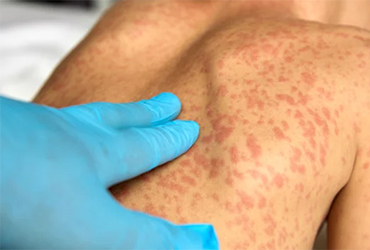
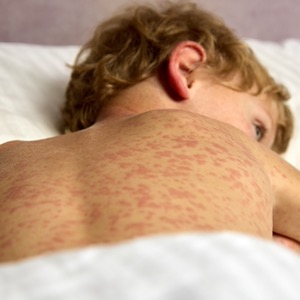
Because of widespread use of the measles, mumps and rubella vaccine, rubella has been pushed to very low levels in the United States. However, by the end of 2023, 19 lower- and middle-income countries had not yet introduced rubella vaccine. In these countries—consisting of the Democratic Republic of the Congo, Ethiopia, Nigeria, South Africa, 14 other African nations and Afghanistan—an estimated 24,000 cases of CRS occurred during 2019 (MMWR Morb Mortal Wkly Rep 2025;74[18]:305-311).
“Rubella is a serious vaccine-preventable disease that can cause devastating birth defects in babies—such as blindness, developmental delays and microcephaly,” said study author Laura Zimmerman, MPH, an epidemiologist with the CDC.
Estimates of CRS incidence, and the number of annual CRS cases in 2019, were used to model the effect that introduction of RCV would have on CRS from 2025 to 2055. Modeling estimates showed that without RCV introduction, a mean of 30,000 to 34,000 CRS cases would occur each year during 2025-2055, with a cumulative mean of 1,025,286 cases across all 19 countries during this 30-year period. If RCV was mandated in these 19 countries, an estimated 986,000 CRS cases would be prevented from 2025 to 2055.
“In advancing toward rubella elimination, revised global immunization guidelines recommend introducing rubella vaccine in the remaining 19 countries that do not already use the vaccine,” Ms. Zimmerman said. “With the use of the vaccine in all countries, we can potentially eliminate rubella globally, protect nearly 1 million babies from lifelong birth defects over the next 30 years and make sure this heartbreaking disease never returns to the U.S.
“Although rubella was eliminated in the U.S., unvaccinated communities remain at risk for rubella outbreaks, which can pose serious dangers to unborn babies,” Ms. Zimmerman said. “People should consult with their healthcare provider to understand the options regarding vaccination. The CDC’s global immunization work is essential for protecting Americans—both at home and abroad—from infectious disease threats.”
Ms. Zimmerman reported no relevant financial disclosures.