By Marie Rosenthal, MS
Unlike previous administrations, which typically endorsed the recommendations of the Advisory Committee on Immunization Practices (ACIP) quickly with a public announcement, Health and Human Services Secretary Robert F. Kennedy Jr. endorsed the recommendations of the current controversial committee without fanfare in July—one month after the recommendations had been made.
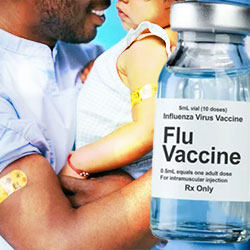
In June, the committee recommended that everyone in the United States who are 6 months of age and older receive a flu shot to protect themselves from the upcoming season; recommended removing thimerosal from all influenza vaccines; and endorsed the use of a new monoclonal antibody against respiratory syncytial virus (RSV).
The flu shot endorsement appeared earlier this week on the ACIP recommendations webpage without the usual public announcement from the CDC director. Mr. Kennedy has been endorsing the recommendations because the head of the CDC, Susan Monarez, PhD, was not installed until recently. She is the first CDC director who had to be confirmed by the Senate, which was done on July 29, 2025.
“ACIP reaffirms the recommendations for routine annual influenza vaccination of all persons aged ≥6 months who do not have contraindications for the 2025-2026 season,” the ACIP page states. “With no current CDC Director and pending confirmation of a new CDC Director, this recommendation was adopted by the HHS Secretary on July 22, 2025, and is now an official recommendation of the CDC.”
This is the same announcement method the secretary used to endorse the recommendations from the former ACIP panel, which met in April, and is in stark contrast to the public announcements he made when he announced thimerosal would be removed from specific vials of influenza vaccines, despite its safety record, and there would be changes to the COVID-19 vaccination recommendations. (Pediatric COVID-19 vaccination now requires shared clinical decision-making with the child’s doctor, and the vaccine is no longer recommended for pregnant women, even though they are at higher risk for severe disease.)
On Aug. 4, Dr. Monarez also endorsed the other recommendation made by the panel in June: that infants younger than 8 months who are entering their first RSV season receive one dose of the monoclonal antibody, clesrovimab (Enflonsia, Merck), which was recently approved by the FDA. Parents now have a choice between clesrovimab and nirsevimab (Beyfortus, Sanofi]), as well as the older generic palivizumab to protect their infants.
The following lists all the recommendations made by the original panel in April, which were recently endorsed:
- GlaxoSmithKline’s MenABCWY vaccine (meningococcal groups A, B, C, W and Y vaccine, Penmenvy) may be used when both MenACWY and MenB are indicated at the same visit among healthy people aged 16 to 23 years (routine schedule) when shared clinical decision-making favors administration of MenB vaccine, and in patients 10 years of age and older who are at increased risk for meningococcal disease (e.g., because of persistent complement deficiencies, complement inhibitor use, or functional or anatomic asplenia).
- Adults 50 to 59 years of age who are at increased risk for severe RSV disease should receive a single dose of RSV vaccine.
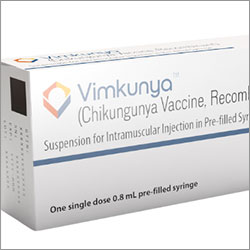
- The virus-like particle chikungunya vaccine (Vimkunya, Bavarian Nordic) should be used in people at least 12 years of age traveling to a country or territory where there is a chikungunya outbreak. In addition, the virus-like particle chikungunya vaccine may be considered for those 12 and older who are traveling or taking up residence in a country or territory without an outbreak but with elevated risk for U.S. travelers if planning travel for an extended period of time (e.g., six months or more).
- ACIP recommends the virus-like particle chikungunya vaccine for laboratory workers with potential for exposure to chikungunya virus.
- ACIP recommends the live-attenuated chikungunya vaccine for people 18 and older traveling to a country or territory where there is a chikungunya outbreak. In addition, the live-attenuated chikungunya vaccine may be considered for people aged at least 18 years traveling or taking up residence in a country or territory without an outbreak but with elevated risk for U.S. travelers if planning travel for an extended period of time (e.g., six months or more).
These recommendations were adopted on May 13, 2025.
In a controversial move, Mr. Kennedy fired the original independent ACIP and replaced its membership primarily with people who share his anti-vaccine views, falsely accusing the original panel of ethics violations. Typically, the ACIP panel is vetted by the CDC, not handpicked by the HHS secretary.