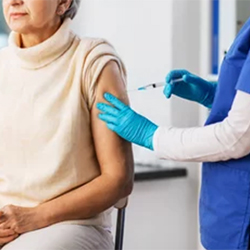
Emergency departments (EDs) may provide an opportunity to address vaccine coverage among underserved populations.
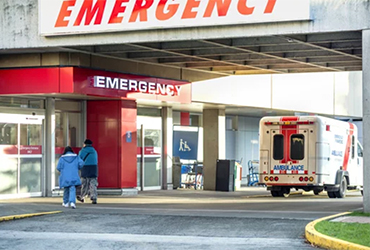
Eighty-six percent of adult patients surveyed in a national ED study reported missing at least one CDC-recommended vaccine, and nearly half of the participants had not heard of at least one of these recommended vaccines (MMWR Morb Mortal Wkly Rep 2025;74[29]:456-462).
However, a majority of the participants said they would receive missing vaccines if offered.
Unaware of Missed Vaccines
The study included 3,285 adults surveyed at 10 EDs in eight U.S. cities across five states from April through December 2024. The primary reasons for missed vaccine doses were that the participant was unaware of or had not been offered the vaccines. One in five people reported lacking a source of primary healthcare.
“Vaccines and vaccination programs have undeniably saved more lives than any other public health intervention in the U.S.; yet, they are currently being de-emphasized,” said researcher Robert M. Rodriguez, MD, a professor of medicine and the associate dean of clinical & population health research at the University of California Riverside School of Medicine.
“Many Americans—approximately 25% to 30% of the U.S. adult population—lack primary care and therefore do not receive basic public health and primary care measures,” Dr. Rodriguez said. “This group rarely, if ever, is asked about or given the opportunity to receive recommended vaccines.”
Most Would Get Their Shots
Out of 2,821 participants who were not up to date with their vaccinations, 46.4% said they would accept one or more missing vaccines if they could be provided during their ED visit, and 86.7% said they would accept all missing vaccines.
“The bottom line from our research is that EDs could and should serve as sites to inform patients, especially underserved populations who lack primary care, about vaccines that are recommended for them and facilitate vaccination—either in the ED or elsewhere,” Dr. Rodriguez said. “Given that vaccines are such a fundamental part of public health—perhaps the most fundamental part of public health—we believe that novel vaccination information and uptake programs should be supported and not de-prioritized.”
Dr. Rodriguez and his colleagues are currently conducting work to allow for the implementation of their vaccination screening process on a broad scale.
Dr. Rodriguez reported no relevant financial disclosures.