

By Marie Rosenthal, MS
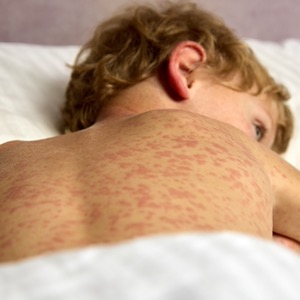
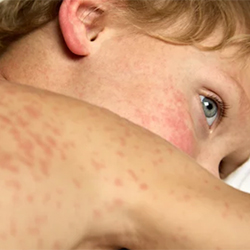
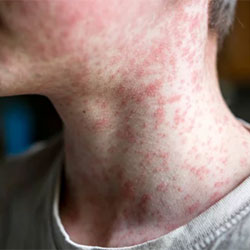
Twenty-three more cases of measles were reported with one more state reporting cases, bringing the total number of confirmed measles cases in the United States to 1,356 as of Aug. 5, according to the CDC.
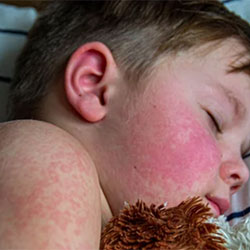
Most of the cases have been in children, and 92% occurred among unvaccinated people, or those whose vaccination status was unknown. One hundred seventy-one people have been hospitalized, and three people—two children and one adult—have died, the CDC said.
Of the 1,356 confirmed cases, 28% (386) are among children younger than 5 years of age; 37% (501) are among those 5 to 19; and 34% (462) are among adults. There were seven cases in the “age unknown” group, the CDC said.
More than half the country is grappling with measles. Wisconsin joined the ranks of states and jurisdictions reporting cases along with Alaska, Arkansas, Arizona, California, Colorado, Florida, Georgia, Hawaii, Illinois, Indiana, Iowa, Kansas, Kentucky, Louisiana, Maryland, Michigan, Minnesota, Missouri, Montana, Nebraska, New Jersey, New Mexico, New York City, New York state, North Carolina, North Dakota, Ohio, Oklahoma, Oregon, Pennsylvania, Rhode Island, South Carolina, South Dakota, Tennessee, Texas, Utah, Vermont, Virginia, Washington and Wyoming.
The 2025 cases occurred as a result of 32 separate outbreaks, which are defined as three or more related cases, and 87% of confirmed cases (1,177/1,356) are outbreak associated. The rest are associated with travel. For comparison, 16 outbreaks were reported during 2024, and 69% of cases (198/285) were outbreak associated.
After cases reached a high in the United States of 27,808 in 1990, measles declined throughout the country because of vaccination with the measles-mumps-rubella (MMR) vaccine, leading to a declaration of measles elimination in the United States in 2000. This elimination status was due to a “highly effective vaccination program in the United States, as well as a better measles control in the Americas region,” according to the CDC.
However, due to the high number of cases being reported in the United States, the country may lose its elimination status.
The CDC said the MMR vaccine is safe and effective at protecting the community against measles, but more than 95% of people in a community need to be vaccinated—measles is a highly contagious virus. However, vaccination coverage among children attending kindergarten has decreased from 95.2% during the 2019-2020 school year to 92.7% in the 2023-2024 school year (MMWR Morb Mortal Wkly Rep 2024;73[41]:925-932). According to the CDC, that leaves about 280,000 kindergartners unprotected and at risk for not only measles but mumps and rubella.
In addition, vaccination against diphtheria, tetanus and pertussis was also down, with only 92.3% of children receiving DTaP vaccinations.
The CDC is sponsoring a Clinician Outreach and Communication Activity (COCA) call to update clinicians about the measles cases and outbreaks on Aug. 14. “During this COCA Call, presenters will discuss the current epidemiology of measles in the United States and address the most common questions from clinicians about preventing, identifying, and testing for measles. Presenters will also summarize measles, mumps, and rubella … vaccination recommendations and considerations,” the CDC explained.
Visit here for more information about the COCA call.