





At the end of June, the Advisory Committee on Immunization Practices voted to remove the preservative thimerosal from the remaining influenza vaccines that still contained it. Although at face value removing a preservative may seem like a noble task, experts who spoke with Infectious Disease Special Edition explained that the move may actually spur more vaccine hesitancy around the globe.
Why Is Thimerosal in Vaccines?
Thimerosal is a mercury-based preservative that has been used in vaccines to prevent microbial growth. The mercury in thimerosal is ethylmercury, which is cleared from the body quickly as opposed to methylmercury, which is the type of mercury found in some fish and can accumulate in the body.
Although thimerosal had been used for decades as a preservative in vaccines, most U.S. vaccines, including all pediatric vaccines, no longer contain the preservative—even before this vote.
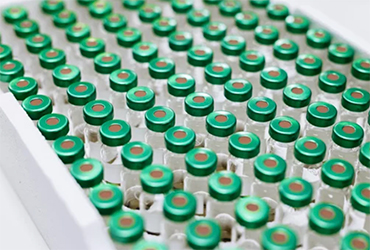
Multidose vials were one of the few remaining places thimerosal was included in vaccine formulations in the United States. The vote “may not have a huge impact in the U.S. since most of the flu shots are provided from single-dose vials,” which do not contain thimerosal, Peter Hotez, MD, PhD, a co-director of the Texas Children’s Hospital Center for Vaccine Development and the dean of the National School of Tropical Medicine at Baylor College of Medicine, in Houston, told IDSE.
Not just most, but almost all: 95% of U.S. flu vaccinations are single-dose and, therefore, do not contain thimerosal, according to Walter Orenstein, MD, DSc (Hon), an emeritus professor of medicine, pediatrics, global health and epidemiology at Emory University School of Medicine, in Atlanta.
Why Was Thimerosal Removed?
Two decades ago, thimerosal was removed from vaccines out of an abundance of caution, as no data identified thimerosal as dangerous at the doses contained in vaccines, according to Dr. Orenstein.
Dr. Orenstein, who was the director of the CDC’s National Immunization Program from 1988 to 2004, was part of the decision-making process to remove thimerosal from U.S. pediatric vaccines in the late 1990s. He explained to IDSE that it was spurred after new regulations came into play that measured mercury in different products. At the time, there was no research to support thimerosal safety, and new studies would take time. “If the studies did show harm, then there was a period that children could have been harmed. So the decision was to remove thimerosal from vaccines because thimerosal is not essential for the vaccine. It’s essential for multidose vials, and by going to single-dose packaging, you didn’t need thimerosal,” Dr. Orenstein told IDSE.
Fast-forward to the present day, and the literature shows that thimerosal in vaccines does not cause harm (Pediatrics 2003;112[5]:1039-1048 and 2009;123[2]:475-482; N Engl J Med 2007;357[13]:1281-1292). “Subsequently, numerous studies have been done without showing any harm from thimerosal, but at the time the decision we made, the safe levels of mercury were available for methylmercury, not ethylmercury.” We now know that thimerosal is metabolized into ethylmercury, which is excreted from the body much more quickly than methylmercury, and is much less likely to cause harm, he explained. “And it turned out, at least the data we have now is there was no harm from it,” he said.
Public trust was another reason to pull thimerosal from vaccines. It was removed to improve public confidence in vaccination, according to Dr. Hotez. “This was done years ago to promote vaccine confidence in the U.S., but it should have been emphasized further that it was done for public perception and not done for medical concerns,” Dr. Hotez said.
The Benefits
Multidose vials can be an option for vaccination campaigns to quickly immunize large groups of people. As each individual needle is inserted in the vial, there is a chance that a microbe could be introduced to the vaccination, Dr. Hotez said. Thus, a preservative is added to reduce that risk.
But most vaccinations in the United States are single-dose formulations, which avoids the need for a preservative.
Removing thimerosal from multidose vials would remove a very small ethylmercury exposure from a small group of adults. “In my opinion, there’s not science to support the need for that,” Dr. Orenstein told IDSE. “The science is the science.”
The Consequences
Single-dose vaccinations may be the standard in the United States, but it is not the same case around the world. Many low- and middle-income countries rely on multidose vials for vaccination, especially for children, due to costs and other factors.
A switch to single-dose vaccines can cause logistical problems, such as increased refrigeration needs, Dr. Orenstein said.
It also can cause vaccine hesitancy, both experts agreed. “My concern is that the misleading rhetoric coming out of HHS [Department of Health and Human Services] could have a downstream negative impact on global immunizations, or that it could further globalize American vaccine hesitancy,” Dr. Hotez said.
And while we don’t have any evidence that thimerosal in vaccines is dangerous for patients, even pediatric patients, there is a staggering amount of evidence about the harms caused by missing childhood vaccinations.
Dr. Orenstein remembers one such case in the late 1990s. Because of the confusion over the recommendations, a child born to a mother who was hepatitis B surface antigen–positive didn’t receive a hepatitis B vaccination at birth, he recalled. Sadly, the child died. Today, a full series of hepatitis B vaccination provides full immunity to 98% of infants, according to the American Academy of Pediatrics.
Dr. Hotez is a co-inventor on non–revenue-generating patents for neglected tropical diseases owned by Baylor College of Medicine (BCM), and co-inventor of a COVID-19 recombinant protein vaccine technology owned by BCM that was licensed by Baylor Ventures nonexclusively and with no patent restrictions to several companies committed to advance vaccines for low- and middle-income countries. These include Biological E (India), BioFarma (Indonesia), Incepta (Bangladesh) and ImmunityBio (U.S. partnerships with Africa, including Botswana and South Africa). The co-inventors have no involvement in license negotiations conducted by BCM. Similar to other research universities, a long-standing BCM policy provides its faculty and staff who make discoveries that result in a commercial license with a share of any royalty income. Any such distribution will be undertaken in accordance with BCM policy. Dr. Hotez is also the author of several books published by academic presses (ASM-Wiley) and Johns Hopkins University Press, and he receives modest royalty income from this activity.
Dr. Orenstein reported that he has served as a consultant to Sanofi, which produces a flu vaccine.